The question “when did Botox come out” is one that intrigues many, given the widespread popularity of this cosmetic treatment today. Botox, widely known for its ability to reduce facial wrinkles, was not always associated with the beauty industry. Understanding its journey from a medical marvel to a cosmetic staple provides insight into its multifaceted roles in health and beauty.
When Did Botox Come Out?
The origins of Botox trace back to the 1970s when scientists were exploring the potential of botulinum toxin for medical uses. The botulinum toxin type A, known for its potent biological effects, first gained attention as a treatment for various muscle disorders. In 1989, the U.S. Food and Drug Administration (FDA) approved the drug for treating eye muscle disorders such as blepharospasm and strabismus, signaling its first official use in medicine. The actual approval for cosmetic use to treat frown lines came much later, in 2002. This marked a significant transition of Botox into the cosmetic arena.
The Journey from Medicine to Cosmetics
Botox’s original use was not for cosmetic purposes but for managing conditions involving muscle spasms. Scientists discovered that its ability to temporarily paralyze targeted muscles could alleviate certain medical conditions. Over time, reports of side benefits, such as reduced facial wrinkles, began to circulate among practitioners. These observations led to clinical studies that eventually paved the way for Botox’s formal introduction into the cosmetic industry.
In the early 2000s, comprehensive studies demonstrated its efficacy and safety for cosmetic procedures, leading to the landmark FDA approval for smoothing out moderate to severe frown lines between the eyebrows. This momentous step opened new avenues for nonsurgical aesthetic procedures, making Botox a household name.
How Botox Works
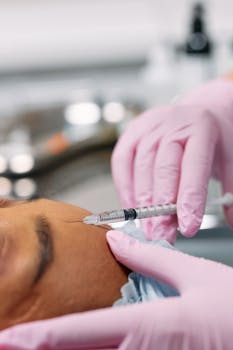
Botox functions by inhibiting the release of acetylcholine, a neurotransmitter responsible for activating muscle contractions. By blocking this signal, Botox induces temporary muscle paralysis, smoothing wrinkles and fine lines. This mechanism is precisely what made Botox invaluable in treating medical conditions like chronic migraines, excessive sweating, and overactive bladders, beyond its cosmetic applications.
For those interested in exploring alternatives to traditional skincare, incorporating Botox treatments is just one aspect of maintaining healthy skin. A holistic approach may also involve exploring eco-friendly skincare practices that support sustainable beauty and health.
Botox’s Impact on Society and Culture
The introduction and commercialization of Botox have undoubtedly shaped cultural and societal perceptions toward aging and beauty. Before its emergence, surgical procedures were often the only viable option for those seeking youthful appearances. Botox has democratized access to effective aesthetic enhancements, offering less invasive and more affordable options.
Moreover, Botox has sparked diverse discussions around beauty standards, ageism, and the definition of personal care. It has also inspired ongoing research into other medical uses and potential benefits, highlighting its role beyond mere cosmetic enhancement.
Future Trends and Developments
The Botox industry continues to evolve with innovations promising more targeted and longer-lasting results. Ongoing research is exploring its expanded use in new therapeutic areas, reaffirming its place in both medical and cosmetic fields. Developments in Botox formulations, improved delivery methods, and combination treatments with other aesthetic technologies are areas of active exploration.
As Botox becomes even more integrated into mainstream beauty and healthcare, consumers are encouraged to stay informed about the latest scientific findings and consult healthcare professionals before pursuing treatments. For more detailed information on Botox and other health topics, you can refer to educational resources that provide comprehensive background and updates.
In looking at when Botox came out, it’s clear that its vast impact spans both the medical and beauty industries, and its story is far from over.
- Botox was first FDA-approved for medical use in 1989.
- Its cosmetic approval came in 2002, revolutionizing aesthetic procedures.
- Originally used for muscle disorders, Botox has diverse applications.
- It works by temporarily paralyzing muscles, reducing wrinkles.
- Ongoing research continues to expand Botox’s therapeutic potential.
What was Botox’s original use?
Botox’s original use was medical, treating eye muscle disorders like blepharospasm and strabismus before its cosmetic potential was fully realized.
When did Botox receive FDA approval for cosmetic use?
In 2002, Botox was FDA-approved for cosmetic use, specifically for reducing frown lines between the eyebrows.
How does Botox smooth wrinkles?
Botox smooths wrinkles by temporarily reducing muscle activity. This is achieved by blocking nerve signals that prompt muscle contractions.
Are there medical uses for Botox beyond cosmetics?
Yes, Botox is used medically to treat conditions such as chronic migraines, excessive sweating, overactive bladders, and certain muscle disorders.
Is Botox continuing to evolve in its applications?
Botox continues to evolve, with ongoing research exploring potential new medical and cosmetic uses, as well as improved delivery methods.