The Peptide Study That Changed When Scientists Checked the Cells: How Misidentified Cell Lines, Hidden Contamination and Laboratory History Distort Research Results

The Peptide Study That Changed When Scientists Checked the Cells: How Misidentified Cell Lines, Hidden Contamination and Laboratory History Distort Research Results

A laboratory investigates how an experimental peptide interacts with cultured cells. The first results appear compelling. A molecular signal changes, the statistical analysis identifies a measurable difference, and the investigators begin developing an explanation for what happened. Months later, a second research team attempts to examine the same finding. Its scientists use the reported compound…

Read More
The Peptide Study That Looked Promising in the Laboratory but Could Not Prove a Human Benefit: How Cell Experiments, Animal Models and Clinical Evidence Tell Different Stories

The Peptide Study That Looked Promising in the Laboratory but Could Not Prove a Human Benefit: How Cell Experiments, Animal Models and Clinical Evidence Tell Different Stories

A peptide can produce a striking result in a laboratory experiment without demonstrating that it will improve human health. A cell culture may respond to a compound, an animal model may show a measurable change, or a molecular experiment may identify an interaction with a biological target. Each observation can advance scientific understanding. None, by…

Read More
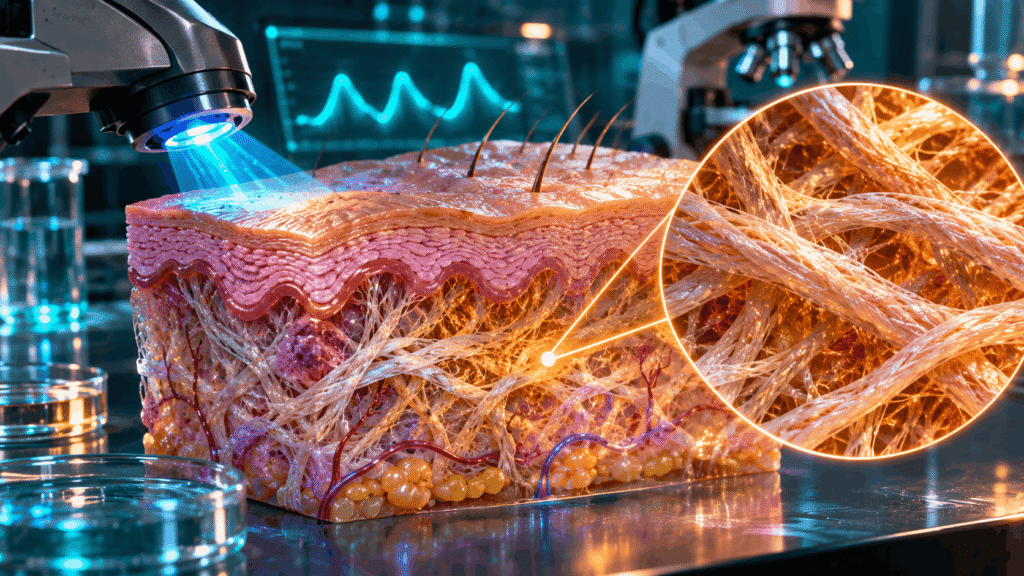
The Collagen Biomarker That Seemed to Prove Better Skin Health Until Researchers Examined the Measurements: Why Hydration Tests, Tissue Biology and Human Trials Can Tell Different Stories

The Collagen Biomarker That Seemed to Prove Better Skin Health Until Researchers Examined the Measurements: Why Hydration Tests, Tissue Biology and Human Trials Can Tell Different Stories

A skin-hydration instrument detects an improvement after participants receive a collagen supplement. The resulting graph shows a clear difference between the beginning and end of the study. It looks like convincing evidence that skin health has improved. But what, exactly, changed? Did the instrument measure a temporary difference in surface hydration, a lasting change in…

Read More
The Oxidative Stress Experiment That Looks Like a Breakthrough Until Scientists Check the Controls: Why Glowing Cells, Antioxidant Markers and Peptide Studies Cannot Prove Human Health Benefits

The Oxidative Stress Experiment That Looks Like a Breakthrough Until Scientists Check the Controls: Why Glowing Cells, Antioxidant Markers and Peptide Studies Cannot Prove Human Health Benefits

A group of cells glows brightly under a fluorescence microscope. Researchers introduce an experimental compound, repeat the measurement, and find that the fluorescent signal has fallen. The result may look persuasive: the compound appears to have reduced a marker associated with oxidative stress. But what exactly changed? Did the cells produce fewer reactive oxygen species?…

Read More
The Hair-Growth Peptide Study That Found Thicker Hair but Left a Bigger Question Unanswered: Why Follicle Counts, Photography, Genetics and Clinical Trial Design Change the Evidence

The Hair-Growth Peptide Study That Found Thicker Hair but Left a Bigger Question Unanswered: Why Follicle Counts, Photography, Genetics and Clinical Trial Design Change the Evidence

A small clinical trial reported something that sounds straightforward: more favorable hair measurements among men who received an experimental peptide than among those given a comparison lotion. Some hairs were thicker, fewer fell into the finest measured category, and independent photographic reviewers observed a difference in the appearance of hair loss. Those findings are worth…

Read More
The Laboratory Sample That Passed Every Initial Check but Failed the Reproducibility Test: Why Peptide Research Needs Better Controls for Sample Identity, Measurement Uncertainty and Independent Verification

The Laboratory Sample That Passed Every Initial Check but Failed the Reproducibility Test: Why Peptide Research Needs Better Controls for Sample Identity, Measurement Uncertainty and Independent Verification

A research sample can pass its initial laboratory checks and still produce findings that another scientist cannot reproduce. The certificate may show a high purity value. The reported molecular mass may appear correct. The original experiment may even produce a statistically impressive result. Yet when another laboratory attempts to investigate the same scientific question, the…

Read More
The Peptide Research Sample Passed Its Purity Test but Changed Before the Next Experiment: Why Temperature, Moisture, Chemical Stability, and Missing Laboratory Records Can Undermine Scientific Results

The Peptide Research Sample Passed Its Purity Test but Changed Before the Next Experiment: Why Temperature, Moisture, Chemical Stability, and Missing Laboratory Records Can Undermine Scientific Results

A laboratory can receive a research peptide accompanied by an impressive certificate of analysis, showing a high reported purity percentage and an apparently matching chemical identity. The first experiment may proceed without raising an obvious concern. Weeks later, however, a second analysis of material from the same lot produces a different result. The original documentation…

Read More

The Weight-Loss Peptide Evidence Gap: Why Tirzepatide Clinical Trials, FDA Approval and Research-Only Products Must Never Be Treated as the Same Thing

Tirzepatide has a substantial clinical research record. It has been evaluated in large randomized trials, reviewed by the U.S. Food and Drug Administration, and incorporated into approved prescription medicines for specific conditions. Those facts are established. But they are increasingly presented alongside another, very different category: laboratory materials marketed under the names of weight-loss peptides….

Read More

A Peptide Can Be 99% Pure and Still Leave the Biggest Safety Questions Unanswered: What Laboratory Tests Really Prove About Identity, Contamination and Biological Risk

A laboratory report describes a peptide sample as 99% pure. The number appears precise, reassuring and easy to remember. But what does it actually establish? It may describe the proportion of a detected chromatographic signal attributed to the main component. It does not, by itself, establish the sample’s molecular identity, the total amount of the…

Read More

Subscribe to Our Newsletter