
Table of Contents
Comparing Ozempic and Jardiance for Diabetes Management
Type 2 diabetes affects over 34 million Americans, making effective management crucial for preventing complications like heart disease and neuropathy. When exploring ozempic versus jardiance for diabetes, patients often seek options that balance blood sugar control with additional benefits such as weight loss and cardiovascular protection.
Ozempic, containing semaglutide, is a GLP-1 receptor agonist that mimics incretin hormones to boost insulin secretion and slow digestion, as noted by NCBI resources on diabetes pharmacology. In contrast, Jardiance, with empagliflozin, functions as an SGLT2 inhibitor, promoting glucose excretion through urine to lower blood levels. Both are FDA-approved primarily for type 2 diabetes, yet Ozempic aids weight management, while Jardiance supports heart failure treatment.
This comparison will delve into key differences, including administration methods, efficacy from clinical trials, and factors like ozempic vs jardiance uses and side effects, alongside semaglutide vs empagliflozin price considerations, to highlight diabetes drug alternatives.
Understanding these distinctions empowers those managing type 2 diabetes to discuss personalized options with healthcare providers, ensuring choices align with individual health goals and lifestyles.
Overview of Ozempic and Jardiance
Ozempic, a semaglutide injection overview highlights its role as a once-weekly subcutaneous GLP-1 receptor agonist developed by Novo Nordisk. Approved by the FDA in 2017, it mimics incretin hormones to enhance insulin secretion, suppress glucagon, and slow gastric emptying, effectively managing blood sugar levels in adults with type 2 diabetes. Beyond glycemic control, it reduces cardiovascular risks, as demonstrated in the SUSTAIN clinical trials which showed significant improvements in A1C and weight reduction.
Administration begins at 0.25 mg weekly for four weeks, then titrates to 0.5 mg, with potential increases to 1 mg or 2 mg based on response and tolerability. A key benefit is its appetite suppression, promoting modest weight loss without dietary overhaul, making it suitable for patients seeking integrated diabetes and obesity management.
Jardiance, an empagliflozin SGLT2 inhibitor profile, is a daily oral SGLT2 inhibitor from Boehringer Ingelheim, first approved in 2014. It works by blocking sodium-glucose cotransporter 2 in the kidneys, preventing glucose reabsorption and promoting its excretion through urine, much like a natural filtration system flushing excess sugar. Primarily indicated for type 2 diabetes, it also addresses heart failure and chronic kidney disease, offering cardiorenal protection.
When outlining ozempic vs jardiance uses and side effects, Jardiance starts at 10 mg once daily, titratable to 25 mg for enhanced efficacy. The EMPA-REG OUTCOME trial (PMC) validated its benefits, revealing a 38% reduction in cardiovascular death among high-risk patients.
For those evaluating ozempic versus jardiance for diabetes, a detailed ozempic vs jardiance comparison explores how their mechanisms, dosing, and outcomes differ in efficacy and safety profiles.
Feature Comparison of Ozempic and Jardiance
When evaluating ozempic versus jardiance for diabetes management, key differences emerge in efficacy and administration. Ozempic, a GLP-1 receptor agonist, and Jardiance, an SGLT2 inhibitor, target type 2 diabetes through distinct mechanisms, influencing A1C levels, weight, and heart health.
Diabetes medication efficacy varies by patient needs, with metrics like A1C reduction measuring blood sugar control over time. Weight loss percentages reflect body mass changes from treatment, while cardiovascular risk reduction, such as MACE (major adverse cardiovascular events), indicates protection against heart attacks and strokes. Administration methods affect daily convenience. Per NCBI, clinical trials like SUSTAIN for Ozempic and EMPA-REG for Jardiance provide these benchmarks, showing Ozempic’s edge in glycemic control and weight management for many users. These factors guide choices in GLP-1 vs SGLT2 benefits, especially for those prioritizing comprehensive outcomes beyond sugar regulation.
| Feature | Ozempic (Semaglutide) | Jardiance (Empagliflozin) |
|---|---|---|
| A1C Reduction | 1.5-2% average | 0.7-1% average |
| Weight Loss | 5-15% body weight | 2-4% body weight |
| CV Risk Reduction | 26% MACE reduction | 14% CV death reduction |
| Administration | Weekly injection | Daily oral tablet |
Ozempic vs Jardiance: Key Features Comparison
This table highlights Ozempic’s superior A1C lowering and weight loss, ideal for patients focused on obesity alongside diabetes. Jardiance excels in heart failure risk reduction, benefiting those with cardiac concerns, though its milder weight effects suit less urgent needs. Administration preferences matter; injections may deter some, while pills offer simplicity. Overall, neither dominates universally–selection depends on goals like weight loss or CV protection. For heart failure, Jardiance shows stronger evidence per NCBI data.
In terms of ozempic vs jardiance uses and side effects, Ozempic often causes gastrointestinal issues like nausea, while Jardiance risks urinary tract infections and dehydration. Both can combine for enhanced control, addressing multiple pathways without major interactions, though monitoring is key.
Determining which is better ozempic or jardiance hinges on individual profiles, such as weight goals favoring Ozempic or heart failure risks prioritizing Jardiance.
These insights underscore dosage variances–Ozempic weekly at 0.25-2 mg, Jardiance daily at 10-25 mg–and support informed decisions in diabetes care.
The comparative strengths of these medications reveal tailored paths for better health outcomes, emphasizing personalized consultation.
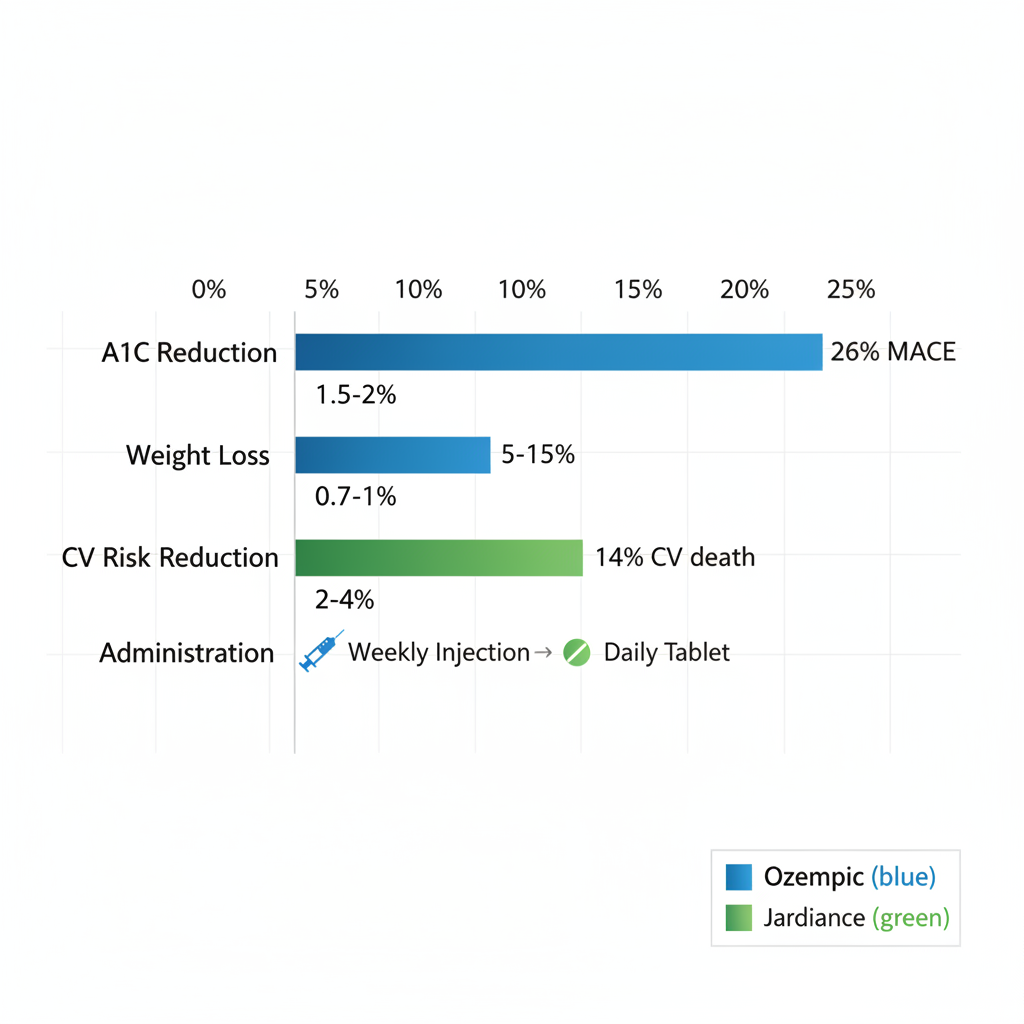
Key feature comparison chart for Ozempic versus Jardiance diabetes treatments
Visual aids like this chart reinforce the data, showing Ozempic’s broader bars in weight and A1C categories, while Jardiance holds steady in CV metrics. Such representations help visualize trade-offs, aiding discussions with providers on combining therapies or adjusting based on side effect tolerance.
Pricing Analysis of Ozempic Versus Jardiance
When evaluating ozempic versus jardiance for diabetes, understanding the diabetes drug costs becomes crucial for patients and providers in the US. Ozempic, a semaglutide-based GLP-1 agonist, carries a list price of approximately $900 per month for the pen injector. This positions it as a premium option in medication affordability comparisons, though patient assistance programs from Novo Nordisk can reduce costs for eligible uninsured individuals. For diabetes-specific coverage, Ozempic for Diabetes often qualifies under plans addressing cardiovascular risks, with discounts available via GoodRx coupons that lower prices to around $800 for Ozempic pens.
Jardiance, an empagliflozin SGLT2 inhibitor, offers a more accessible entry point at about $600 monthly without insurance. PMC studies indicate SGLT2 inhibitors like Jardiance may provide better long-term cost savings due to cardiovascular benefits, potentially offsetting initial expenses through reduced hospitalizations. Boehringer Ingelheim’s savings card caps out-of-pocket costs at $10 for qualifying patients, enhancing its value in semaglutide vs empagliflozin price discussions.
Insurance significantly impacts both drugs’ affordability in the US. Copays typically range from $25 to $100 with commercial plans, while Medicare averages $50 for Jardiance and $75 for Ozempic. Neither has generic versions yet, as patents expire around 2028-2030, but formulary preferences often favor one over the other based on rebates. Resources like manufacturer cards and pharmacy discount sites help navigate these costs, influencing overall choice in diabetes management.
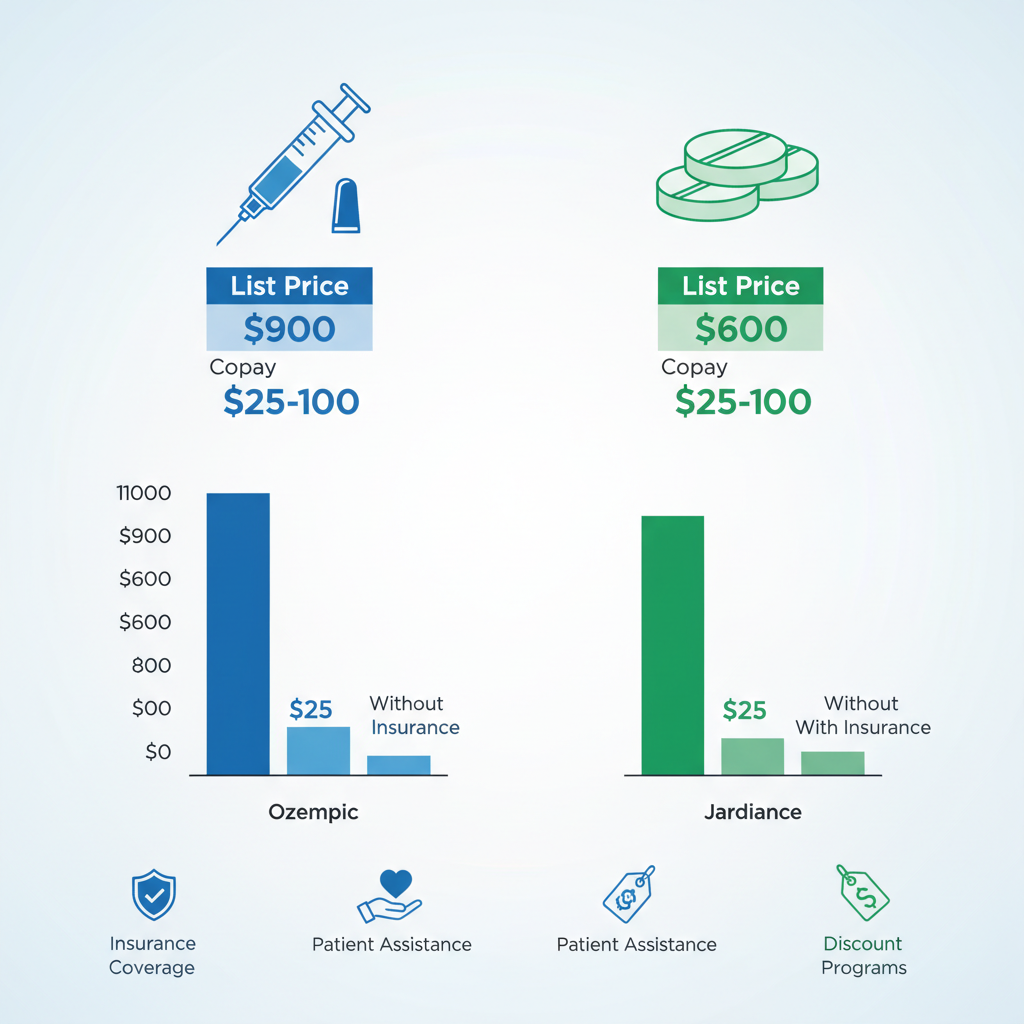
Ozempic versus Jardiance cost breakdown infographic for US consumers
Verdict on Choosing Ozempic or Jardiance
When evaluating ozempic versus jardiance for diabetes, the best diabetes med choice depends on individual health goals and tolerances. Ozempic, a GLP-1 receptor agonist, excels in glycemic control and significant weight loss, making it ideal for patients prioritizing fat reduction alongside blood sugar management. However, its injectable form may not suit everyone.
Consider Ozempic if:
- Weight loss is a primary concern, as it promotes substantial reductions beyond glucose control.
- You tolerate weekly injections and seek cardiovascular benefits, per NCBI guidelines on diabetes medications.
Dosage starts at 0.25 mg weekly, titrating to 1 mg or 2 mg based on response.
Jardiance, an SGLT2 inhibitor, offers oral convenience with strong protection for heart failure and kidney disease. It’s less effective for weight loss compared to Ozempic but shines in preventing cardiovascular events.
Opt for Jardiance when:
- Oral administration is preferred over injections.
- Comorbidities like heart failure or chronic kidney issues are present, as PMC data highlights its edge in HFpEF outcomes.
Typical dosing is 10 mg daily, adjustable to 25 mg.
For resistant cases, Jardiance and Ozempic Together can enhance efficacy, addressing ozempic vs jardiance uses and side effects by combining weight loss from Ozempic with Jardiance’s renal and cardiac safeguards. NCBI supports this combo therapy for personalized treatment options. Weigh costs–Ozempic around $900 monthly versus Jardiance at $500–against benefits. Always consult your doctor to tailor the decision framework to your profile, ensuring safe, effective management.
Making the Right Choice Between Ozempic and Jardiance
When considering ozempic versus jardiance for diabetes, the best option hinges on your unique health profile. Ozempic excels in weight management, while Jardiance shines in cardiovascular and kidney protection, as highlighted in our ozempic vs jardiance uses and side effects comparison. Factors like semaglutide vs empagliflozin price also play a role in accessibility for effective diabetes treatment options.
Individual responses vary, so personalized assessment is key. Exploring jardiance and ozempic together can enhance outcomes for some patients, offering a comprehensive medication selection guide.
Consult your healthcare provider to tailor a plan that fits your needs. As per PMC, customized therapy boosts long-term success. With informed choices, you can achieve sustainable wellness confidently.
