Table of Contents
Embracing Natural Approaches to Breast Symmetry
Understanding these fundamentals empowers you to embrace your body with confidence. Rather than worry, focus on self-acceptance while exploring simple adjustments. Breast asymmetry doesn’t define your beauty; it’s a natural part of diversity that many navigate successfully.
Natural breast balancing techniques offer gentle solutions, including how to fix uneven breasts with exercise for breast symmetry through targeted pectoral strengthening and improved posture. Proper bra selection provides essential support, enhancing comfort and appearance daily. These approaches, drawn from wellness insights, highlight exercise solutions that build strength over time.
This guide previews step-by-step routines starting with self-assessment to identify your unique needs. With consistency, you’ll see gradual improvements, fostering a positive body image and overall well-being.
Preparing Your Body for Symmetry Work
Before diving into routines that explore how to even out breasts naturally, proper preparation sets the foundation for safe and effective results. This involves self-assessment to understand your current state, consulting professionals when needed, and establishing baseline measurements. Remember, while many wonder can you fix uneven breasts naturally, success starts with realistic steps and awareness of potential asymmetrical breast size causes like hormonal shifts or posture habits.
Self-Assessment Methods
Begin by accurately measuring breast differences. Stand in front of a mirror with a soft measuring tape: note the fullest part around each breast at nipple level, and compare underbust measurements for volume disparity. For a simple diagram, envision lines marking these points—upper bust across the nipples and underbust below. This 60-word process helps quantify imbalances without guesswork, drawing from correction basics that emphasize precision for tracking progress.
Medical Consultation Guidance
If you notice sudden changes, pain, or lumps, consult a doctor immediately—these could signal underlying issues beyond natural fixes. Address questions like ‘When should I worry about having two different size breasts?’ by watching for red flags such as rapid asymmetry. Professionals can rule out medical concerns, ensuring your journey toward preparing for natural symmetry is safe. Avoid self-diagnosis; seek expert input for peace of mind.
Setting Realistic Expectations
Natural methods, including how to fix uneven breasts with exercise, offer gradual improvements through targeted workouts and lifestyle tweaks. Expect subtle shifts over months, not overnight miracles—patience is key in safe breast balancing prep. Embrace a holistic wellness view, combining exercises with nutrition for optimal body harmony.
Tracking Your Progress
Use tools like weekly photos in consistent lighting or a journal to log measurements and sensations. Apps for body tracking can also help visualize changes. This 50-word habit reinforces motivation and adjustments, promoting sustained effort in your natural symmetry pursuit.
Assess Your Asymmetry Level
To begin how to even out breasts naturally, start with a thorough self-assessment in a private space. This step empowers you to understand your unique body and plan effective non-surgical approaches, like uneven breast size solutions exercise. It addresses questions such as whether you can fix uneven breasts without implants by confirming that natural methods begin here.
Instructions for Measuring Breast Differences:
- Stand in front of a full-length mirror with good lighting, wearing a fitted bra or none for accuracy.
- Visually note position differences, such as one breast sitting higher, and observe shape variations.
- Use a soft measuring tape to measure each breast’s circumference at the fullest point and from nipple to shoulder for height comparison.
- Record measurements and take photos from multiple angles to track progress over time. These asymmetry evaluation methods help categorize your condition as mild (less than 1-inch difference) or significant (more than 1 inch), noting posture’s role in temporary imbalances.
This evaluation personalizes your path, linking observations to potential asymmetrical breast size causes like hormonal shifts or muscle imbalances, ensuring tailored strategies for how to fix uneven breasts with exercise in future steps. Understanding why asymmetry occurs helps refine your plan.
Tips to Avoid Common Errors:
- Measure at the same time of day to account for swelling.
- Relax shoulders to minimize posture distortions.
- Consult a professional if asymmetry seems linked to health issues, as self-checks from home routines provide a starting point but aren’t diagnostic.
Explore Common Causes of Asymmetry
Breast asymmetry is a common variation affecting up to 88% of women, often benign and not requiring intervention (Healthline). Understanding breast asymmetry causes helps identify personal factors in breast imbalance, paving the way for natural remedies. To pinpoint your asymmetrical breast size causes, reflect on your history: consider if differences emerged during puberty or intensified post-pregnancy.
Key contributors include:
- Genetics: Inherited traits can lead to uneven development from birth.
- Puberty: Hormonal surges during adolescence may cause one breast to grow faster.
- Pregnancy and breastfeeding: Temporary changes from milk production often resolve but can linger.
- Hormonal imbalances: Fluctuations, such as those from menstrual cycles or menopause, influence symmetry through hormonal effects on symmetry.
While most cases are normal, consult a doctor if sudden changes occur, signaling potential health issues.
Why it matters: Recognizing these triggers empowers informed choices, like exploring how to even out breasts naturally through lifestyle adjustments. This awareness directs efforts toward effective solutions.
Tips for tracking: Monitor monthly with photos or measurements; note correlations to cycles or weight shifts (Healthline). Now, target pectoral muscles influenced by these factors to learn how to fix uneven breasts with exercise.
Strengthen Pectoral Muscles Basics
Building strong pectoral muscles provides essential support for the breasts, helping to address asymmetrical breast size causes like weak chest muscles that contribute to uneven appearance over time. Pectoral strengthening for balance can naturally lift and firm the chest area, promoting better posture and symmetry without surgery.
To begin how to fix uneven breasts with exercise, start with these foundational moves. Perform 2-3 sets of 8-12 reps, three times a week.
- Push-Ups: Begin in plank position with hands shoulder-width apart. Lower your body until chest nearly touches the floor, keeping core tight and elbows at 45 degrees. Push back up. Avoid arching your back to prevent strain.
- Chest Presses: Lie on your back with knees bent, holding light dumbbells or water bottles above your chest. Lower weights to sides of chest, elbows bent, then press up straight. Keep movements controlled for safety.
These chest workouts for symmetry target the pectorals directly, enhancing muscle tone beneath the breasts for a natural lift.
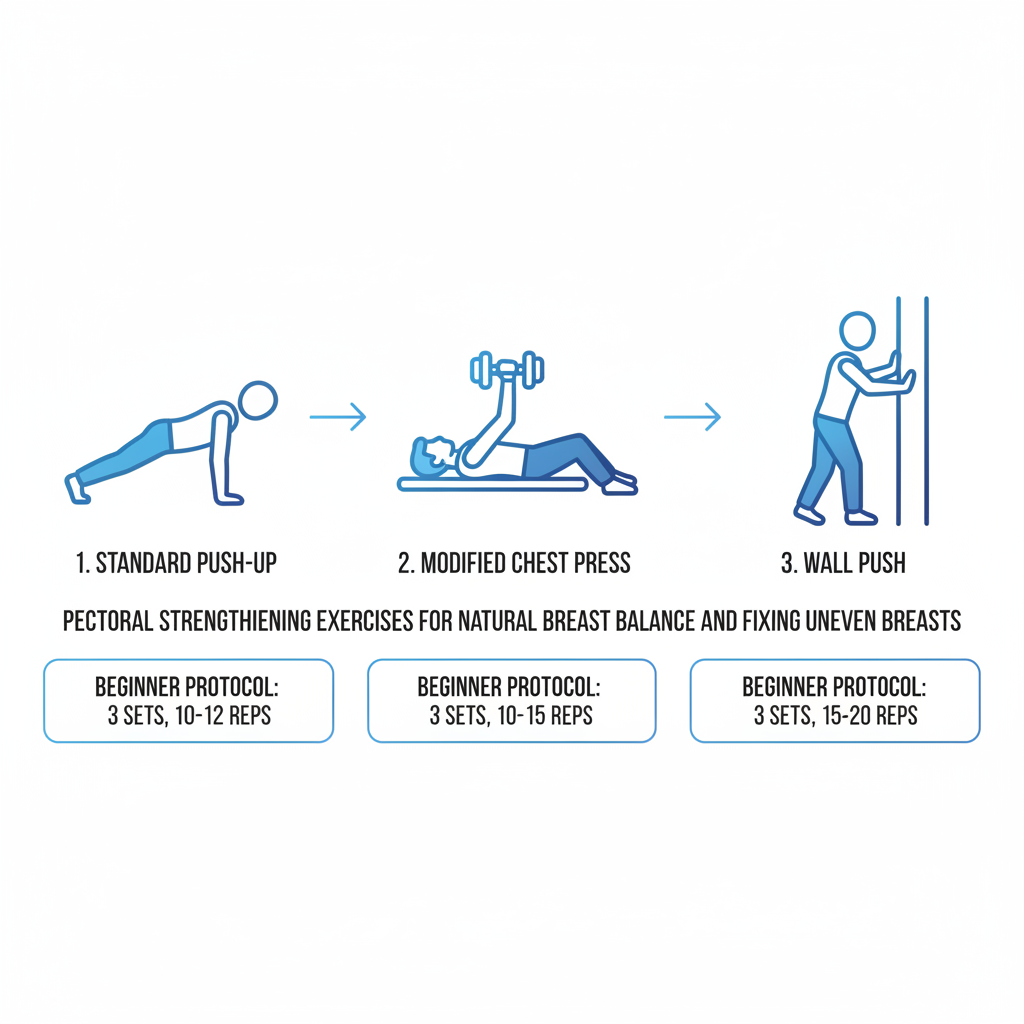
Basic exercises to strengthen pectoral muscles for natural breast balance
How to even out breasts naturally works by developing this underlying support, countering sagging and imbalance. For beginners, modify push-ups on knees or against a wall. Consult a professional if you have shoulder issues, and breathe steadily to stay motivated. Build on these basics for advanced routines ahead.
Advanced Upper Body Routines
Advancing your fitness journey involves upper body symmetry workouts that specifically address how to even out breasts naturally. Building on foundational exercises, incorporate targeted chest balancing exercises like dumbbell flies, bent-over rows, and side planks into a weekly routine. For more variations, see uneven chest exercises. Perform unilateral movements, focusing on the weaker side first: three sets of 10-12 reps per exercise, three times a week. For dumbbell flies, lie on a bench, extend arms overhead with slight bend, lower weights out to sides in a wide arc, then squeeze chest to return—visualize hugging a tree for proper form. Rows target back muscles for posture support, pulling weights toward hips while keeping elbows close. Planks engage core and shoulders; hold 20-30 seconds per side, rotating to emphasize obliques.
These routines matter because they promote balanced development, countering asymmetrical breast size causes like poor posture or muscle imbalances, leading to improved confidence and physical alignment over time.
For advanced tips on how to fix uneven breasts with exercise, progress by adding resistance bands if dumbbells are unavailable. Rest 48 hours between sessions to allow recovery, and track progress with photos or measurements. Consistency yields results; complement with alignment work in the next step for holistic symmetry.
Improve Posture for Better Balance
Poor posture, a common asymmetrical breast size cause, can exacerbate unevenness by pulling the body out of alignment and straining upper body muscles developed through prior exercises. Correcting it supports how to even out breasts naturally, enhancing the visual symmetry and lift from your workout routine. Incorporating posture exercises for breast alignment not only prevents sagging but also promotes sagging breasts prevention by maintaining structural integrity over time.
To build these habits, start with shoulder rolls: Gently roll your shoulders forward and backward 10 times each way, three sets daily, to release tension. Practice wall angels by standing against a wall, sliding arms up and down like making snow angels, holding each position for five seconds; do 15 reps. Integrate these into your how to fix uneven breasts with exercise sessions, performing them post-workout to reinforce natural symmetry through stance. Use a mirror for feedback to ensure even movement.
For lasting results, consistency matters—expect cumulative effects over 4-6 weeks of daily practice to notice improved balance. Track progress with weekly photos, celebrating small wins like straighter shoulders. This step complements upper body work; support posture gains with proper bra fit for sustained alignment.
Select Supportive Bras Effectively
Choosing the right bra can significantly aid in how to even out breasts naturally by providing balanced support and camouflage for asymmetry. Start with the fitting process: measure your band and cup sizes separately for each breast to account for differences, often opting for the larger cup and using inserts for the smaller side. Professional fittings at specialty stores ensure accuracy, especially as your body changes during the natural evening process related to asymmetrical breast size causes.
This selection matters because supportive undergarments for symmetry enhance comfort and posture, boosting confidence in daily activities. Well-fitted bras minimize visible discrepancies, promoting a positive body image without invasive measures.
For tips, prioritize padded bras for breast balance, adjustable strap styles, and sports bras that tie into how to fix uneven breasts with exercise for active comfort. Consider minimizer or balconette types; always choose breathable fabrics to sustain with ongoing habits.
Maintain and Track Your Progress
To sustain the benefits of how to even out breasts naturally, commit to monthly check-ins where you assess your progress visually and through measurements. Adjust your routine based on improvements, incorporating variations from how to fix uneven breasts with exercise to target specific areas. Track changes related to asymmetrical breast size causes, such as hormonal shifts, by noting them in a journal. Realistic timelines suggest noticeable symmetry in 3-6 months with consistent effort, reinforcing that you can fix uneven breasts without implants through dedicated natural methods.
Maintaining these habits supports long-term breast health and overall wellness, preventing regression and promoting sustaining natural breast balance. Progress tracking for symmetry builds confidence and ensures lasting results from your fitness journey.
Stay motivated by celebrating small wins, like improved posture or firmer contours, and use journal prompts such as ‘What felt easier this month?’ Set reminders for routines and reward yourself with relaxing self-care. If challenges arise, address setbacks next to refine your approach.
Overcoming Common Challenges in Natural Balancing
Pursuing how to even out breasts naturally can be empowering, yet it’s normal to encounter hurdles along the way. Many women experience plateaus where progress stalls after initial improvements, discomfort from targeted exercises, or minimal visible changes despite consistency. Hormonal fluctuations, often tied to menstrual cycles or stress, can exacerbate asymmetrical breast size causes, making one side seem more prominent temporarily. These challenges might raise doubts, like wondering when to worry about having two different size breasts or if your routine needs an overhaul. The good news is that with empathy and adjustments, troubleshooting breast symmetry becomes manageable, keeping you on track toward balanced confidence.
To address these obstacles, consider these targeted solutions in a Q&A format:
- What if exercises cause discomfort? For how to fix uneven breasts with exercise, start with modified versions like wall push-ups instead of full planks to ease strain on chest muscles. Warm up with light stretches and use a supportive sports bra to minimize pain, building tolerance gradually.
- Hitting a plateau with no progress? Reassess your routine by varying reps or incorporating rest days, ensuring you’re fueling with nutrient-rich foods. Patience is key; natural changes take time, often 4-6 weeks to notice shifts.
- Dealing with hormonal ups and downs? Track your cycle and adjust intensity during high-hormone phases. Understanding asymmetrical breast size causes like estrogen variations helps you stay consistent without frustration.
- When should I seek professional advice? If asymmetry persists beyond six months or includes lumps or pain, consult a doctor to rule out underlying issues. For ongoing support, explore uneven breast size correction through gentle massage techniques as a natural aid.
- Need extra natural fixes for exercise hurdles? Try self-massage with natural oils post-workout to boost circulation and reduce soreness, complementing your symmetry efforts.
Prevent these setbacks by listening to your body, maintaining a balanced diet, and tracking progress weekly rather than daily. Consistency paired with flexibility prevents burnout. With these tools, success awaits in achieving the natural balance you seek.
Achieving and Maintaining Breast Harmony Naturally
Achieving breast symmetry naturally involves a holistic approach that combines targeted exercises, supportive garments, and consistent monitoring to address common concerns like asymmetrical breast size causes. By integrating these strategies, women can work toward lasting balance without invasive procedures. Methods such as how to even out breasts naturally emphasize the synergy of daily habits that promote overall chest health and posture.
Key takeaways include the power of how to fix uneven breasts with exercise, which strengthens pectoral muscles for better lift and alignment, alongside choosing well-fitted bras to prevent strain. This recap underscores long-term natural breast care, drawing from expert tips on prevention like those from WebMD, which highlight maintaining skin elasticity through hydration and avoiding excessive sun exposure for sustained wellness.
Embrace body positivity on this journey, recognizing that minor asymmetries are normal and often improve with sustained symmetry practices. Your body deserves nurturing that fosters confidence and comfort.
To maintain these gains:
- Incorporate weekly strength routines focusing on upper body.
- Schedule regular self-checks and professional fittings.
- Stay hydrated and protect skin from environmental damage.
Start your path to harmony today—visit WellnessHQ.net for more wellness guides and resources to support your empowered lifestyle.
Resources
- Improve Breast Symmetry with Targeted Pectoral Exercises
- Discover Natural Fixes for Uneven Breasts Effectively
- Explore Correction Options for Breast Asymmetry Issues
- Fix Uneven Breasts Through Strengthening Chest Workouts
- Balance Uneven Breasts Using Home Pectoral Routines
- Strengthen Weaker Chest Side for Better Symmetry
- Understand and Monitor Breast Asymmetry Causes Carefully
- Prevent Sagging Breasts with Exercises and Lifestyle Tips
- Firm Breasts Through Pectoral Muscle Building Exercises