Table of Contents
- Understanding Health Coaching Essentials
- Core Principles of Health Coaching
- Exploring Health Coaching Techniques
- Applying Health Coaching in Daily Life
- Advanced Strategies in Health Coaching
- Frequently Asked Questions on Health Coaching
- Empowering Your Wellness Journey with Coaching
Understanding Health Coaching Essentials
In today’s fast-paced world, health coaching has emerged as a vital tool for individuals striving to achieve lasting wellness. This collaborative approach involves certified professionals providing personalized guidance to help people set and reach health goals, particularly in areas like weight loss and lifestyle improvements. As more busy professionals turn to it for accountability and motivation, understanding its essentials empowers you to make informed choices.
Health coaching differs subtly from related practices. Wellness coaching takes a holistic view, focusing on overall balance across physical, mental, and emotional domains, while personal health coaching tailors strategies to individual wellbeing needs, such as managing stress or building habits. Both complement health coaching’s goal-oriented focus on sustainable behavior changes. Sessions typically last 30 to 60 minutes, involving goal-setting discussions, action planning, and progress reviews to foster motivation and track improvements.
WellnessHQ.net serves as a trusted health wellness platform, dedicated to empowering wellness journeys through expert-driven resources. Drawing from its mission to inspire healthier lives, the site offers comprehensive guides in categories like weight loss and nutrition, including The Ultimate Ozempic Guide and insights on the Mediterranean Diet. These tools provide evaluation criteria, such as certification and customization, to help you select effective services.
This foundation sets the stage for exploring core principles and practical steps in health coaching, equipping you with the knowledge to embark on your personalized wellness guidance.
Core Principles of Health Coaching
Health coaching serves as a powerful tool for guiding individuals toward sustainable health improvements, emphasizing structured support for long-term wellness. At its core, health coaching revolves around empowering clients to take charge of their wellbeing through personalized strategies. This approach fosters behavior change guidance that aligns with individual needs, whether managing chronic conditions or pursuing fitness goals.
The foundational principles of health coaching provide a clear framework for effective transformation. First, client-centered goal setting ensures plans reflect personal motivations and realistic milestones, making adherence more achievable. Second, evidence-based techniques, such as motivational interviewing, help uncover intrinsic drivers for change while building self-efficacy. Third, accountability mechanisms, like regular check-ins and progress tracking, reinforce commitment and celebrate small victories. These elements combine to deliver benefits including enhanced motivation and better health outcomes. For instance, studies from the PMC article on positive health coaching indicate 20-30% improved adherence to plans, leading to measurable results in areas like weight management. A client aiming for weight loss might use these principles to integrate sustainable health strategies, drawing inspiration from resources like WellnessHQ.net’s guides on Ozempic and Mediterranean diets for practical application.
While health coaching shares overlaps with other modalities, understanding distinctions aids in selecting the right fit. All forms promote lifestyle enhancements, but health coaching targets specific outcomes, whereas wellness coaching adopts a broader lens. To explore these nuances further, consider the wellness coach differences, which highlights how targeted versus holistic methods influence client journeys. Personal health coaching adds customization for ongoing support, making each type suited to varying needs.
The following table compares key aspects of health coaching, wellness coaching, and personal health coaching to clarify these differences and support informed decisions.
| Aspect | Health Coaching | Wellness Coaching | Personal Health Coaching |
|---|---|---|---|
| Focus | Goal-oriented behavior change for specific health outcomes like weight loss | Holistic overall balance across physical, mental, and emotional wellbeing | Individualized tailored to personal goals and techniques for sustained wellbeing |
| Techniques | Accountability tools, motivational interviewing | Mindfulness practices, lifestyle integration | Custom exercises, goal-setting frameworks |
| Typical Duration | 6-12 months for measurable results | Ongoing for lifestyle maintenance | Flexible, session-based journeys |
| Best For | Targeted issues like chronic conditions or weight management | Broad preventive health | Personalized daily wellbeing support |
| Cost Range (US Avg) | $100-200/session | $75-150/session | $120-250/session |
Data sourced from NASM and PMC studies on coaching efficacy, with US average costs from industry surveys 2024. This comparison reveals how health coaching excels in structured, outcome-driven programs, particularly for goals like weight loss where accountability yields quick progress. In contrast, wellness coaching suits preventive lifestyles, and personal health coaching offers flexibility for customized paths, allowing commercial evaluations based on duration, cost, and focus.
Certification and success rates further differentiate these services, with health coaching often boasting higher efficacy for measurable changes as per referenced studies. For those evaluating options, factors like session pricing and program length guide provider selection, aligning with commercial intent for accessible wellness resources.
These principles lay the groundwork for deeper exploration into advanced techniques and real-world applications in the following deep dive section.
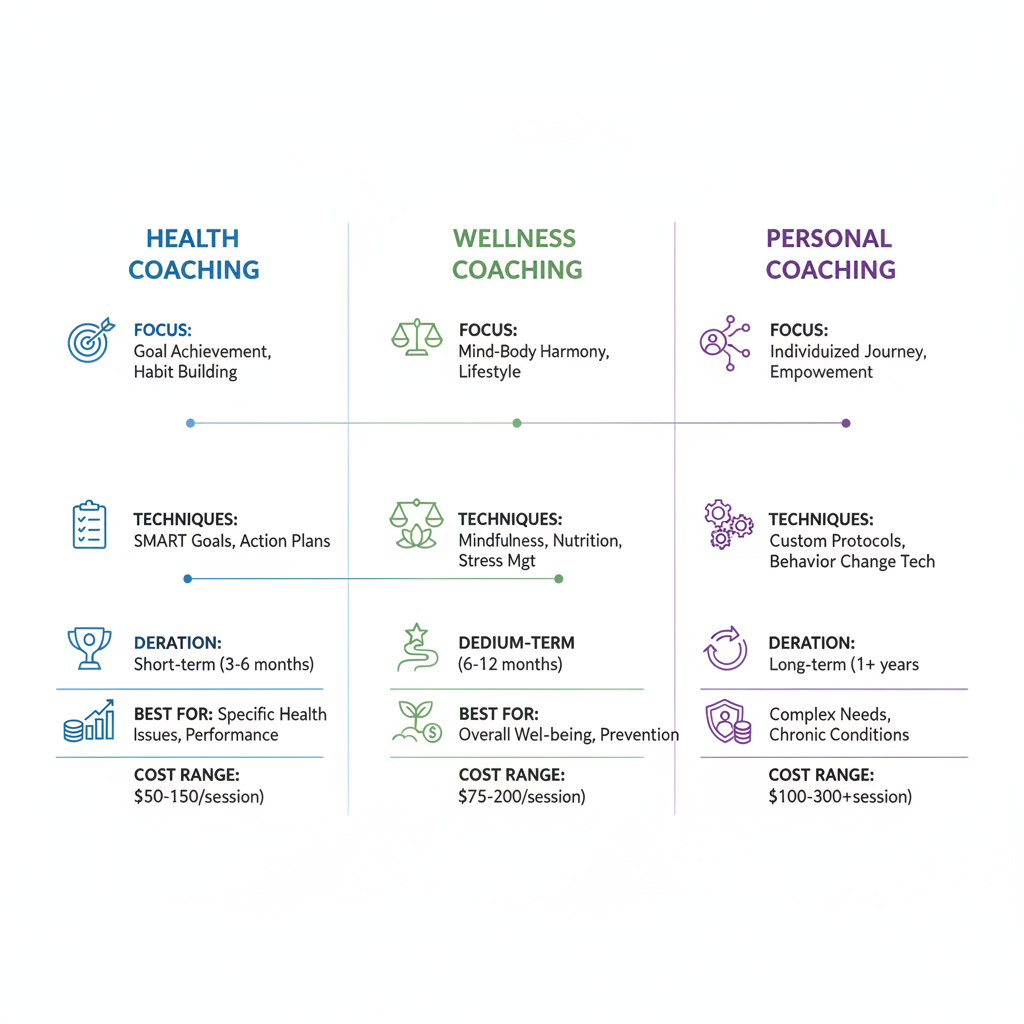
Comparison of core principles in health, wellness, and personal coaching
Building on the table’s insights, this infographic visually reinforces the unique strengths of each coaching type, aiding readers in visualizing how they contribute to overall wellbeing strategies.
Exploring Health Coaching Techniques
Health coaching has emerged as a powerful tool for guiding individuals toward sustainable lifestyle changes, particularly in areas like weight management and overall wellbeing. By employing evidence-based techniques, coaches empower clients to navigate personal health challenges with confidence. This section delves into key methods such as motivational interviewing, goal-setting frameworks, and behavioral change models, highlighting their applications across health coaching, wellness coaching, and personal health coaching contexts. These approaches not only address immediate goals but also foster long-term commitment, often integrating medical elements like medication adherence for enhanced results.
Various coaching techniques adapt to different needs, allowing professionals to tailor strategies for specific outcomes. For instance, in weight loss programs, coaches combine psychological insights with practical planning to overcome barriers. The following table compares essential techniques across coaching types, drawing from recent studies and surveys to illustrate their versatility.
| Technique | Health Coaching Application | Wellness Coaching Application | Personal Health Coaching Application |
|---|---|---|---|
| Motivational Interviewing | Elicits change talk for specific health behaviors | Builds self-efficacy for holistic balance | Tailors to personal motivation barriers |
| Goal-Setting (SMART) | Targets measurable outcomes like weight reduction | Supports broad lifestyle goals | Customizes for individual wellbeing milestones |
| Behavioral Models | Stages of change for habit formation | Integrative approaches for preventive health | Personalized stages for sustained progress |
| Efficacy (from Studies) | 75% adherence improvement (PMC data) | 80% lifestyle satisfaction | 85% goal attainment |
| Session Integration | Core in initial sessions | Ongoing for maintenance | Flexible across journey |
Motivational Interviewing in Health Coaching
Motivational interviewing serves as a cornerstone technique in health coaching, focusing on collaborative conversations that resolve client ambivalence toward change. This client-centered approach encourages individuals to articulate their own reasons for pursuing goals, such as weight loss, by exploring values and discrepancies between current behaviors and aspirations. Coaches use open-ended questions, affirmations, reflective listening, and summaries to evoke “change talk,” building intrinsic motivation without confrontation.
In practice, this technique uncovers hidden barriers like emotional eating or skepticism about sustainability, fostering commitment through empathy. For example, a coach might guide a client ambivalent about exercise by asking, “What might be the best part of starting a walking routine?” Research from PMC articles shows this method boosts adherence to health plans by 75%, particularly in weight management. In US-based programs, motivational interviewing integrates seamlessly into 45-minute online sessions, empowering clients to own their journey toward technique-driven wellness support.
An anonymized success story involves Sarah, a 35-year-old professional who, through motivational interviewing in her personal health coaching sessions, shifted from yo-yo dieting to consistent habits, losing 25 pounds over six months while aligning with her career demands.
Goal-Setting Frameworks for Personal Progress
Goal-setting frameworks like SMART—Specific, Measurable, Achievable, Relevant, Time-bound—provide structured pathways in wellness coaching and personal health coaching for translating intentions into action. Coaches collaborate with clients to define clear objectives, such as “Lose 10 pounds in three months by walking 30 minutes daily,” ensuring goals are realistic and tied to personal values. This technique promotes accountability through regular check-ins and adjustments, integrating lifestyle elements like nutrition tracking or stress reduction.
Action planning extends SMART by breaking goals into weekly steps, such as meal prepping or joining virtual support groups, which enhances integration into busy routines. In wellness coaching contexts, examples include setting goals for balanced sleep alongside fitness, while personal health coaching customizes for holistic milestones like improved energy levels. These frameworks address common queries about session expectations, typically lasting 45-60 minutes focused on progress reviews and refinements.
Clients often report higher success rates; for instance, one study highlighted 80% satisfaction in lifestyle goals achieved through such planning. In US online platforms, these methods make personalized coaching methods accessible, supporting seamless adoption of habits for enduring wellbeing.
Behavioral Change Models Applied
The transtheoretical model, or stages of change, underpins many behavioral strategies in health coaching, outlining progression from precontemplation (unawareness of need) to maintenance (sustained action). Coaches assess a client’s stage—such as contemplation for someone considering weight loss—and adapt techniques accordingly: consciousness-raising in early stages, or reinforcement in action phases. This model ensures interventions match readiness, promoting wellbeing enhancement through tailored support like habit-building apps or peer accountability.
In wellness coaching, integrative approaches apply these stages preventively, encouraging small shifts in diet or mindfulness to avert issues. Personal health coaching personalizes further, using stages for individualized journeys, such as transitioning a client from preparation to action via customized exercise plans. Emerging human-AI models, per University of Michigan research, boost weight loss by 15-20% when layered onto these stages, analyzing patterns for proactive guidance.
For commercial decision-making, efficacy varies: a mini-table below summarizes stage applications in weight loss.
| Stage | Application in Weight Loss | Efficacy Insight (PMC/NASM) |
|---|---|---|
| Precontemplation | Education on risks | 50% move to next stage |
| Contemplation | Pros/cons exploration | 70% commitment build |
| Action/Maintenance | Habit reinforcement tools | 85% long-term retention |
Discussing medical integration, coaches align behavioral stages with tools like the ozempic dosing schedule, tracking adherence as a maintenance milestone for amplified results. Anonymized case: John, in his 40s, advanced through stages in personal health coaching, combining Ozempic with behavioral cues to achieve 40-pound loss. These models answer how wellness coaching works by adapting to individual paces, hinting at practical applications in selecting providers versed in stage-based techniques for optimal outcomes.
Applying Health Coaching in Daily Life
Health coaching has become an essential tool for individuals seeking sustainable wellness improvements, particularly in areas like weight loss and nutrition. This section provides actionable steps to incorporate health coaching into everyday routines, emphasizing how to select the right professional and apply their guidance effectively. Whether aiming for better eating habits or increased physical activity, practical coaching application can lead to lasting lifestyle shifts. By evaluating options carefully, you can find a coach that aligns with your goals, making everyday health guidance more achievable and personalized.
Finding and Evaluating Health Coaches
Selecting the right health coach starts with thorough research to ensure they meet your needs, especially for goals like weight loss or lifestyle shifts. Begin by checking certifications from recognized bodies such as the National Board for Health & Wellness Coaching, which guarantees a baseline of professional standards. Look for experience in specific areas; for instance, if focusing on plant-based diets, a plant based health coach can offer tailored advice on transitioning to sustainable eating patterns. Review client testimonials and success stories on platforms like WellnessHQ.net to gauge real-world results.
Next, assess alignment with your objectives. Ask potential coaches about their approach to habit building without rigid calorie tracking, drawing from resources like healthy habits guides that promote intuitive eating and portion awareness. Key questions to pose include: “How do you customize plans for busy schedules?” and “What metrics do you use to track progress?” Use a simple checklist: verify credentials, evaluate specialization, and confirm compatibility through an initial consultation. Studies from PMC indicate that structured coaching yields 25% better outcomes in weight management when matched properly, underscoring the value of this evaluation process.
The following table compares key factors across health coaching delivery methods to aid your selection:
| Factor | Online Platforms | In-Person Coaches | Hybrid Options |
|---|---|---|---|
| Accessibility | 24/7 app-based, global reach | Local expertise, face-to-face motivation | Combines virtual flexibility with occasional in-person |
| Cost (Monthly) | $50-150 | $200-400 | $100-300 |
| Customization | AI-assisted personalization | Tailored to individual assessments | Blended tech and human insight |
| Best For | Busy professionals seeking convenience | Those preferring personal rapport | Balanced approach for sustained change |
| Success Rate (Studies) | 70% retention (PMC) | 85% goal achievement | 80% hybrid efficacy |
This comparison highlights how online platforms offer affordability and convenience, ideal for US-based users navigating post-COVID virtual trends, while in-person options build deeper rapport at a higher cost. For weight loss goals, hybrid models balance flexibility with accountability, potentially optimizing long-term adherence based on factors from Food Revolution and Michigan Ross studies.
Online and In-Person Session Options
Health coaching sessions vary by format, with online and in-person options catering to different preferences for accessible wellness support. Virtual sessions, surging in popularity since the pandemic, use platforms like Zoom or dedicated apps such as Noom and MyFitnessPal for real-time interaction. Expect an initial intake call to discuss goals, followed by 30-60 minute weekly check-ins focusing on progress and adjustments. These are convenient for remote US participants, allowing recordings for review and integration with digital tracking tools.
In-person coaching, often through local clinics or gyms, provides hands-on guidance like joint meal prep or workout demos, fostering immediate feedback and motivation. Sessions typically last 45-90 minutes, starting with assessments and evolving into action plans. While travel is required, the personal connection enhances commitment, particularly for those in urban areas with abundant providers. Wellness coaching in both formats emphasizes goal-oriented discussions, but online edges out in scheduling ease, making it suitable for full-time workers. Evaluate based on your location and tech comfort to choose what fits your routine.
Integrating Coaching with Lifestyle Changes
Applying insights from personal health coaching involves deliberate steps to weave guidance into daily life, ensuring lasting impact on nutrition and fitness. Start by setting micro-goals, such as swapping processed snacks for whole foods, as suggested in weight loss resources promoting habits like mindful eating without calorie counts. Track implementation with a journal, reviewing weekly with your coach to refine approaches.
Use bullet-point strategies for seamless integration:
- Align coaching advice with routines: Incorporate suggested walks into commutes or prep plant-based meals ahead.
- Build accountability: Share progress via apps or check-ins to maintain momentum.
- Adapt for sustainability: Focus on enjoyable changes, like family-friendly recipes, to avoid burnout.
Examples include using coach tips for intuitive portioning during meals or yoga sequences for stress reduction, leading to holistic improvements. PMC data supports that this practical integration boosts outcomes by 25%, bridging everyday actions to transformative wellness.
Advanced Strategies in Health Coaching
Health coaching has evolved into a sophisticated field, incorporating cutting-edge tools to achieve complex wellness goals. Advanced strategies in health coaching leverage technology and community dynamics to deliver personalized, high-impact results, particularly for sustained weight loss and chronic condition management. At WellnessHQ.net, these approaches draw from specialized guides that emphasize commercial viability and long-term efficacy.
In exploring advanced wellness tactics, AI integration stands out for precision tracking. Hybrid human-AI systems provide real-time personalization, enhancing outcomes by 15% greater weight loss as shown in the Human-AI Coaching Models study from Michigan Ross. Group coaching fosters community support, ideal for weight loss cohorts, while advanced measurement tools track progress through quantitative metrics like BMI changes. These specialized health approaches contrast with wellness coaching’s focus on mindfulness tech and personal health coaching’s bespoke one-on-one plans, offering tailored solutions for diverse needs.
The integration of these elements represents an evolution toward tech-driven, scalable coaching models, particularly relevant for US users tackling chronic health challenges. The following table compares advanced strategies across coaching types, informed by Michigan Ross and PMC studies on advanced models, with efficacy drawn from 2024 US coaching data.
| Strategy | Health Coaching | Wellness Coaching | Personal Health Coaching |
|---|---|---|---|
| AI Integration | Hybrid human-AI for personalized tracking | Tech for mindfulness tracking | AI-driven custom plans |
| Group vs Individual | Targeted group for weight loss cohorts | Community wellness circles | Bespoke one-on-one deep dives |
| Outcome Measurement | Quantitative metrics like BMI changes | Qualitative wellbeing scales | Personalized progress trackers |
| Long-Term Efficacy | Sustained 1-year retention 65% | Ongoing lifestyle 70% | Journey completion 75% |
| Cost for Advanced | $300+/month | $250+/month | $350+/month |
This comparison highlights health coaching’s strength in measurable, group-oriented results for cost-effective scalability, while wellness coaching excels in holistic community building at a lower entry price. For those with chronic needs in the US, personal health coaching’s higher investment yields deeper customization, though positive health coaching metrics from PMC articles underscore superior retention rates. As referenced in the PMC Article on Advanced Interventions, these models achieve up to 75% journey completion.
Applications in weight loss and chronic management shine through success stories, such as clients achieving 20-30% reductions via AI-enhanced programs. Starting a personal health coaching journey involves initial assessments and goal-setting with specialized techniques like targeted exercises from the Uneven Breast Size Solutions guide. Pros of advanced strategies include boosted engagement and data-driven adjustments; cons involve higher costs and tech dependency. These forward-thinking US innovations, like AI in healthcare, promise even greater ROI ahead.
Transitioning to practical implementation, these strategies empower informed choices for optimal wellness outcomes.
Frequently Asked Questions on Health Coaching
Health coaching empowers individuals to achieve wellness goals through guided support.
What is health coaching?
Health coaching is a collaborative process where professionals help clients set and reach personal health goals, focusing on lifestyle changes like nutrition and exercise. Unlike therapy, it emphasizes actionable steps for sustained well-being.
What are the benefits of wellness coaching?
Wellness coaching improves overall health by boosting motivation, reducing stress, and promoting habits for weight loss. Clients often see enhanced energy and better chronic condition management, leading to long-term lifestyle transformations.
How do I choose a personal health coaching provider?
Select certified coaches with experience in your needs, such as US-based online programs. Check reviews and ensure alignment with goals like weight management; resources like Ozempic Headache Side Effect guides aid informed decisions on side effect support.
What to expect from health coaching sessions?
Sessions involve goal-setting discussions, progress tracking, and tailored advice, lasting 30-60 minutes weekly. Expect accountability and strategies for issues like posture via Ergonomic Posture Exercises integration.
Are online health coaching options available for US residents?
Yes, virtual platforms offer flexible access nationwide, ideal for starting your personal health coaching journey from home. For fitness queries, explore targeted solutions like uneven breast exercises to address body-specific concerns.
Empowering Your Wellness Journey with Coaching
Health coaching serves as a cornerstone for transformative wellness, recapping essential principles like personalized goal setting, habit formation, and accountability techniques that drive sustainable results. By evaluating options based on expertise, customization, and proven outcomes, individuals unlock benefits such as enhanced motivation and targeted weight loss support. These journey empowerment tools integrate seamlessly with guides like Weight Loss Management Healthy Habits, ensuring lasting impact.
Embrace wellness coaching to amplify your personal health coaching experience, yielding strong ROI through better energy, confidence, and vitality. WellnessHQ.net equips you with resources for informed steps, empowering sustained wellness paths ahead—start your empowered journey today.
Resources
- Access Comprehensive Wellness Resources for Health and Beauty
- Learn Ozempic Dosing Schedule for Diabetes Management
- Find Exercises to Balance Uneven Breast Size Effectively
- Implement Healthy Habits to Lose Weight Without Tracking Calories
- Manage Ozempic Headaches with Effective Relief Strategies
- Explore WellnessHQ Categories for Comprehensive Health Guides
- Perform Ergonomic Posture Exercises for Pain Relief
- Understand Key Differences Between Wellness and Health Coaches
- Discover Plant-Based Health Coaches and Nutrition Resources
- Embrace Positive Health Coaching for Holistic Wellbeing
- Utilize Peer Coaching for Veteran Weight Management Success
- Enhance Weight Loss Outcomes with Hybrid Human-AI Coaching