
Table of Contents
Comparing Ozempic and Jardiance: Which Medication Suits Your Needs?
When deciding which is better ozempic or jardiance, patients with type 2 diabetes often weigh options for blood sugar control, weight management, and heart health. Ozempic and Jardiance represent two leading classes of medications, each offering unique benefits tailored to individual needs. This comparison explores their mechanisms, efficacy, and suitability to guide informed decisions.
Ozempic, a GLP-1 receptor agonist, mimics incretin hormones to stimulate insulin release, slow gastric emptying, and curb appetite, promoting significant weight loss. In contrast, Jardiance, an SGLT2 inhibitor, blocks glucose reabsorption in the kidneys, leading to its excretion in urine and modest weight reduction alongside cardiovascular protection. Both are FDA-approved for type 2 diabetes; Ozempic also carries indications for cardiovascular risk reduction, while Jardiance treats heart failure and chronic kidney disease. Off-label, they support weight loss, with Ozempic showing greater potential in trials.
Clinical data highlights their strengths: GLP-1 agonists like Ozempic reduce HbA1c by up to 1.5%, while SGLT2 inhibitors like Jardiance achieve about 0.7-1.0% reductions, per comparative studies (e.g., relative risk benefits in diabetes management). For jardiance vs ozempic for weight loss, Ozempic edges out with more pronounced effects, though side effects vary–consider ozempic vs farxiga side effects for similar profiles in gastrointestinal issues versus urinary risks. Comparing Ozempic and Jardiance effectiveness depends on goals: Ozempic for appetite control, Jardiance for heart benefits.
This article previews overviews, key features, pricing, and a final verdict to help you choose wisely. Always consult your physician for personalized advice.
Overview of Ozempic and Jardiance
Ozempic, a GLP-1 receptor agonist developed by Novo Nordisk, targets type 2 diabetes management by mimicking incretin hormones. It slows gastric emptying to enhance insulin secretion and suppress appetite, leading to significant A1C reductions of up to 1.8% in clinical trials. Administered as a weekly subcutaneous injection starting at 0.25 mg and titrating to 2 mg, Ozempic also aids off-label weight loss, with patients averaging 5-15% body weight reduction. Approved by the FDA for lowering cardiovascular risks in diabetics with heart disease, it offers dual benefits for metabolic health. Key facts include:
- Primary indication: Glycemic control in type 2 diabetes
- Unique advantage: Proven heart protection via SUSTAIN trials
- Availability: Prescription-only, widely accessible in the US
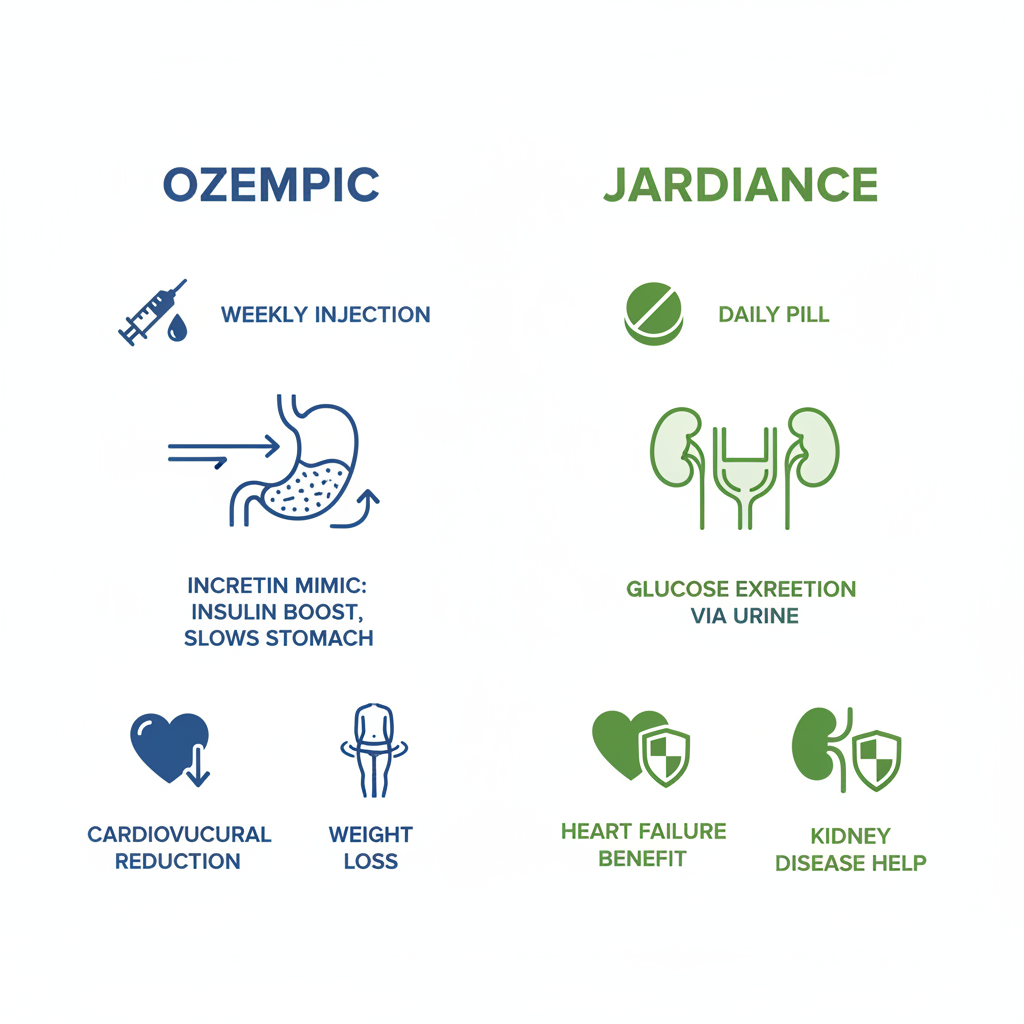
Side-by-side overview of Ozempic and Jardiance drug profiles
This visual highlights how Ozempic’s injectable format contrasts with oral options, influencing patient preferences for long-term adherence.
Jardiance, an SGLT2 inhibitor from Boehringer Ingelheim and Eli Lilly, promotes urinary glucose excretion to lower blood sugar independently of insulin. Taken as a daily oral tablet at 10-25 mg, it reduces A1C by 0.7-1% and supports weight loss of 2-3% through caloric loss in urine. Endorsed for heart failure and chronic kidney disease progression reduction, Jardiance excels in cardiorenal protection, as shown in EMPA-REG OUTCOME trials. Off-label, it attracts non-diabetics for jardiance vs ozempic for weight loss considerations, though side effects like dehydration mirror those in ozempic vs farxiga side effects for SGLT2 class drugs. Key facts include:
- Primary indication: Type 2 diabetes with CV or renal benefits
- Unique advantage: Kidney disease slowing per EMPEROR trials
- Availability: Oral prescription, covered by most US insurances
To determine which is better ozempic or jardiance for individual needs, evaluate profiles against lifestyle factors; consult healthcare providers before starting, as self-prescribing risks complications. For a full comparison, see Ozempic vs Jardiance for Diabetes.
Key Features and Differences Between Ozempic and Jardiance
When evaluating which is better ozempic or jardiance, patients often weigh factors like weight loss potential, blood sugar control, and cardiovascular protection. Ozempic, a GLP-1 receptor agonist, excels in appetite suppression, while Jardiance, an SGLT2 inhibitor, promotes glucose excretion through urine. This comparison highlights their unique mechanisms to inform choices for diabetes management and related health goals.
The following table provides a clear overview of core features, drawing from clinical trial data and real-world insights. Criteria include weight loss efficacy, A1C reduction for glycemic control, cardiovascular benefits, and common side effects. Metrics are based on studies referenced in medical reviews, with user experiences from platforms like WebMD adding context. For instance, Jardiance earns a 4.2/5 rating from users, praising its heart health effects, while Ozempic users note significant weight benefits despite initial discomfort. These elements help address queries on jardiance vs ozempic for weight loss and overall suitability.
| Feature | Ozempic | Jardiance |
|---|---|---|
| Weight Loss Efficacy | 5-15% body weight reduction | 2-4% body weight reduction |
| A1C Reduction | 1-2% decrease | 0.5-1% decrease |
| Cardiovascular Benefits | Reduces major events | Strong for heart failure |
| Common Side Effects | Nausea, GI issues | UTIs, dehydration |
Data sourced from clinical trials; consult physician for personalized advice.
Ozempic stands out for superior weight loss and A1C reductions, making it ideal for those prioritizing obesity alongside diabetes, as seen in ozempic versus jardiance for diabetes discussions. Jardiance, however, offers robust heart failure protection, per Mayo Clinic forums on congestive heart health, appealing to patients with cardiac risks. Side effect profiles differ markedly: Ozempic’s gastrointestinal challenges parallel ozempic vs farxiga side effects in SGLT2 comparisons, while Jardiance risks infections and hydration issues. User ratings show similar satisfaction levels, with tolerances varying by individual needs. These contrasts underscore Ozempic and Jardiance efficacy differences, guiding selections without declaring one universally superior.
Building on these insights, comparative side effects of GLP-1 vs SGLT2 drugs reveal trade-offs that influence long-term adherence. For example, while Ozempic may cause more digestive upset initially, Jardiance’s urinary tract concerns require vigilant hydration. Both medications enhance quality of life when matched to patient profiles, emphasizing the value of professional guidance in navigating these options.
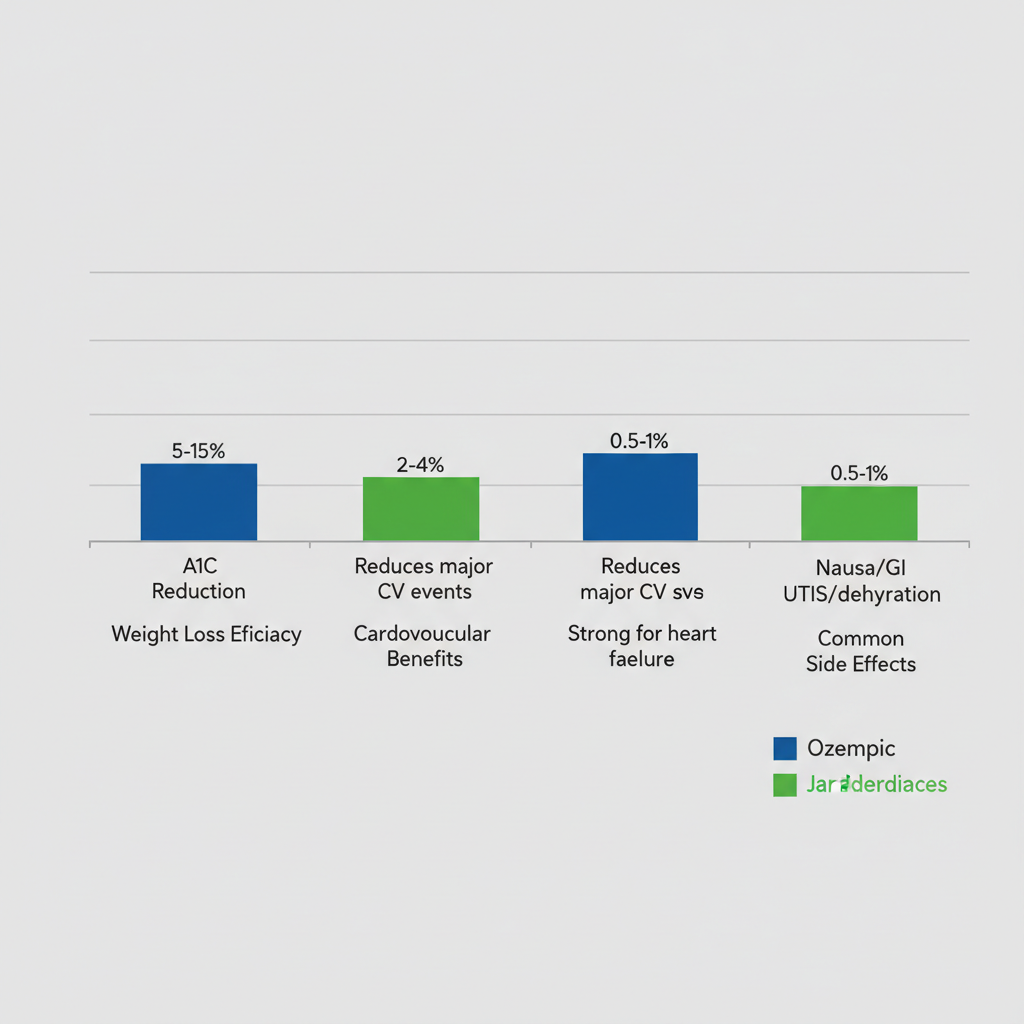
Key features comparison between Ozempic and Jardiance medications
Pricing and Cost Considerations for Ozempic vs. Jardiance
When weighing which is better ozempic or jardiance, a thorough cost analysis of Ozempic versus Jardiance reveals significant differences in affordability of diabetes medications like these. Both drugs lack generic availability, leading to high list prices that impact accessibility for diabetes and weight management. Factors such as dosage strength and insurance coverage in the US further influence out-of-pocket expenses, particularly for off-label uses like non-diabetic weight loss.
Ozempic, a GLP-1 agonist from Novo Nordisk, carries a list price of around $900 per month for a standard dose. This positions it as a premium option, with costs escalating for higher doses used in weight loss regimens. For those exploring jardiance vs ozempic for weight loss, Ozempic’s higher price may deter long-term use despite its efficacy. User reviews highlight variability, with one patient stating, “Without assistance, it’s unaffordable at nearly $1,000 monthly.” Regional US pricing can vary slightly, and resources like GoodRx often discount it to $850-$950.
Jardiance, an SGLT2 inhibitor from Boehringer Ingelheim, offers a more budget-friendly list price of about $500 per month. Similar to ozempic vs farxiga side effects trends in its class, Jardiance’s pricing reflects competitive SGLT2 costs, making it appealing for heart and kidney protection alongside diabetes control. Dosage adjustments rarely spike expenses beyond $600. Reviews note, “Jardiance at $500 was manageable before my copay help kicked in.”
Insurance often places both on Tier 3, resulting in 30-50% copays. Ozempic’s copay card caps costs at $25 for eligible patients, while Jardiance’s program offers similar savings up to $85 monthly. Using jardiance and ozempic together could double expenses without dual coverage, but patient assistance programs from manufacturers provide free or low-cost options for uninsured individuals. For non-diabetics, coverage challenges persist, emphasizing the need for financial planning in treatment decisions.
Final Verdict: Ozempic or Jardiance for Your Health Goals
Deciding between Ozempic and Jardiance often boils down to which is better ozempic or jardiance for your specific needs, whether that’s diabetes management, weight control, or cardiovascular health. If your primary goal is weight loss, Ozempic stands out with its GLP-1 mechanism promoting significant reductions, often 10-15% of body weight in trials, making it ideal for non-cardiac patients where gastrointestinal tolerability is a concern. For jardiance vs ozempic for weight loss, Jardiance offers modest benefits through caloric loss via urination but excels in heart failure and kidney protection, thanks to its SGLT2 inhibition that reduces hospitalization risks by up to 35% as shown in comparative studies.
In scenarios with heart or kidney issues, Jardiance emerges as the stronger choice due to its oral convenience and proven organ benefits. Both drugs shine in diabetes control, lowering A1C by 0.7-1.0%, but Ozempic may edge out for glycemic precision. For enhanced outcomes, Combining Ozempic and Jardiance Safely can yield additive A1C drops of 1.5-2.0% per PMC trial data, ideal for stubborn cases. Switching between them is feasible under medical supervision, with non-diabetics using Ozempic off-label for obesity.
Long-term safety profiles are favorable, though ozempic vs farxiga side effects highlight Ozempic’s nausea versus Jardiance’s dehydration risks; rare issues like pancreatitis or ketoacidosis warrant monitoring. The best choice for diabetes or weight management depends on your profile–consult a physician for personalized advice to align with your health goals safely.
Making the Right Choice for Your Health Journey
When deciding which is better ozempic or jardiance, consider your priorities: Ozempic excels in ozempic vs jardiance for diabetes management and weight loss, offering significant reductions in body weight through its GLP-1 mechanism, while Jardiance shines for cardiovascular protection and heart health benefits in diabetic patients. Both share similar safety profiles, with manageable side effects, making jardiance vs ozempic for weight loss a close call depending on individual needs. For those evaluating ozempic vs farxiga side effects, transitions are feasible under medical supervision, emphasizing choosing the best diabetes medication that integrates with lifestyle changes for optimal results.
Consult your healthcare provider for personalized prescriptions, monitoring, and guidance tailored to your wellness goals. Track progress with regular check-ins to adjust as needed, and remember this is not medical advice–professional evaluation is essential for safe, effective weight loss drug comparisons.
Explore more wellness guides on Nutrition & Diet or Weight Loss & Management categories for additional resources and expert insights.
