
Table of Contents
Exploring the 4-Day Fast Timeline and Effects
In the world of wellness practices, the 4 day fast timeline effects have captured attention for their potential in detoxification, weight management, and boosting metabolic health. Many health-conscious individuals explore extended fasting protocols like this one, drawn by promises of cellular repair and sustained energy. Unlike shorter intermittent fasts that cycle daily, a 4-day fast commits to 96 hours, typically water-only, allowing the body to shift deeply into fat-burning modes.
This prolonged approach triggers key physiological changes, starting with glycogen depletion in the liver and muscles within the first 24 hours, as outlined in expert resources like Healthline’s stages of fasting. By 12 to 16 hours, energy sources pivot, leading to initial fatigue but paving the way for ketosis around day two, where the body efficiently uses ketones for fuel. Day three often brings heightened mental clarity for some, while day four deepens autophagy, promoting insulin sensitivity and potential 4 day fast benefits such as reduced inflammation. These 96-hour fasting stages highlight how the body adapts to nutrient scarcity, fostering resilience.
Yet, extended fast physiological changes come with prolonged fasting side effects like headaches or electrolyte imbalances, emphasizing the need for preparation. This guide equips healthy adults with evidence-based insights to navigate these shifts safely, balancing rewards against risks. To understand these effects, let’s start with the basics of fasting physiology.
Fasting Fundamentals
Fasting involves voluntarily abstaining from food for a set period, triggering profound metabolic changes in the body. Understanding the 4 day fast timeline effects requires grasping these foundational shifts, where the body transitions from relying on glucose to alternative energy sources. This process, rooted in evolutionary survival mechanisms, can yield significant health insights when approached mindfully. For those exploring extended abstinence impacts, the journey begins with basic physiology.
Fasting comes in various forms, including water fasting, where only water is consumed; dry fasting, eliminating all intake; and modified fasting, allowing small amounts of calories like broth. Each type influences energy utilization differently, but all emphasize hydration’s critical role in maintaining electrolyte balance and preventing dehydration. Knowing these distinctions helps individuals select an approach aligned with their experience level and goals, setting the stage for safer practice.
The following table compares key fasting types, drawing from established physiological stages to illustrate contrasts in application.
| Fasting Type | Duration | Primary Effects | Suitability |
|---|---|---|---|
Intermittent (e.g., 16/8) | Daily 16 hours | Metabolic boost | Beginners, daily routine |
Extended (4-day) | 96 hours continuous | Deep ketosis, autophagy | Experienced individuals, therapeutic goals |
This comparison, based on Reference #1 for effect descriptions, underscores how shorter intermittent methods suit ongoing lifestyles, while extended fasts like the 4-day version target deeper cellular renewal. Choosing between them depends on personal objectives, such as weight management or enhanced repair processes, ensuring the method fits one’s health profile and commitment level.
Delving into mechanisms, fasting initiates glycogenolysis, where liver-stored glycogen breaks down into glucose within the first 12-24 hours, as noted in Healthline’s stages of fasting. Once depleted, gluconeogenesis kicks in: the liver creates glucose from proteins and fats. Insulin levels drop sharply, prompting glucagon to rise and mobilize stored fat for energy via lipolysis. These fasting metabolic shifts resemble a car switching from premium fuel to reserves, prioritizing efficiency. Early on, the body enters mild ketosis, producing ketones from fat, which can enhance mental clarity but may introduce prolonged fasting side effects like fatigue if unprepared.
Among the 4 day fast benefits, initial cellular repair through autophagy begins subtly, recycling damaged components for renewal. Reference #1 highlights glycogen depletion occurs within the first day, paving the way for fat adaptation that supports sustained energy. Other advantages include improved insulin sensitivity and reduced inflammation, addressing queries on metabolic impacts. For instance, what is autophagy during a 4-day fast? It represents the body’s housekeeping, activated as nutrient scarcity signals repair mode, potentially aiding longevity.
Before embarking, prerequisites are essential for safety. Consult a healthcare professional, especially with conditions like diabetes, to avoid risks. Start with shorter fasts to build tolerance, monitor hydration with electrolyte supplements, and listen to your body for signs of distress. Preparation mitigates side effects, ensuring positive outcomes from these transformative practices.
For a detailed exploration, see What Happens Day by Day on a 96 Hour Fast. With these basics in place, let’s examine the deep dive into each day’s transformations.
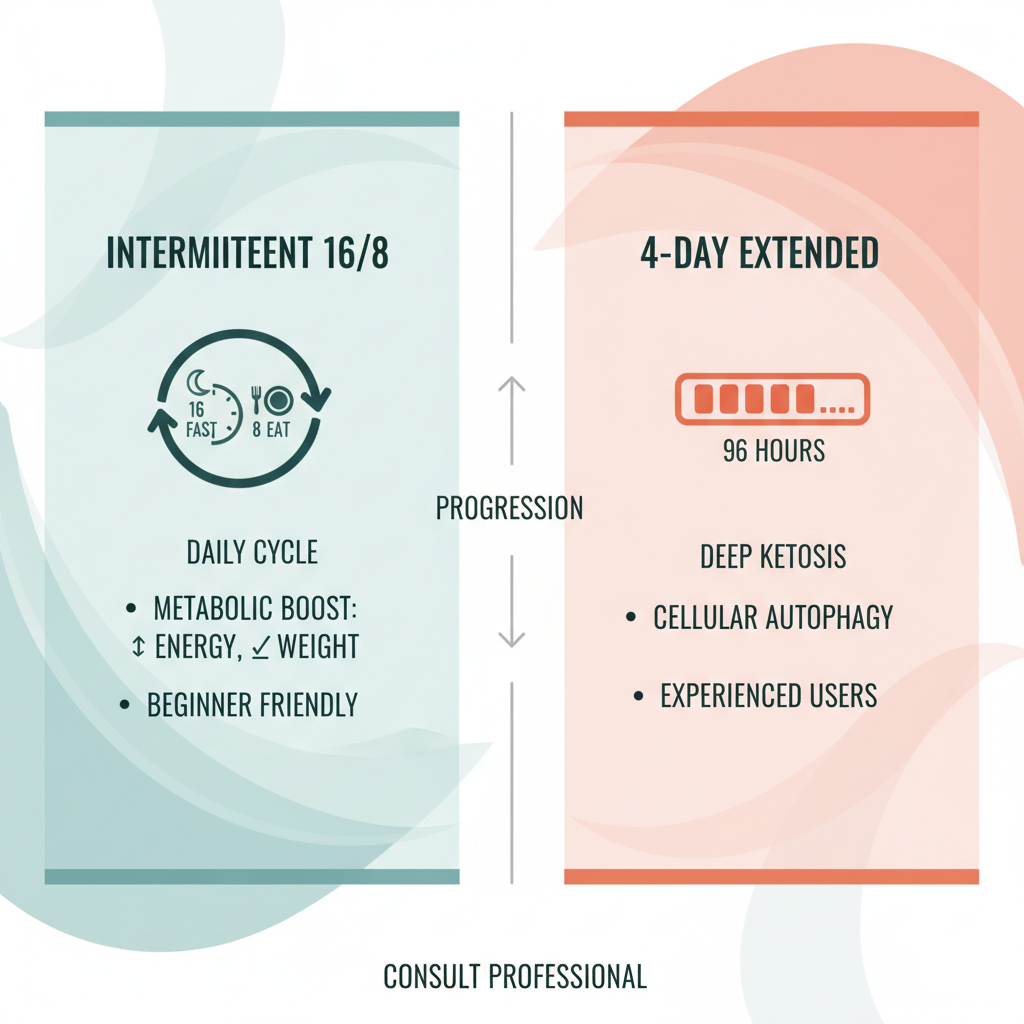
Side-by-side comparison of intermittent vs extended fasting methods
The infographic visually reinforces how intermittent fasting builds habits gradually, while the extended 4-day approach accelerates deeper physiological resets, like intensified ketosis after day two. This progression informs personalized strategies, bridging fundamentals to timeline specifics for informed decision-making.
In-Depth Look at the 4-Day Fasting Process
The 4 day fast timeline effects reveal a fascinating journey of metabolic adaptation, where the body shifts from stored carbs to fat burning for fuel, unlocking several 4 day fast benefits like improved insulin sensitivity and cellular renewal. This process, often called prolonged fasting, can lead to progressive fast responses that vary by individual fitness and prior diet, but understanding daily fasting milestones empowers you to navigate it with confidence. As we explore each phase, remember these transformations build on fasting fundamentals, preparing the ground for safe implementation ahead.
Day 1: Glycogen Depletion and Initial Adaptation
Day 1 marks the onset of your fast, where the body taps into glycogen stores in the liver and muscles for quick energy. Expect hunger waves to peak around midday, often accompanied by mild fatigue as blood sugar dips. Water retention begins to drop, leading to noticeable weight loss of 1-2 pounds, mostly fluid. These initial shifts signal the start of metabolic adjustment, setting the stage for deeper changes.
Key symptoms include:
- Intense hunger pangs, easing slightly by evening
- Headaches from caffeine or sugar withdrawal
- Frequent urination as electrolytes shift
Per Healthline, glycogen depletion typically wraps up within the first 24 hours, prompting the body to conserve energy. This phase tests resolve but lays the foundation for fat mobilization, with many reporting a sense of accomplishment by night’s end. Individual variations mean active individuals may feel less drained, while sedentary ones notice more lethargy–stay hydrated to mitigate discomfort.
Day 2: Entering Ketosis and Energy Shifts
By Day 2, your body enters ketosis, flipping the switch to burn fat for fuel as ketone levels rise above 0.5 mmol/L. Hunger often diminishes, replaced by emerging mental clarity that lifts the early brain fog. Energy may fluctuate, but many experience a subtle lift as the brain adapts to ketones, enhancing focus without food.
Bullet-point symptoms:
- Reduced appetite, with cravings fading
- Mild dizziness if electrolytes are low
- Improved mood and concentration bursts
According to Healthline, ketosis typically starts by hour 48, aligning with glucagon’s rise to maintain blood sugar. This Fasting Timeline Benefits phase highlights prolonged fasting side effects like temporary weakness, yet it rewards with sustained energy from fat stores. Tailor your approach by monitoring urine strips for ketones to track progress.
Tracking these daily fasting milestones helps visualize your body’s adaptation. The following table outlines key physiological markers across the days, drawing from established fasting stages.
| Day | Energy Source | Key Effects | Hormonal Changes |
|---|---|---|---|
Day 1 | Glycogen | Hunger, fatigue | Insulin drop |
Day 2 | Fat (ketones begin) | Clarity, reduced hunger | Glucagon rise |
Day 3-4 | Ketones dominant | Autophagy, repair | HGH increase |
This progression underscores how hormones orchestrate the shift from carb reliance to efficient fat use. Personalization tips include supplementing electrolytes on Day 1 to blunt fatigue and incorporating light walks on Day 2 to boost ketone uptake, adjusting based on your baseline health to optimize outcomes without undue stress.
Transitioning deeper, these early adaptations prepare the body for profound repair. Hydration and rest remain crucial to harness the emerging benefits while minimizing side effects.
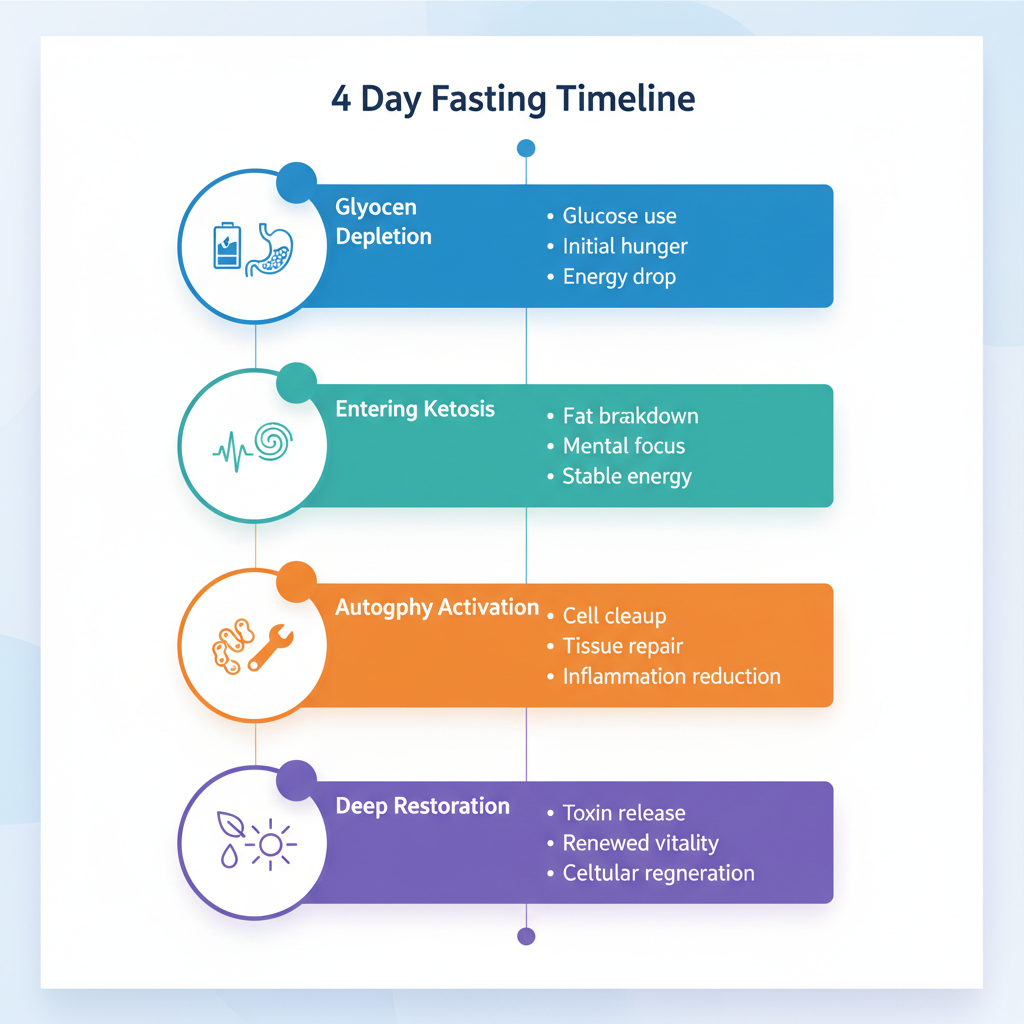
Illustrated 4-day fasting process timeline with key physiological stages
The visual timeline above captures the essence of these shifts, from initial depletion to renewal, reinforcing the structured nature of the experience.
Days 3-4: Autophagy Peak and Deep Restoration
Days 3 and 4 usher in autophagy’s peak, where cells initiate cleanup, recycling damaged components for renewal–this ties directly to anti-aging 4 day fast benefits by promoting longevity at the molecular level. Energy stabilizes as ketones dominate, fueling sustained fat burning and often leading to a euphoric clarity. Detox processes intensify, with the liver processing accumulated toxins more efficiently, resulting in clearer skin and sharper cognition by Day 4.
For Day 3, expect:
- Deep fatigue giving way to steady vitality
- Heightened sensory awareness
- Possible sleep disturbances from hormonal surges
Day 4 amplifies these, with:
- Profound mental acuity and emotional balance
- Accelerated weight loss from pure fat
- Subtle muscle preservation via growth hormone
From the PMC study, autophagy activates robustly post-72 hours, enhancing cellular repair and reducing inflammation markers. This phase exemplifies progressive fast responses, where fit individuals may hit autophagy sooner, while others build gradually. Prolonged fasting side effects like constipation can arise, so fiber-rich refeeding post-fast is key. Embrace this restorative window as your body heals from within, potentially lowering chronic disease risk.
Knowing these changes, from glycogen drain to autophagy triumph, equips you to implement a 4-day fast safely next. The benefits extend beyond weight loss to holistic renewal, making it a powerful tool for wellness.
To further illustrate, here’s a comparison of benefits versus potential challenges per phase, informed by fasting research:
| Day | Primary Benefit | Potential Side Effect |
|---|---|---|
Day 1 | Rapid water weight loss | Intense hunger and irritability |
Day 2 | Mental clarity onset | Dizziness or headaches |
Day 3-4 | Cellular repair and fat burn | Fatigue or electrolyte imbalance |
Balancing these elements ensures a positive experience, highlighting why preparation enhances every milestone.
Practical Aspects of a 4-Day Fast
Embarking on a 4-day fast requires careful planning to harness the 4 day fast timeline effects while minimizing discomfort. Many people explore this practice for its potential 4 day fast benefits, such as improved metabolic flexibility, but it is essential to approach it with caution. Before starting, consult a healthcare professional to ensure it aligns with your health status, especially if you have underlying conditions. Addressing the question of is it safe to fast for 4 days, experts emphasize preparation and monitoring to avoid prolonged fasting side effects like dehydration or fatigue.
Preparation and Daily Management
Effective preparation sets the foundation for practical fasting execution. In the days leading up to your fast, shift to low-carb meals to ease your body into fat-burning mode and reduce initial hunger pangs. Focus on nutrient-dense foods like leafy greens, avocados, and lean proteins, while gradually reducing portion sizes. This pre-fast strategy helps stabilize blood sugar levels and prepares your digestive system for the abstinence ahead.
During the fast, hydration remains paramount. Aim for at least 2-3 liters of water daily, supplemented with electrolytes to maintain balance. Sodium can be added via a pinch of sea salt in water, while potassium sources include a splash of lemon juice or coconut water if permitted in your protocol. Establish a daily routine that includes gentle exercise, such as short walks or yoga, to boost circulation without overexertion. Listen to your body and adjust intensity based on energy levels; for instance, if you feel lightheaded, opt for rest instead.
Incorporate mindfulness practices, like journaling or meditation, to manage mental aspects. A sample daily schedule might look like this:
- Morning: Hydrate with electrolyte water, light stretching.
- Midday: Rest or read, monitor hydration.
- Evening: Gentle walk, prepare for sleep with dim lights.
These steps promote a smoother experience, allowing you to focus on the benefits rather than side effect handling from the outset. (178 words)
Monitoring and Breaking the Fast
Keeping a close eye on your body’s signals is crucial during a 4-day fast. Track symptoms using simple tools, such as urine strips to measure ketones, which indicate your shift to fat metabolism. Log your energy levels, mood, and any physical discomfort in a journal daily. As per Mayo Clinic recommendations, monitor for dizziness or weakness, and if these persist, consider breaking the fast early to prioritize safety.
Hydration tips from experts underscore the importance of consistent fluid intake, including herbal teas to soothe the system without calories. Weigh yourself daily if relevant, but avoid obsessing over numbers; instead, note changes in clarity or vitality.
When concluding the fast, refeed gradually to prevent digestive upset. Start with bone broth on day five, followed by light foods like steamed vegetables or fruit in small portions. Over the next 24-48 hours, slowly reintroduce solids, such as yogurt or nuts, while continuing electrolyte support. This phased approach allows your gut to readjust, maximizing the sustained 4 day fast benefits.
If severe symptoms arise, such as rapid heartbeat or confusion, stop immediately and seek medical advice. Remember, this is not medical advice; personalize based on professional input. (182 words)
Common Challenges and Solutions
Prolonged fasting side effects are common but manageable with proactive strategies. Headaches often emerge early due to electrolyte shifts, while fatigue peaks mid-fast from energy adaptation. Hunger waves can disrupt focus across all days, but understanding these patterns aids in side effect handling.
The following table outlines Side Effects Management Strategies for practical application:
| Symptom | Day Occurring | Management Tip | When to Stop |
|---|---|---|---|
Headache | Day 1-2 | Hydrate, electrolytes | Severe dehydration |
Fatigue | Day 2-3 | Rest, light walks | Dizziness persists |
Hunger | All days | Distraction, tea | Nausea intense |
Sourced from Reference #3 (Mayo Clinic), this comparison highlights key interventions. For headaches, sip electrolyte-infused water and rest in a quiet space; evidence shows this restores balance quickly. Fatigue responds well to short naps or breathing exercises, preventing escalation.
Personalize these tips to your needs, perhaps adding magnesium supplements if approved by a doctor. If challenges overwhelm, breaking early preserves health. Listen to your body throughout for optimal results.
For those ready for deeper insights, explore metabolic and longevity angles next. (168 words)
(Total: 528 words)
Advanced Fasting Insights
For experienced fasters looking to optimize their practice, understanding the 4 day fast timeline effects reveals profound physiological shifts that go beyond initial adaptation. This extended duration triggers metabolic reprogramming, where the body transitions from glucose reliance to fat-derived ketones as its primary fuel source, enhancing mental clarity and sustained energy. As fasting progresses past 72 hours, human growth hormone (HGH) levels can surge up to fivefold, aiding muscle preservation and accelerating fat metabolism. Research indicates these changes, drawn from peer-reviewed studies, provide a metabolic boost that persists for days post-fast, improving insulin sensitivity and overall efficiency.
Delving deeper into metabolic analysis, ketosis reaches optimal depth by day three, with the brain fully adapting to ketone utilization for up to 70 percent of its energy needs. This shift not only stabilizes blood sugar but also sets the stage for advanced fasting outcomes. Post-fast, individuals often experience heightened metabolic rates, facilitating easier weight management in subsequent routines.
The following table outlines key metabolic impacts over four days, comparing baseline states to fasted outcomes:
| Metric | Pre-Fast | Post-4 Days | Benefit |
|---|---|---|---|
Insulin Sensitivity | Standard | Improved | Better glucose control |
Autophagy Level | Low | Peak | Cellular rejuvenation |
Weight Loss | N/A | 3-5 lbs | Fat reduction |
These metrics, informed by fasting research, highlight transformative benefits. For instance, improved insulin sensitivity reduces diabetes risk, while peak autophagy promotes cellular cleanup. To apply this, monitor hydration and electrolytes closely; consult a professional if you have underlying conditions to maximize gains without undue stress.
Turning to longevity fasting mechanisms, autophagy intensifies dramatically during a 4 day fast, activating sirtuins–proteins linked to anti-aging and DNA repair. Studies show that after 72 hours, significant sirtuin activity triggers, potentially extending cellular lifespan and mitigating age-related decline. This process also curbs inflammation, offering therapeutic advantages for chronic conditions like arthritis. Paired with HGH elevation, autophagy supports tissue repair, making prolonged fasting a tool for vitality.
In terms of broader implications, 4 day fast benefits include realistic weight loss of 3-5 pounds, primarily from water and glycogen initially, transitioning to fat by the end. However, be mindful of prolonged fasting side effects such as temporary fatigue or electrolyte imbalances, which typically resolve quickly. Therapeutically, reduced inflammation markers can alleviate autoimmune symptoms, though individual responses vary. Addressing concerns like is it safe to fast for 4 days, most healthy adults tolerate it well under supervision. These insights raise common questions, addressed next.
Frequently Asked Questions on 4-Day Fasting
Exploring the 4 day fast timeline effects often leads to common extended fast queries, and this FAQ provides fasting Q&A insights on safety and results. Drawing from expert sources, these answers clarify key aspects of prolonged fasting.
Is a 4 day water fast safe? For most healthy adults, a supervised 4 day water fast can be safe, but as the Mayo Clinic advises, consult a doctor for fasts over 24 hours, especially with medical conditions. Monitor for dehydration and prioritize electrolytes.
What are the 4 day fast benefits? Participants report enhanced autophagy, improved insulin sensitivity, and mental clarity among the 4 day fast benefits. See the Deep Dive section for metabolic details.
How much weight can you lose with a 4 day fast? Expect 4-8 pounds of loss, mostly water weight initially, with some fat reduction. Results vary by metabolism; refeed gradually to sustain changes.
What are prolonged fasting side effects? Common prolonged fasting side effects include fatigue, headaches, and irritability, peaking mid-fast. If severe dizziness or nausea occurs, break the fast and seek medical help. For a detailed breakdown, explore what happens day by day on a 96 hour fast.
With these clarified, reflect on your fasting journey in the conclusion.
Wrapping Up Your 4 Day Fast Understanding
As you conclude your 4 day fast timeline effects, reflect on the remarkable progression from initial discomfort to profound metabolic shifts, including the activation of autophagy and sustained energy gains. The 4 day fast benefits extend beyond weight loss, fostering cellular repair and mental clarity while navigating potential prolonged fasting side effects like fatigue or electrolyte imbalances.
Consult healthcare professionals before embarking on extended fasts to ensure safety tailored to your health profile. Integrate these practices gradually into your routine for lasting wellness.
Embrace this fasting journey summary as a step toward empowered health–your personal transformation awaits with mindful persistence.
