Table of Contents
Unlocking Better Rest: The Power of Sleep Optimization
In our busy lives, sleep optimization stands out as a game-changer for wellness, boosting energy and mood while supporting long-term health. This practice involves intentional strategies to improve sleep duration, quality, and consistency, drawing on principles like sleep hygiene to create restful routines.
Adults typically need 7-9 hours of sleep nightly, as recommended by experts, which enhances cognitive function, reduces stress, and lowers risks of chronic diseases. By focusing on improving sleep quality, we can foster better immunity and mental clarity. Our guide outlines six actionable techniques, from establishing consistent schedules to crafting relaxing bedtime rituals, including essential healthy sleep tips.
We’ll also highlight common pitfalls to sidestep, empowering you to enhance rest routines and nighttime recovery for vibrant days ahead.
1. Establishing a Consistent Sleep Schedule
Sleep optimization begins with one simple yet powerful step: building a regular sleep-wake routine. At WellnessHQ.net, we believe this foundation helps regulate your body’s internal clock, leading to deeper rest and more vibrant days ahead. By prioritizing consistency, you can transform how you feel each morning.
A fixed schedule aligns your circadian rhythms, the natural cycles that dictate when you feel alert or ready for bed. We recommend starting by calculating your ideal sleep duration—most adults need seven to nine hours—then setting a bedtime and wake time that fit your lifestyle. For instance, if you aim for eight hours, count backward from your desired wake-up to determine bedtime. Stick to this even on weekends to avoid disrupting your rhythm; if travel throws things off, gradually adjust by 15-30 minutes daily. According to the Sleep Foundation, maintaining a consistent schedule can improve sleep efficiency by up to 20%, making it easier to fall asleep quickly and wake feeling refreshed. This practice enhances sleep hygiene, a key to improving sleep quality over time, by regulating rest patterns and boosting daily recovery.
Here’s a practical example for busy families: Suppose parents work standard hours; set a 10 p.m. bedtime and 6 a.m. wake-up, winding down with reading or light stretching. Kids can follow a similar pattern, adjusted for school. For shift workers, we suggest anchoring wake times around daylight exposure to mimic natural cues. Remember, while this boosts energy, if fasting is part of your wellness routine, explore ways to avoid fatigue fasting for sustained vitality. These habits pave the way for supportive surroundings in the next technique, creating a holistic approach to better rest.
2. Optimizing Your Sleep Environment
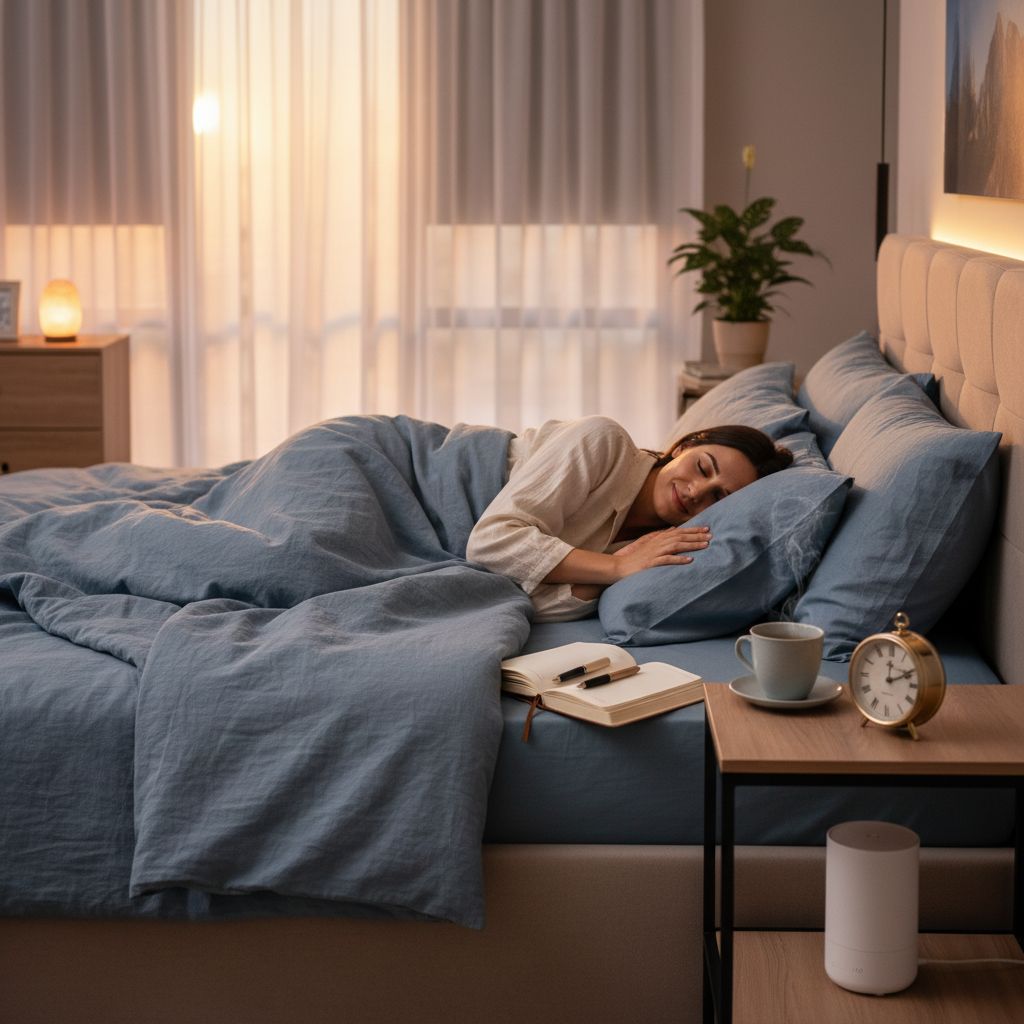
Creating an ideal sleep environment is a cornerstone of sleep optimization, setting the stage for deeper, more restorative rest. We know how everyday stressors can make winding down challenging, especially in bustling urban settings where noise and light seep in unexpectedly. By fine-tuning bedtime settings, you can transform your bedroom into a sanctuary that supports better sleep hygiene and overall well-being.
Start with the basics: aim for a cool room temperature, ideally under 65°F as recommended by sleep medicine experts, to signal your body it’s time to sleep. Darkness is essential too—use blackout curtains to block out streetlights or early dawn rays, reducing melatonin disruption. Quiet is key; a white noise machine can mask urban sounds like traffic or neighbors, while maintaining comfortable humidity levels prevents dryness that leads to awakenings. Invest in quality bedding, like breathable sheets and a supportive mattress, to enhance physical comfort and minimize tossing and turning. These adjustments not only promote relaxation but also tie into broader strategies for improving sleep quality, complementing consistent routines with environmental cues for wind-down.

Five-step process to optimize your sleep environment for better rest
We suggest experimenting with a simple bedroom audit to craft restful spaces tailored to your needs. Here’s a quick checklist:
- Check temperature: Is it cool and consistent?
- Assess lighting: Do heavy curtains or an eye mask eliminate glow?
- Evaluate noise: Can a fan or app drown out disturbances?
- Review bedding: Does it feel supportive and cozy?
- Scan for clutter: A tidy room fosters calm.
If anxiety heightens these disruptions, resources on helping someone with anxiety can provide additional support alongside these tweaks. Remember, the content on WellnessHQ.net is provided for informational and educational purposes only and is not intended as a substitute for professional medical advice, diagnosis, or treatment. Always consult with a qualified healthcare provider before making changes to your health routine.
3. Building a Relaxing Pre-Bed Routine
At WellnessHQ, we know that sleep optimization starts with intentional habits, and crafting a relaxing pre-bed routine is one of the best ways to signal your body it’s time to wind down. This simple practice can transform restless nights into restorative rest by easing you into slumber more naturally.
Once you’ve optimized your bedroom environment, incorporating behavioral elements like unwinding rituals takes your efforts further. A soothing evening calm sequence, begun 30 to 60 minutes before lights out, helps lower cortisol levels and quiet the mind, setting the stage for deeper sleep. We love activities such as reading a light book, gentle stretching, or sipping caffeine-free herbal tea—these promote relaxation without overstimulation. According to the Sleep Foundation, dimming lights in this routine reduces melatonin disruption, enhancing overall sleep hygiene. By focusing on these practices, you’re actively working on improving sleep quality, making it easier to fall asleep and stay asleep through the night. If issues like ozempic night sweats interrupt your rest, weaving in such steps can complement your wellness journey.
For a practical example, try this 45-minute sample routine to build your own:
- Minutes 45-30: Dim the lights and avoid screens to protect your natural sleep signals.
- Minutes 30-15: Enjoy light stretching or yoga poses to release the day’s tension.
- Minutes 15-0: Read a few pages of a calming book or journal grateful moments, then slip into bed.
These steps, drawn from proven sleep hygiene tips, make transitioning to sleep feel effortless and enjoyable.
4. Incorporating Mindfulness and Relaxation
At WellnessHQ, we find that the mind plays a pivotal role in sleep optimization. Racing thoughts from daily stress often delay bedtime, but simple mindfulness practices can quiet the mental chatter and signal your body it’s time to unwind. By focusing on internal calm, these techniques enhance overall sleep hygiene and contribute to improving sleep quality.
Mindfulness and relaxation methods offer powerful stress-relief for rest, targeting the body’s natural response to tension. We recommend starting with guided imagery, where you visualize a peaceful scene, like a serene beach, to shift focus from worries. Progressive muscle relaxation involves tensing and releasing muscle groups from toes to head, releasing built-up strain. Meditation apps or simple deep breathing also work wonders; according to insights from the American Medical Association, breathing exercises can shorten sleep latency by calming the nervous system. These mental unwind practices reduce cortisol levels, promoting faster sleep onset and deeper rest, which ties into broader wellness benefits like better mood and focus the next day. Beginners can ease in by setting aside just five minutes before bed, gradually building the habit for lasting results.
For a quick start, try this 5-minute breathing script we love: Sit comfortably, close your eyes, and inhale deeply through your nose for four counts, hold for four, then exhale slowly for six. Repeat while noticing your breath’s rhythm. This anchors you in the present, easing into sleep. Pair it with your pre-bed routine to track progress, perhaps using apps next for guided sessions that build on these foundational mental tools.
5. Leveraging Sleep-Tracking Apps
We’re excited about the role technology plays in sleep optimization, especially as we empower and inspire individuals to lead healthier lives through simple, data-driven tools. Sleep-tracking apps have become essential for monitoring rest patterns and guiding better habits in 2026, offering tech-aided rest tracking that fits seamlessly into daily routines.
These apps excel at functions like tracking sleep cycles with accurate detection, as noted in the Sleep Foundation’s evaluations of top options. They provide gentle reminders for bedtime routines and analyze patterns to offer digital sleep insights, helping users understand factors affecting their rest. For instance, apps like Calm and Headspace focus on relaxation through meditation and soothing sounds, while RISE tracks sleep debt to support improving sleep quality. Sleep Reset personalizes plans based on assessments, and BetterSleep offers ambient noises for winding down. Briefly contrasting types, meditation-focused apps suit those with racing minds, whereas trackers like Muse S Athena combine monitoring with guided sessions for comprehensive sleep hygiene. Users gain actionable insights, such as optimal wake times or environmental tweaks, fostering long-term improvements without overwhelming complexity.
To get started, we recommend trying free versions of these best sleep apps to see what resonates with your needs—many offer premium upgrades for deeper features. Always review privacy policies, as data sharing varies, ensuring your information stays secure. By incorporating app feedback, you can identify pitfalls like irregular schedules and refine habits for restorative nights ahead.
6. Avoiding Common Sleep Pitfalls
In our journey toward sleep optimization, we all make these slips that undermine our efforts. Even with the best intentions, common pitfalls can sabotage restful nights and leave us groggy. Recognizing and correcting them is key to refining sleep habits and achieving lasting benefits.
We often fall into traps like excessive screen time before bed, which exposes us to blue light and disrupts melatonin production, leading to delayed sleep onset. Another frequent error is irregular caffeine intake, especially in the afternoon, as it lingers in our system for hours, fragmenting sleep cycles and reducing depth. Over-napping during the day is also problematic; long siestas, particularly late in the afternoon, steal from nighttime sleep pressure, making it harder to fall asleep. The sleep hygiene impact is profound, with studies showing poor practices correlate negatively with sleep quality, often resulting in heightened daytime fatigue and mood dips. To fix these, establish a no-screens rule an hour before bed, limit caffeine after noon, and cap naps at 20-30 minutes early in the day. These adjustments promote better sleep hygiene and support improving sleep quality over time.
For sidestepping rest errors, try a weekly self-check: Track your habits in a journal, noting screen use, caffeine timing, and nap lengths. Reflect on how they affect your energy levels. If patterns emerge, tweak one area at a time. This mindful approach ensures sustainable changes, wrapping up our techniques on a strong note as we integrate them into daily life for enhanced wellness.
Mastering Sleep Optimization for Lasting Wellness
We hope this guide has empowered you to achieve sleep optimization through practical steps. By combining techniques like maintaining a consistent schedule, creating a restful environment, limiting screen time, incorporating relaxation routines, watching diet and exercise, and prioritizing daylight exposure, you’ve built a foundation for sustained rest mastery. These habits work in synergy to foster deeper, more restorative nights.
The holistic sleep gains extend to sharper focus and overall vitality, much like the benefits of balanced nutrition and activity. As experts from the American Medical Association note, aiming for seven to eight hours nightly supports cognitive and cardiovascular health, with persistence key to lasting improvements.
Start with one or two changes to enhance your sleep hygiene and improving sleep quality. Explore more on WellnessHQ.net to inspire your wellness journey.
Resources
- Manage Ozempic Night Sweats with Morning Dosing Tips
- Prevent Fatigue While Fasting with Energy-Boosting Tips
- Support Someone with Anxiety Using Empathy and Techniques
- Understand Hair Transplant Costs in Chicago and Options
- Adopt Eco-Friendly Skincare for Sustainable Healthy Skin
- Explore Breakthroughs in Skincare Technology for Better Results
- Balance Blood Sugar Naturally with Diet and Lifestyle Tips
- Implement Healthy Sleep Tips for Restful Nights
- Discover Top Sleep Apps for Improved Rest and Wellness
- Understand Sleep Hygiene Impact on Adolescent Health
- Get Good Night Sleep with Expert Doctor Tips
- Practice Sleep Hygiene for Consistent Quality Rest