It can be annoying to have dandruff. One day you see white flakes on your clothes, pillow or comb – the next day your head is irritated. However the concern grows when hair begins to fall as well – can dandruff cause hair loss?
The short answer is that permanent hair loss is typically not directly caused by dandruff. However temporary hair loss or breakage can result from serious dandruff, constant scratching, head irritation or a condition like seborrheic skin disease. Seborrheic skin disease may result in hair loss from itching in affected areas but not permanent hair loss.
The good news is that once the head is calmer, cleaner and less itchy – dandruff related hair loss frequently improves. Understanding what’s actually going on in your mind is important.
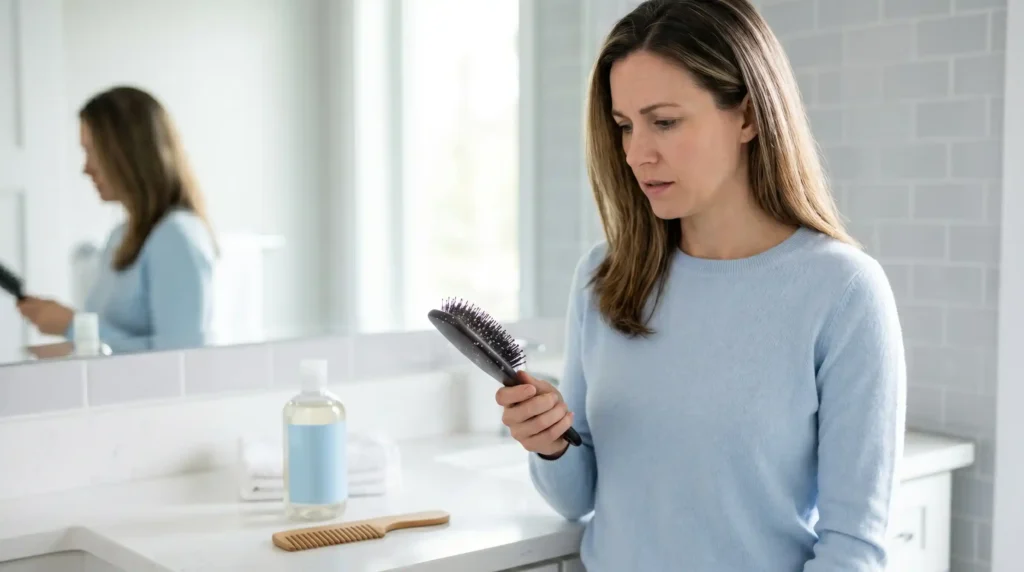
Can Dandruff Really Cause Hair Loss?
Usually dandruff is not the primary reason for hair loss. A frequent hair problem that results in flaking and itching is dandruff. Mayo Clinic describes dandruff as common, not contagious and usually manageable with regular or medicated shampoo.
For a few reasons dandruff and hair loss may occur at the same time.
- You regularly scratch your itchy scalp.
- Rubbing may cause damage and weaken hair strands.
- Inflammation can make the scalp unhealthy.
- Behind the flakes could be a more serious scalp issue.
So dandruff may not be the direct cause of hair loss – but it can create conditions that make hair shedding worse.
Quick answer:
Dandruff can contribute to temporary hair shedding – especially when there is itching, scratching, redness or inflammation. But it usually does not cause permanent baldness by itself.
How Dandruff May Lead to Hair Shedding
Constant Scratching Can Damage Hair
It’s normal to scratch your head when you have dandruff. The issue is that nail itching can weaken the roots of your hair and hurt your head. It can also break hair strands near the scalp – making your hair look thinner than it really is.
This type of hair fall is often temporary. Scratching decreases and the head has time to heal after the discomfort reduces.
Scalp Inflammation Can Affect Hair Health
A healthy head supports healthy hair. But when the scalp is red, oily, flaky or inflamed – hair may not look as strong. Inflammation can make the scalp feel sore, sensitive and uncomfortable.
Because of this – treating dandruff involves more than just the removal of flakes. It is also about calming the scalp.
Seborrheic Dermatitis Can Make Flaking Worse
Many people use the word dandruff for any type of head flaking. But sometimes the issue is stronger than regular dandruff. Itching, redness, yellowish scaling and oily flakes are all possible signs of seborrheic dermatitis. It commonly affects oily areas of the body including the scalp.
If your flakes are thick, oily, yellow or linked with redness – you may need more than a basic shampoo.
Harsh Hair Products Can Make the Problem Worse
Your head may become irritated by some shampoos, styling gels, hair sprays, oils or strong fragrances. When the head is already sensitive – harsh products may increase itching and flake.
This can start a cycle:
- Dandruff causes itching.
- You scratch more.
- The scalp becomes more irritated.
- Hair fall looks worse.
- Breaking this cycle is the first step.
Dandruff Hair Loss vs Normal Hair Shedding
Everyone sheds some hair every day. That does not always mean something is wrong. But if your hair fall comes with flakes, itching or scalp irritation, dandruff may be part of the problem.
| Sign | May Be Dandruff-Related | May Be Another Hair Loss Issue |
| White flakes on scalp or shoulders | Yes | Usually no |
| Itchy scalp | Yes | Sometimes |
| Hair falling after scratching | Yes | Sometimes |
| Red or irritated scalp | Yes | Sometimes |
| Receding hairline | Usually no | Yes |
| Widening hair part | Usually no | Yes |
| Round bald patches | No | Yes |
| Sudden heavy shedding | Sometimes | Yes |
If your hair loss is patchy, sudden, painful or getting worse – it is better to speak with a skin specialist.
Common Causes of Dandruff
Dandruff can happen for different reasons. It is not always about poor hygiene. The American Academy of Dermatology says dandruff may be linked to oily skin – hair care habits and some medical conditions.
Common causes include:
- Dry scalp
- Oily scalp
- Product buildup
- Seborrheic dermatitis
- Sensitivity to hair products
- Cold or dry weather
- Stress
- Not washing the scalp often enough
- Washing too often with harsh shampoo
When someone has head rashes, a fungal infection or another skin problem – they may mistakenly believe they have dandruff. That is why stubborn dandruff should not be ignored.
Signs Your Hair Loss May Be Linked to Dandruff
Your hair fall may be connected to dandruff if:
- You have visible flakes.
- Your scalp feels itchy most days.
- Hair falls more after scratching.
- You see redness or irritation.
- Your scalp feels oily and flaky at the same time.
- Hair fall improves when dandruff improves.
- You notice more breakage than actual root shedding.
This type of hair fall is usually easier to manage because the main goal is to fix the scalp environment.
Signs Your Hair Loss May Not Be From Dandruff
Not every hair loss problem comes from dandruff. Hair loss can be caused by a number of factors – including aging, stress, diseases, hormonal changes and genetics. Hair loss can be temporary or permanent depending on the cause.
Your hair loss may have another cause if you notice:
- A receding hairline
- A widening part
- Bald spots
- Hair falling in clumps
- Sudden shedding after illness or stress
- Hair loss after pregnancy
- Scalp pain, sores or swelling
- Family history of baldness
- No improvement after dandruff treatment
In these cases dandruff shampoo alone may not solve the problem.
How to Reduce Dandruff Related Hair Fall
Use an Anti Dandruff Shampoo Correctly
For mild dandruff regular washing with a gentle shampoo may help. If that does not work – medicated dandruff shampoos can be useful. While those with curly, coiled or textured hair may need to use dandruff shampoo less frequently – other people can use it two to three times a week.
Typical components of anti dandruff shampoos include as follows.
- Ketoconazole
- Zinc pyrithione
- Selenium sulfide
- Salicylic acid
- Coal tar
Always follow the product directions. Some dandruff shampoos must be left on the hair for a few minutes before washing.
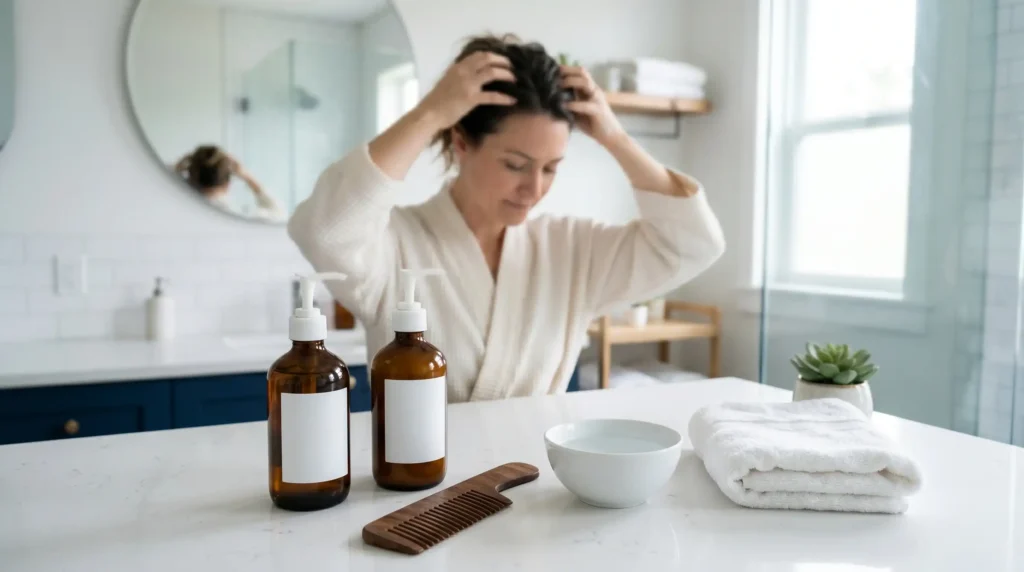
Avoid Scratching Your Head
Although it could feel wonderful for a short while – scratching might exacerbate headaches.
Try this instead.
- Massage your head gently with fingertips.
- Do not use your nails.
- Keep your nails short.
- Avoid picking flakes aggressively.
- Use a soothing scalp routine.
- The less you scratch, the more your scalp can recover.
Do Not Overuse Heavy Oils
Some people apply oil when they see flakes because they think the head is only dry. But dandruff can also happen on an oily head. Heavy oiling may trap buildup and make flakes worse for some people.
If oil makes your scalp itchier or greasier then reduce it.
Keep Your Scalp Clean but Not Stripped
A clean head matters but over washing with harsh shampoo can also irritate the skin. The goal is balance.
Use gentle treatments that don’t leave your hair dry and rough – however wash it thoroughly enough to remove oil, sweat and buildup.
Choosing the Right Shampoo and Conditioner for a Flaky Head
An effective hair wash routine can have a significant impact. If your head is flaky but your hair also feels dry, brittle or damaged – you need a routine that cleans the head without making the hair feel worse.
When necessary use a dandruff shampoo on your hair – but use a mild conditioner to keep your lengths and ends hydrated. This is particularly useful if after washing your hair feels weak, frizzy or rough.
For more product guidance you can also read this detailed guide on the best shampoo and conditioner for dry damaged hair. For dry, weak or broken hair, it might assist you in comparing better possibilities.
What If Hair Loss Continues After Dandruff Improves?
If your dandruff gets better but your hair still looks thin – weak or flat the cause may be something else. It could be genetic thinning, stress related shedding, nutritional issues, hormonal changes or another scalp condition.
This is where many people start comparing hair support products. That is fine, but it is important to stay realistic. No product can fix every type of hair loss and strong claims should always be checked carefully.
If you are researching hair support options for thinning or weak-looking hair, this Particle Hair Revival Kit Review may help you understand one product people discuss for hair revival and scalp support.
Home Care Tips for Dandruff and Hair Fall
You do not need a complicated routine to start improving your hair. Small habits can help.
- Depending on your hair type – wash your hair on a regular basis.
- Follow the directions on anti dandruff shampoo.
- If the label recommends it, let a medical shampoo sit before rinsing.
- Avoid very hot water.
- To scratch dandruff do not use your nails.
- Always use clean combs and brushes.
- Not applying excessive amounts of styling products directly to your hair.
- Do not use a tight haircut that damages your hair’s roots.
- Eat food which has sufficient protein.
- Get iron, zinc and vitamins from healthy foods into your diet.
- Take control over your tension.
Also, be patient. Hair improvement can take time. Hair shedding does not always stop overnight.
When Should You See a Dermatologist?
You should see a dermatologist if:
- Dandruff does not improve after several weeks.
- Your scalp is painful or swollen.
- You see bleeding, sores or pus.
- Hair loss is sudden or heavy.
- You have round bald patches.
- Flakes are thick, yellow, or crusty.
- Your scalp is very red or burning.
- You’re not sure if it’s an infection, psoriasis, eczema or dandruff.
Skin doctors can examine your head and suggest the right treatment. This is important because different head conditions can look similar but need different care.
Can Hair Grow Back After Dandruff Related Hair Loss?
In many cases yes. If scratching, irritation or inflammation are the primary causes of hair loss, hair usually gets better once the head is healthier.
But if hair loss is caused by genetics, hormones, alopecia, medication or another medical issue – treating dandruff alone may not regrow hair.
That is why the right diagnosis matters. Dandruff treatment helps when dandruff is part of the problem. If the shedding is caused by something else – it could not be sufficient.
FAQs About Dandruff and Hair Loss
Can dandruff cause permanent hair loss?
Usually, no. Dandruff may contribute to temporary shedding or breakage – especially if you scratch a lot. Permanent hair loss is usually linked to other causes.
Does scratching dandruff make hair fall out?
Yes continuous scratching can promote breakage – shedding, weaken hair strands and irritate the head.
Can anti dandruff shampoo stop hair fall?
If your hair loss is caused by dandruff or irritation – it might be beneficial. If your hair loss is hormonal, genetic or the result of another illness – it might not be helpful.
Is dandruff a sign of poor hygiene?
Not always. oily skin, dry heads, product buildup and skin sensitivity can all produce dandruff.
How long does it take to control dandruff?
Mild dandruff may improve within a few weeks with the right routine. Doctor treatment or medicated shampoo may be necessary for more unwilling dandruff.
Should I oil my hair if I have dandruff?
Be careful. Some dry hair may benefit from oil but excessive oil use may increase flakes and growths in some cases – especially if the hair is oily.
Final Thoughts
So can dandruff cause hair loss? In most cases dandruff does not directly cause permanent hair loss. However when the head gets irritated, inflamed or itchy – it may cause temporary shedding or breakage.
The best approach is simple – treat the dandruff, avoid scratching, use the right shampoo routine and watch your head closely. If your hair loss continues after the flakes improve, do not guess. A dermatologist can help you find the real cause and the right solution.