The Habits That Matter More Than You Think

Most women do not wake up on their 30th birthday feeling different. The shift is quieter. A late night suddenly shows up on your face. Your skin feels drier after a week of travel. A workout you once bounced back from takes longer to recover from. None of this means your body is suddenly “aging badly.” It simply means the payoff from doing the basics well gets bigger.
That is what makes your 30s such an interesting decade. You are young enough to build habits before they feel urgent, but old enough to notice which ones actually matter. The smartest approach is not an exhausting anti-aging routine. It is understanding the few things that quietly support your skin, strength and health year after year.
Your skin often tells the story first
Skin is usually where subtle changes become visible because it reflects both biology and lifestyle. Collagen gives the dermis much of its structural strength, while elastin helps skin stretch and recover. Over time, these components change, and repeated UV exposure can make those changes more noticeable.
That is why two women of the same age can have very different experiences with their skin. Genetics matter, but so do ordinary decisions: sunscreen on a random Tuesday, what you eat when busy, how much you move and whether sleep is treated as essential or optional.
Instead of reacting to every fine line, think of skin as a long-term project. Healthy-looking skin is not created only in the bathroom. It is supported by what happens at breakfast, at the gym, during sleep and every time you step outside.
Start with what your body actually needs
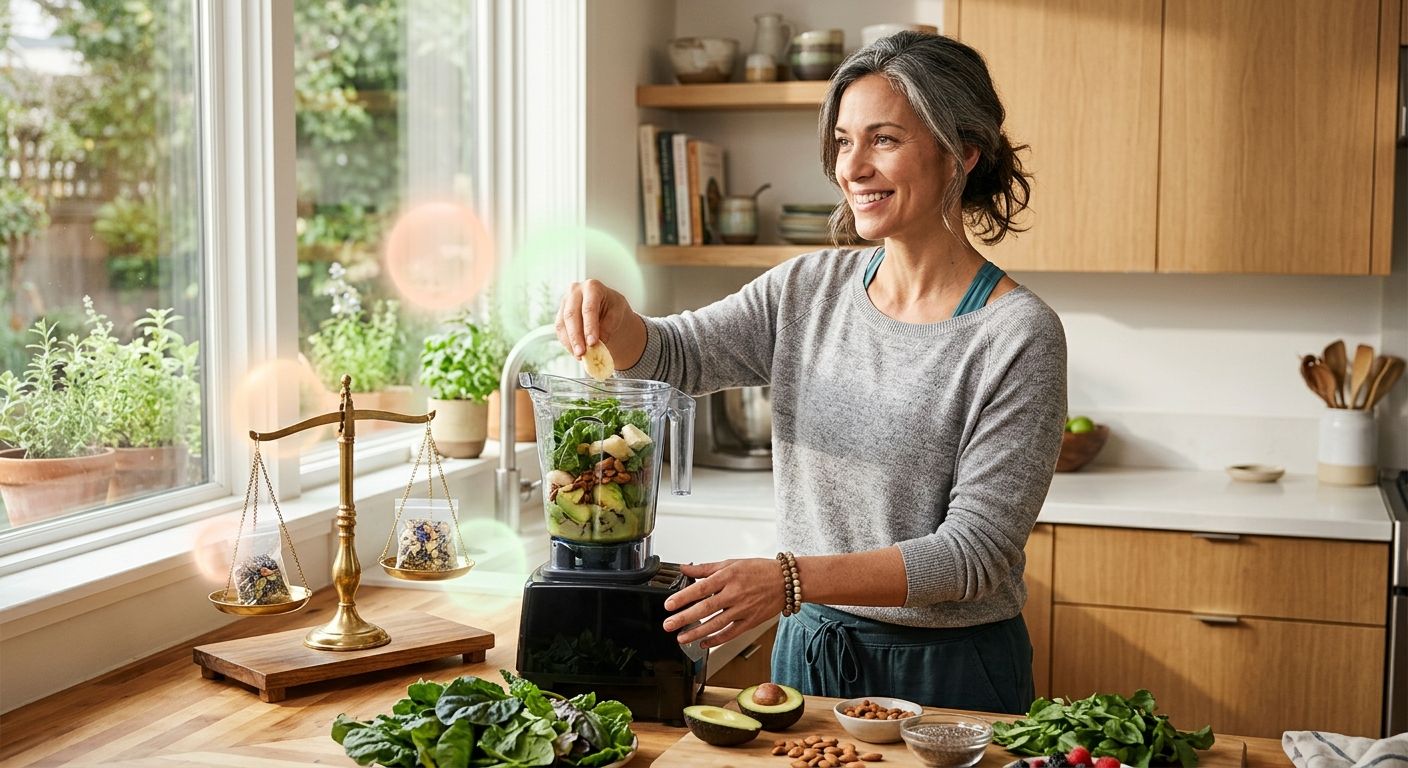
If you want to support skin, hair, nails and muscle, begin with something less glamorous than a serum: adequate nutrition.
Protein supplies amino acids the body uses throughout muscle and connective tissue. You do not need to measure every gram, but it helps to notice whether a meaningful protein source shows up consistently. Eggs or Greek yogurt at breakfast, beans or chicken at lunch, fish or tofu at dinner—the exact foods matter less than the pattern.
Vitamin C matters too because it is required for normal collagen formation. The NIH Office of Dietary Supplements explains its role in collagen biosynthesis, a useful reminder that supporting collagen is not only about taking collagen. Bell peppers, citrus fruit, strawberries, kiwi and broccoli can all contribute.
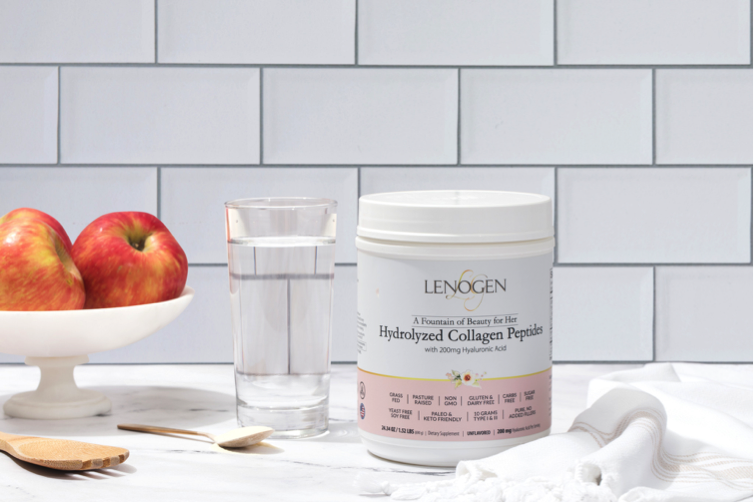
This is where collagen supplements make more sense. They are better viewed as one optional layer in a routine that already includes good nutrition, sleep, movement and sun protection. For women comparing formulas, a practical guide to collagen for women over 30 can explain what matters on a label without pretending that one scoop can replace the rest of your lifestyle.
Where collagen and hyaluronic acid meet
Structure and hydration are closely connected in skin, but they are not the same job. Collagen acts more like structural scaffolding. Hyaluronic acid, or HA, helps create the water-rich environment around that structure.
HA is remarkably hydrophilic. Scientific reviews describe it as capable of retaining roughly 1,000 times its own weight in water. That does not mean taking HA literally pulls 1,000 times its weight in water into your face, but it helps explain why the molecule is so closely associated with tissue hydration.
Research on oral HA is still developing yet randomize clinical research has reported improvements in skin-hydration measures with regular supplementation. That makes the collagen-HA combination interesting for a simple reason: collagen contributes collagen-derived peptides and amino acids, while HA is valued for its water-binding properties and hydration support.
For someone who prefers a streamlined routine, a collagen formula with hyaluronic acid can therefore be a practical option. The better question is not whether the product contains a trendy ingredient, but whether the formula makes sense as a whole and clearly tells you what you are getting.
Do not forget what is happening underneath the skin
Beauty conversations after 30 tend to focus on the face, but one of the best long-term investments is less visible: muscle. Maintaining muscle supports strength, posture, mobility and the ability to keep doing ordinary things comfortably as the years pass. A few consistent strength sessions each week using dumbbells, resistance bands, machines or body-weight exercises can be more useful than repeatedly starting extreme plans you cannot sustain.
Protein gives your body building material, while resistance training gives muscle a reason to adapt. Add regular walking or other activity, and healthy aging becomes something you are already practicing.
The boring habits are often the powerful ones
Sleep and sunscreen may not feel as exciting as a new supplement, yet both deserve attention. Poor sleep affects energy, recovery, concentration and the choices you make the next day. Consistent sun protection matters because UV exposure is a major contributor to premature visible skin aging. The American Academy of Dermatology recommends broad-spectrum, water-resistant SPF 30 or higher as part of an anti-aging skincare approach.
Hydration belongs here too. Drinking enough water matters, but forcing down enormous amounts is not a shortcut to flawless skin. Stay adequately hydrated, eat water-rich foods, use moisturizer when needed and let several sensible habits work together.
The real advantage of your 30s
Perhaps the most useful thing about turning 30 is learning to think in years instead of days.
One healthy breakfast will not transform your skin. One workout will not remake your body. One early bedtime will not erase months of poor sleep, and one serving of collagen will not rewrite your biology. But ordinary choices repeated often enough become the environment your body lives in.
That is the opportunity this decade offers. You do not need to fear aging or chase every new beauty trend. Eat well most of the time, get enough protein, move and build strength, sleep like it matters, protect your skin from the sun and stay reasonably hydrated. If a supplement fits your goals, choose it because the formulation makes sense—not because the label is crowded with promises.
The goal is not to look 25 forever. It is to reach 40, 50 and beyond knowing you started taking care of yourself long before you felt you had to.