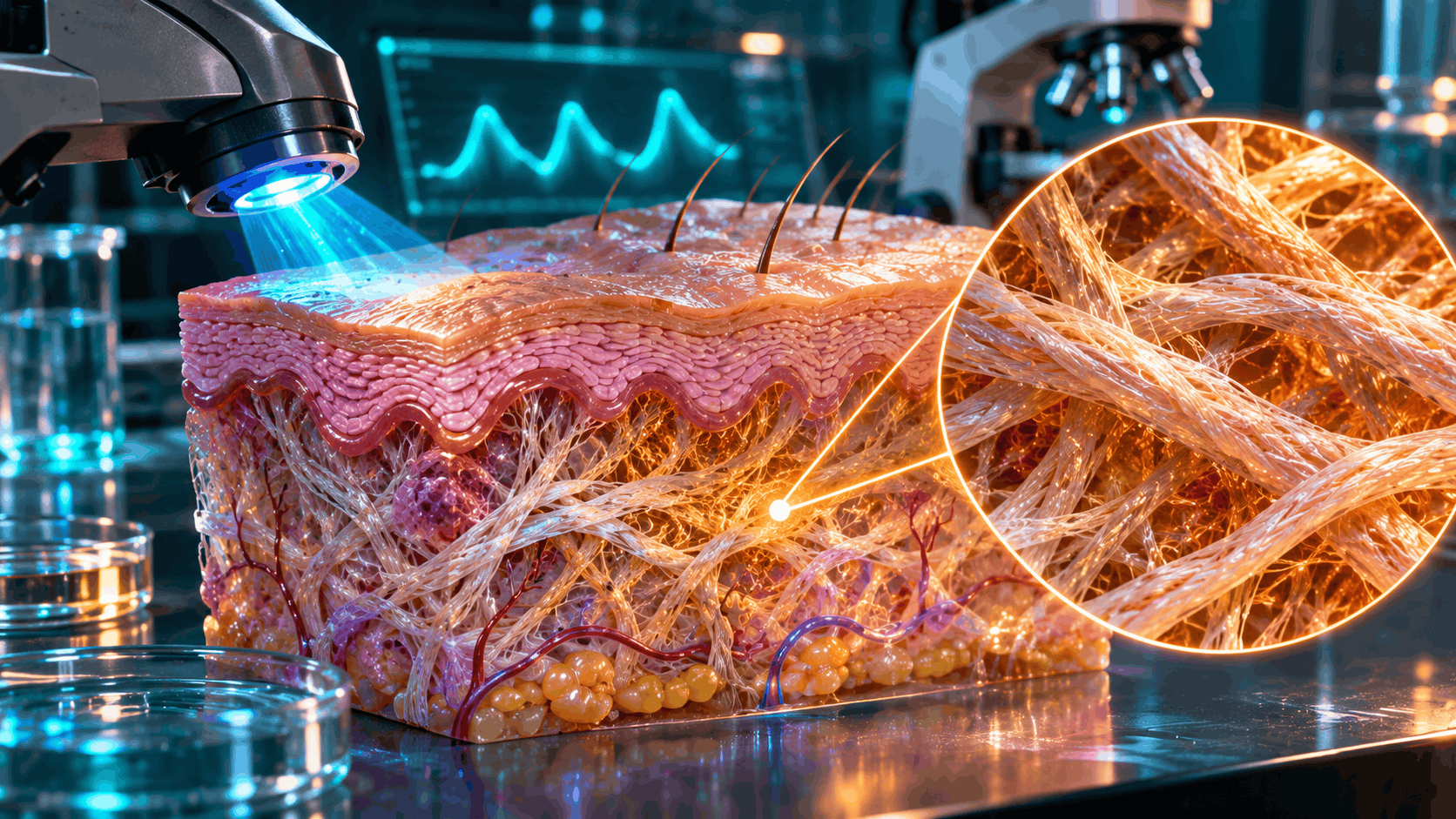
A laboratory investigates how an experimental peptide interacts with cultured cells. The first results appear compelling. A molecular signal changes, the statistical analysis identifies a measurable difference, and the investigators begin developing an explanation for what happened.
Months later, a second research team attempts to examine the same finding. Its scientists use the reported compound and follow the published method, yet the expected biological response does not appear.
The difference might involve the experimental substance, measurement technique, or laboratory environment. But there is another possibility: the cells being tested are not equivalent.
Cell lines are fundamental tools in biomedical research. They allow scientists to investigate biological pathways under defined experimental conditions. However, their identity and characteristics cannot always be assumed from the label on a culture container.
Cross-contamination, mistaken identity, genetic changes, and differences in a cell line’s history can influence the results of an experiment. Some problems remain difficult to recognize through ordinary visual inspection.
For studies involving experimental peptides, these issues are especially important. A reported change in cellular signaling may be meaningful only if researchers know which cells produced the response and whether the experimental model is suitable for the question being investigated.
The experiment can be carefully performed using the wrong cells
Consider a hypothetical research team investigating a peptide’s interaction with a particular cellular pathway. The scientists obtain a cell line that their records identify as originating from one tissue type.
They develop their experimental comparisons, monitor the cells, and generate a consistent set of measurements. Their results suggest an interesting response under the tested conditions.
Later, an authentication assessment reveals that the cell line does not match its documented identity.
That discovery changes how the original results must be interpreted.
The measurements may still describe what occurred in the actual cell population. However, they may not support conclusions about the tissue or biological model the investigators believed they were studying.
A technically accurate assay cannot compensate for a mistaken assumption about the identity of the experimental system.
The research question, model, and conclusions must all be reconsidered together.
Why cell-line misidentification remains a scientific problem
Cell lines may be misidentified through labeling errors, historical documentation problems, or cross-contamination by another cell population.
Cross-contamination is particularly challenging when a faster-growing cell population gradually replaces the one researchers intended to study.
Unless authentication methods are used, the culture may continue to carry the original name even though its biological identity has changed.
The International Cell Line Authentication Committee, known as ICLAC, maintains a register of cell lines known to be misidentified through contamination or other mechanisms.
Its fourteenth register version was released in February 2026, demonstrating that cell-line identity remains an active concern for researchers rather than a problem confined to historical laboratory practices.
The register does not mean that every cell line is unreliable. It provides a way for scientists to identify known problems and investigate whether particular resources are appropriate for their work.
Researchers should not interpret an unfamiliar cell-line name as evidence that the material is authentic. Neither should they assume that the absence of a name from a register proves the material has been independently tested.
Authentication requires evidence connected to the particular resource being used.
What short tandem repeat profiling can establish
For many human cell lines, short tandem repeat profiling provides a recognized approach to identity assessment.
Short tandem repeats, often abbreviated STRs, are regions of DNA containing repeating sequence patterns. A combination of these patterns can create a profile that helps distinguish human cell lines.
Researchers can compare the profile obtained from a culture with an appropriate reference profile to evaluate whether the cells match the expected identity.
ATCC describes STR profiling as an important authentication technique for human cell lines and maintains reference information for comparison.
However, STR profiling is not a universal substitute for every form of cell characterization. The relevant authentication method depends on the species, resource type, and scientific question.
A matching identity profile also does not prove that a culture is free from every microbial contaminant or that its biological behavior has remained unchanged.
These are separate properties requiring suitable forms of assessment.
Authentication is therefore one important component of research quality, not a single test that answers all possible questions about a cellular model.
Why cell passage history can affect experimental findings
A cell’s passage history describes its record of being subcultured during laboratory maintenance.
Passage numbers are useful for documenting the history of a culture, but they are not a direct measurement of the biological age or current behavior of every cell.
As cell populations are maintained through successive passages, their characteristics may change.
Such changes can include differences in growth patterns, morphology, gene expression, or other biological features relevant to experimental interpretation.
ATCC notes that excessively subcultured cell lines may undergo phenotypic and genetic changes. It recommends documenting passage information and working within an established passage range appropriate to the research.
For a study examining cellular responses to an experimental peptide, differences in cell history may influence the signals being measured.
Imagine one laboratory using cells from an early passage range while another relies on a population maintained for considerably longer.
Even if the investigators apply comparable analytical methods, their experimental systems may no longer be biologically equivalent.
That possibility should be investigated rather than immediately interpreted as evidence that the original peptide finding was incorrect.
Genetic drift can change what a cell model represents
Genetic drift in laboratory cell populations refers to changes in the genetic characteristics represented within a culture over time.
These changes may arise through the biological processes involved in cell propagation and selection.
Particular cellular populations can become more prominent as culture conditions favor some characteristics over others.
Such changes do not necessarily make every experiment invalid. Their significance depends on whether the altered characteristics affect the scientific question.
A model used to investigate one biological pathway might remain informative for a defined purpose while becoming less suitable for another.
Researchers therefore benefit from understanding how the cell resource has been maintained and whether its relevant properties remain consistent.
Cell identity and functional stability should not be treated as identical questions.
A culture can retain a recognizable identity while showing important changes in its biological behavior.
The contamination that may escape ordinary visual inspection
Microbial contamination can alter laboratory experiments in ways that are not immediately obvious.
Mycoplasma contamination is a particularly important concern in cell-culture research because it can affect cell physiology and experimental measurements.
Contaminated cultures may show changes in metabolism, growth, molecular signaling, or other characteristics relevant to the research question.
These changes can complicate studies of experimental compounds when researchers assume the cellular response reflects only the substance under investigation.
ATCC recommends routine testing for mycoplasma in continuous cell lines and describes several approaches to identifying contamination.
Importantly, the absence of a striking visual abnormality does not establish that a culture is uncontaminated.
The appearance of the cells should not replace suitable laboratory testing.
When a biological result unexpectedly changes, investigators may need to evaluate contamination alongside material identity, analytical methods, and other experimental variables.
Why the same peptide can appear different in different cell models
Different cell types can have distinct receptor expression patterns, signaling pathways, metabolic processes, and responses to their environments.
A response observed in one cell model may therefore be absent or different in another.
This does not necessarily establish that the substance behaves inconsistently under identical conditions. The biological conditions themselves may differ.
Researchers need to distinguish between an experiment performed in a different model and a direct replication using a sufficiently comparable model.
For example, two studies may investigate the same molecular pathway while using different cell populations.
The measured signals may differ because the pathway has different biological roles or baseline characteristics in those cells.
These differences can provide useful scientific information when clearly documented.
Problems arise when conclusions from one model are presented as broadly applicable without explaining the limitations of the experimental system.
How experimental controls help separate competing explanations
Appropriate controls are essential for determining whether an observed result supports a specific hypothesis.
A control condition may help distinguish a proposed response to an experimental substance from changes associated with the assay, experimental environment, or background cellular activity.
However, the design of a control must correspond to the actual question.
A reference measurement cannot compensate for using a misidentified cell line. Likewise, authentication of the cell line does not establish that every analytical method is free from interference.
Researchers need to consider these issues separately.
When investigators observe an unexpected change in a peptide-related experiment, they should examine whether the controls adequately distinguish alternative explanations.
Those explanations may include differences in the tested material, cellular identity, assay characteristics, or baseline biological variability.
The goal is not simply to demonstrate a positive response. It is to determine which explanation is best supported by the evidence.
Why biological and technical replicates are different
Research papers frequently describe experiments performed in replicate, but not every replicate represents an independent biological observation.
Technical replicates involve repeated measurements associated with the same biological source or preparation.
They can help characterize measurement variation under the defined testing conditions.
Biological replicates involve independently generated biological observations. Their meaning depends on the experiment and the structure of the research design.
These distinctions matter because treating several technical readings as though they represent independent biological samples can create misleading impressions of statistical certainty.
For example, multiple measurements from the same culture do not automatically represent the same evidentiary basis as measurements from independently established cultures.
Researchers must identify the relevant experimental unit and use statistical methods appropriate to the data structure.
Transparent reporting allows other scientists to determine what was genuinely repeated and whether the conclusions are supported.
Why cell morphology is useful but insufficient
Microscopic examination can reveal important characteristics of cultured cells.
Researchers may observe cell shape, organization, density, and other visible features to help assess the state of a culture.
These observations are useful because unexpected changes can signal that a model requires further examination.
However, cell morphology alone cannot reliably establish every aspect of identity or contamination status.
Different cell populations may share similar visual characteristics. Conversely, a single population may change its appearance under different environmental conditions.
ATCC includes morphology among the observations relevant to cell characterization, while also recommending complementary methods for identity and contamination assessment.
A convincing microscopic image is therefore not equivalent to a complete authentication record.
Scientists should interpret visual observations alongside methods suited to the particular resource and experimental question.
Why the source of the experimental substance still matters
Even when the cellular model is authenticated, experiments involving synthetic peptides require appropriate characterization of the material being studied.
Peptides can differ in sequence, chemical modifications, associated impurities, and other characteristics that may affect interpretation.
A product name is not, by itself, proof of chemical identity.
Analytical methods such as chromatography and mass spectrometry can provide information relevant to defined characteristics of the material.
Those measurements should be evaluated according to their actual scope and limitations.
Research-information resources such as Peptides Memphis can serve as starting points for identifying terminology and research topics, but any scientific or quality claim should be checked against appropriate primary evidence.
A website’s description of itself as educational does not independently establish that its products, scientific statements, or quality practices have been verified.
The research result depends on the evidence for both the experimental substance and the biological model.
How cell-culture records support reproducible science
A laboratory’s records help establish the relationship between a biological resource and the experiment in which it was used.
Useful information may include the cell-line identity, source, authentication history, passage range, and relevant contamination-testing status.
Researchers also benefit from documenting which experimental system was used for a particular set of observations.
The value of these records becomes clear when another laboratory attempts to investigate the finding.
If the published methods identify only a general cell-line name, a second research team may be unable to determine whether the systems were sufficiently comparable.
Clear documentation does not guarantee that the conclusion is correct.
It helps independent researchers identify potential sources of variation and evaluate whether reported differences can be meaningfully explained.
Why a cell-based result cannot establish a human health benefit
Cell-culture experiments are valuable tools for investigating particular biological processes under controlled conditions.
They can identify molecular interactions and generate hypotheses for further scientific research.
However, cellular responses do not automatically establish that an experimental peptide produces a meaningful or beneficial outcome in humans.
Human biology involves interacting tissues, physiological systems, and variables that cannot be fully represented by a single cultured cell population.
Even a highly reproducible cellular result remains evidence about the system in which it was measured.
Clinical claims require an appropriate body of evidence addressing the specific human outcome, compound, and intended use.
Likewise, chemical purity or a research-use statement does not establish regulatory approval, safety, or suitability for human administration.
Responsible scientific communication should identify the level of evidence rather than presenting all biological findings as equivalent.
Why negative results can improve a research field
A failed replication may initially appear disappointing, but it can reveal important limitations in an existing scientific explanation.
When one research team observes an effect that another cannot reproduce, the difference creates an opportunity to examine experimental assumptions.
Researchers may discover a problem with cell identity, an unrecognized difference in culture history, a variation in assay conditions, or a more limited biological effect than originally proposed.
Such findings are useful because they clarify the conditions under which a result can be observed.
Scientific progress does not depend on every experiment confirming the original hypothesis.
It depends on investigating competing explanations and determining which conclusions remain defensible.
Reporting inconsistent outcomes and relevant limitations can strengthen the wider evidence base.
What researchers should ask before accepting a cell-based peptide claim
The first question is whether the actual biological model is clearly identified.
Readers should determine whether the study reports authentication information appropriate to the cell resource, rather than relying on a label alone.
The next question concerns the experimental conditions and whether the reported measurements are suitable for the hypothesis.
Researchers should examine the controls, sample characteristics, number of independent observations, and statistical methods.
They should also consider whether contamination or changes in cell history could plausibly influence the finding.
Finally, the conclusion should remain consistent with the evidence level.
A cellular signaling response should not be translated into a clinical claim without separate human evidence.
The more explicitly a paper reports these distinctions, the easier it becomes for other investigators to test the underlying scientific explanation.
The most important variable may be the one researchers thought they already knew
In the hypothetical experiment described at the beginning of this article, the researchers believed they knew which cells they were studying.
The apparent certainty of that assumption shaped their interpretation of every subsequent measurement.
If the cell line had been misidentified or substantially changed, the original scientific question would need to be reconsidered.
That possibility does not mean cellular experiments are inherently unreliable. It demonstrates why authentication, documentation, and suitable quality checks matter.
Cell lines are powerful research tools, but their names cannot substitute for evidence about their identity and characteristics.
For research involving experimental peptides, scientific confidence depends on the interaction of several elements: the substance being tested, the biological system, the measurement method, and the experimental design.
When those elements are adequately documented, researchers can more effectively evaluate differences between studies and identify the limitations of their conclusions.
A promising molecular signal becomes useful scientific knowledge not because a graph looks convincing, but because investigators can establish what was studied, what was measured, and what the evidence genuinely supports.