
Table of Contents
Understanding Breast Asymmetry and Exercise Benefits
Many women wonder how to fix uneven breasts with exercise, a common concern that affects daily confidence. Breast asymmetry, where one breast differs in size, shape, or position from the other, is a normal variation experienced by up to 88% of women, according to the Cleveland Clinic. This unevenness often stems from causes of breast asymmetry like hormonal changes, developmental differences, or posture habits, and it rarely signals a serious issue unless accompanied by pain or sudden changes.
Targeted pectoral exercises for breast size difference can help by strengthening the underlying chest muscles, creating a more balanced appearance without directly altering breast tissue. While exercises won’t change breast size, they promote better muscle tone for natural ways to balance chest appearance. For more on natural correction possibilities, see Can You Fix Uneven Breasts Naturally. Does uneven breast size matter? It’s typically harmless and doesn’t require correction, but consulting a doctor rules out underlying conditions.
This guide outlines safe steps for correcting asymmetrical breasts through fitness, with precautions to ensure effectiveness. Before starting, assess your health to prioritize safety and realistic results.
Assessing Your Asymmetry Before Starting
Breast asymmetry is a common concern, affecting many women without posing health risks. Before exploring options like how to fix uneven breasts with exercise, begin by evaluating your chest imbalance through simple self-assessment techniques. This foundational step helps identify symmetry issues naturally and determines if targeted approaches, such as pectoral exercises for breast size difference, could benefit your appearance.
To assess at home, stand in front of a mirror with good lighting and follow these steps:
- Observe overall size and shape differences between breasts.
- Check nipple position and areola size for alignment.
- Note any visible volume discrepancies from multiple angles.
For a quantitative measure, use a soft tape to record bust dimensions at the fullest point and underbust. According to the Cleveland Clinic, slight variations are normal in up to 88% of women, but significant changes warrant attention.
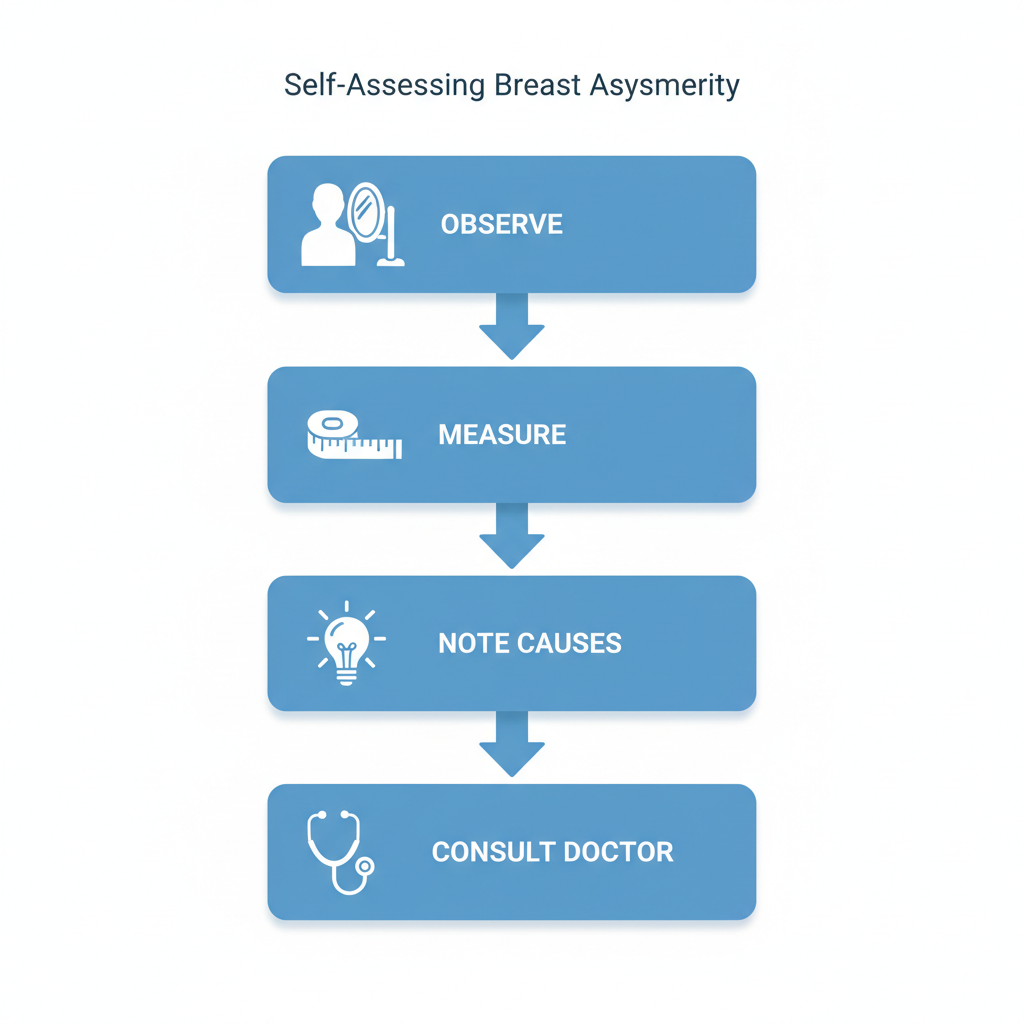
Step-by-step guide to assessing breast asymmetry at home.
The causes of breast asymmetry often stem from developmental factors during puberty, hormonal changes like those in pregnancy, or even posture habits. The Cleveland Clinic notes that while most cases are benign, underlying issues such as fibroadenomas may contribute.
If asymmetry appears suddenly or causes discomfort, consult a healthcare professional to rule out medical concerns. Tracking progress over time can highlight improvements from strength training. For exercise-based solutions, explore Uneven Breast Size Solutions Exercise to build pectoral strength and enhance overall symmetry safely.
Warm-Up Routine for Chest Muscles
Before diving into targeted workouts on how to fix uneven breasts with exercise, start with this gentle warm-up to prepare your pectoral muscles. This initial chest activation routine boosts blood flow, enhancing the effectiveness of pectoral exercises for breast size difference and reducing injury risks during symmetry workouts.
Why It Matters
A proper warm-up increases circulation to the chest area, as noted in safe exercise guides, making muscles more pliable and responsive. This preparation step prevents strains, especially when addressing breast asymmetry, and sets a strong foundation for optimal results in just 5-10 minutes.
Instructions
- Stand tall and perform arm circles: Extend arms out to the sides and make small forward circles for 10-15 reps, then reverse direction. Focus slightly more on the smaller side to encourage even activation. Breathe deeply–in through the nose, out through the mouth–to oxygenate muscles.
- Do wall pushes: Face a wall, place hands at shoulder height, and perform 10-15 slow pushes, engaging your chest. These exercises to fix uneven breasts mimic push-ups dynamically.
- Add dynamic stretches: Swing arms across your body in gentle crossing motions for 10-15 reps per side, holding each stretch briefly while maintaining steady breaths.
Tips for Beginners
Adapt by reducing reps to 5-8 if new to fitness, or use a chair for support during wall pushes. Listen to your body and consult a professional if you have concerns–progress gradually for safe, encouraging gains in chest symmetry.
Building Pectoral Strength with Push-Ups
Push-ups stand out as a fundamental bodyweight exercise for developing pectoral muscles, which can help address chest imbalances and promote a more symmetrical appearance. Incorporating pectoral exercises for breast size difference like push-ups targets the chest directly, potentially evening out breast size through consistent strengthening of the smaller side. This approach answers common concerns about whether chest workouts can balance asymmetry by focusing on muscle development beneath the tissue.
To perform a standard push-up, start in a plank position with hands shoulder-width apart and body straight from head to heels. Lower your chest toward the floor by bending elbows at a 45-degree angle, then push back up. Aim for 8-12 reps per side, emphasizing control to activate the pectorals effectively, as noted in Healthline’s form tips for optimal muscle engagement.
For beginners, modify by dropping to your knees to reduce intensity while maintaining form. Progress to full push-ups, then advance to one-arm variations for greater challenge on the weaker side. Common errors include sagging hips or flaring elbows; keep your core tight and gaze forward. Exercises for uneven breasts such as these push-up routines for chest balance and strengthening unequal pecs require patience and regular practice, ideally three times weekly, to see gradual improvements in symmetry.
Chest Press Variations for Balance
Chest presses offer effective pectoral exercises for breast size difference, helping address asymmetry by strengthening the smaller side. These movements promote balanced chest pressing through targeted pec development, building symmetry over time. Can targeted exercises fix one breast being smaller? Yes, with consistent effort, as causes of breast asymmetry often respond to how to fix uneven breasts with exercise routines like this.
Why It Matters
natural exercises for uneven breasts, such as chest presses, use body resistance to even out pectoral muscles without invasive methods. They enhance underlying support for better proportion, though results vary by individual factors like genetics.
Instructions
For dumbbell chest press, lie on a bench, feet flat, holding dumbbells above your chest with palms facing forward. Lower weights to chest sides in a controlled arc (elbows at 45 degrees), then press up explosively. Aim for 10-15 reps per set, focusing more on the weaker side. Inhale during descent, exhale on the lift. For machine variations, adjust seat for incline or decline to target upper or lower pecs. Start with lighter weights to avoid strain, progressing with overload as strength builds.
Tips
Maintain proper grip to prevent wrist stress, and use a spotter for heavy sets. Breathe steadily to stabilize your core, ensuring even development across both sides.
Incorporating Chest Flyes for Tone
Chest flyes provide targeted isolation for the pectoral muscles, promoting a lifted appearance and helping balance asymmetrical breasts through focused strength building. As one of the best exercises for breast asymmetry, this movement enhances muscle tone without adding bulk, drawing from expert insights on isolation benefits for upper body firmness. Incorporating flyes for pec symmetry can address how to fix uneven breasts with exercise by strengthening the chest evenly.
For floor flyes, lie on your back with knees bent and feet flat, holding light dumbbells above your chest with palms facing in. Slowly lower the weights out to the sides in a wide arc until you feel a stretch across your chest, then squeeze your pectorals to bring them back up. Aim for 12-15 reps per set, keeping your shoulders down to avoid strain on the upper body.
Cable flyes offer a similar isolation but with constant tension; stand between cable machine pulleys set at chest height, grasping the handles with a slight bend in your elbows. Step forward into a staggered stance, then bring your arms together in front of you in a hugging motion, focusing on the chest contraction. Perform 12-15 reps, maintaining control to prevent shoulder discomfort.
Beginners can modify by using no weights or resistance bands for lighter resistance, gradually increasing as form improves. These pectoral exercises for breast size difference emphasize proper alignment to maximize benefits while minimizing injury risk.
Dips and Advanced Pectoral Moves
As you progress in your fitness routine to address how to fix uneven breasts with exercise, incorporating dips elevates the challenge for deeper pectoral engagement. These advanced chest balancing movements build strength and symmetry, particularly useful for pectoral exercises for breast size difference caused by natural asymmetry or postural habits. Start with assisted dips using a machine or resistance bands to maintain proper form, gradually advancing to full bodyweight dips on parallel bars as your strength improves.
Aim for 6-10 reps per set, performing an extra set or additional reps on the smaller side to promote even development and answer the common query of how many reps should I do for the smaller side. Safety cues include keeping your elbows at a 90-degree angle, avoiding shoulder strain by engaging your core, and stopping if you feel discomfort in the joints. This scalable approach, drawing from advanced techniques like those outlined in Healthline resources, intensifies your workout while minimizing injury risk, setting the stage for targeted rows in the next phase.
Rows for Postural Support
Incorporating rows into your routine can be a key part of how to fix uneven breasts with exercise, as these movements build back strength to improve overall posture. Strong back muscles help counteract forward slouching, which often exacerbates causes of breast asymmetry like hormonal imbalances during puberty or pregnancy. By focusing on posture exercises for symmetry, you promote better spinal alignment that indirectly supports even breast positioning without targeting the chest directly.
To perform inverted rows, set up under a sturdy bar or use a TRX strap at chest height. Lie beneath it, grip the bar shoulder-width apart, and pull your chest toward the bar while keeping your body straight like a plank. Aim for 10-12 reps per set, emphasizing controlled form to engage the rhomboids and trapezius muscles effectively. This exercise complements pectoral exercises for breast size difference by balancing the upper body, preventing overdevelopment in the front that could worsen imbalances.
Finish with a cool-down stretch for the back to maintain flexibility. Regular practice, three times weekly, enhances postural support and contributes to a more symmetrical silhouette over time.
Cool-Down and Stretching
After completing your pectoral exercises for breast size difference, a proper cool-down helps reduce muscle soreness and promotes recovery for balanced chest development. Incorporating stretches like chest openers and shoulder rolls maintains flexibility, supporting long-term progress in addressing breast asymmetry. These movements counteract any tightness built up during workouts, ensuring both sides of your body receive equal attention.
Begin with a chest opener: Stand tall, clasp your hands behind your back, and gently lift your arms while opening your chest. Hold for 20-30 seconds, breathing deeply to enhance relaxation. Follow with shoulder rolls, circling your shoulders forward and backward in slow, controlled motions for the same duration. Focus on bilateral symmetry to prevent imbalances, especially if posture contributes to causes of breast asymmetry.
Perform these daily to integrate seamlessly into your routine, aiding overall recovery. While diet plays a role in supporting tissue health–answering whether nutrition affects breast size and symmetry–these stretches provide immediate benefits for muscle repair and posture improvement, setting the stage for troubleshooting any persistent unevenness.
Common Challenges and Solutions
Embarking on pectoral exercises to address breast asymmetry requires awareness of potential obstacles. Many women experience initial hurdles that can discourage progress, but with targeted strategies, these can be overcome. This section outlines common issues, practical solutions, and preventive measures to support your journey toward better symmetry. Remember, results from how to fix uneven breasts with exercise vary, emphasizing the need for patience and professional guidance.
Common Issues
- Muscle Soreness and Fatigue: Beginners often face delayed onset muscle soreness after push-ups or chest presses, making daily activities uncomfortable.
- Lack of Visible Progress: Plateaus can arise if routines remain static, leading to frustration over slow improvements in breast shape.
- Worsening Imbalances: Overworking the dominant side might exacerbate differences, especially if form falters during unilateral exercises.
- Injury Risks: Strain in shoulders or chest from improper technique can halt training, particularly with underlying conditions like causes of breast asymmetry.
- Motivation Dips: Inconsistent routines due to busy schedules disrupt momentum, questioning efforts like pectoral exercises for breast size difference.
These challenges affect up to 70% of starters, but recognizing them early prevents setbacks.
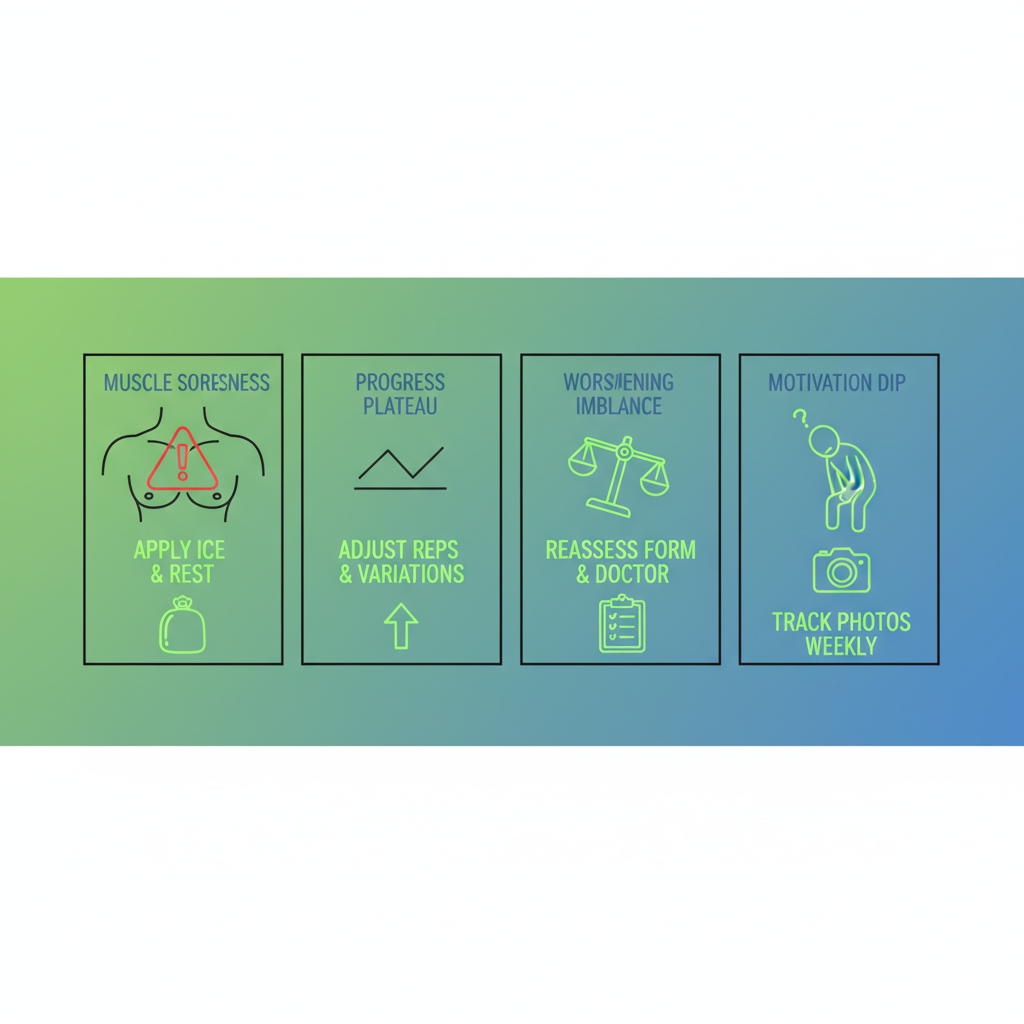
Common challenges and solutions in pectoral exercises for breast symmetry
The infographic highlights key pitfalls visually, reinforcing the importance of adaptive approaches in your fitness plan.
Solutions
- Manage Soreness: Apply ice packs for 15 minutes post-workout and incorporate rest days; gentle stretching eases tension.
- Break Plateaus: Adjust reps or add variations like dumbbell flyes; track weekly measurements to monitor gains. Addressing how long does it take for pectoral exercises to fix unequal breasts? Expect noticeable changes in 4-8 weeks with consistency, though full symmetry may take months.
- Correct Imbalances: Focus on weaker side with extra sets; use mirrors for form checks to ensure even effort.
- Handle Injuries: Stop immediately if sharp pain occurs and consult a doctor; consider low-impact alternatives like resistance bands over weights.
- Boost Consistency: Schedule short sessions and pair with lifestyle habits, such as walking, to build adherence.
For alternative approaches, explore uneven breast size solutions exercise tailored to individual needs, including overcoming workout barriers for symmetry.
Prevention Tips
- Track progress with photos or apps to stay motivated and spot issues early.
- Integrate exercises into daily routines, like morning push-ups, for seamless adoption.
- Consult a physician for red flags per Cleveland Clinic guidelines, such as sudden asymmetry changes or persistent pain, to rule out underlying concerns.
Patience is key; combine these with medical advice for safe, sustainable results.
Achieving and Maintaining Breast Symmetry
Incorporating exercises like push-ups and chest presses can effectively address how to fix uneven breasts with exercise, promoting better symmetry over time. These routines strengthen the pectoral muscles, offering a natural lift and balance without surgery. Consistent practice yields realistic improvements in appearance and confidence, drawing from established advice on breast firming exercises for long-term results.
To sustain chest balance naturally, aim for 3-4 sessions weekly, tracking progress through photos or measurements every few weeks. Complement workouts with a nutrient-rich diet high in proteins and antioxidants, as it supports tissue health and may influence outcomes. Maintain proper posture to prevent exacerbating causes of breast asymmetry, and incorporate pectoral exercises for breast size difference tailored to weaker areas. Yes, diet can affect breast firmness indirectly by aiding muscle recovery.
Embrace these habits for empowered wellness. If concerns persist, consult a doctor for personalized guidance and peace of mind.
