
Table of Contents
Understanding Office Posture and Why Stretches Matter
Imagine starting your workday energized, only to end slumped over your keyboard with nagging back pain by afternoon. For many desk workers, this is a daily reality due to prolonged sitting and screen time, leading to poor office posture like rounded shoulders and forward head position. According to Harvard Health, 80% of adults experience back pain, often tied to sedentary jobs that weaken posture over time.
These habits cause static desk positions and slouching, contributing to muscle tension and discomfort. The good news is office posture improvement stretches offer a simple solution, realigning your body to reduce tension, improve alignment, and boost energy levels. Incorporating desk stretches for back pain can prevent long-term issues, making them essential for daily wellness.
This guide walks you through an ergonomic desk setup guide, preparation tips, seven key workstation alignment exercises, and troubleshooting for seated posture correction routines. With consistent practice, you’ll notice better comfort in weeks. Start today–small stretches yield big results for a pain-free workday.
Preparing Your Workspace for Posture Stretches
Before diving into office posture improvement stretches, optimizing your workspace is crucial for reducing strain and maximizing the benefits of these exercises. An ergonomic desk setup guide can transform your typical office or home environment, preventing slouch and supporting long-term posture health without expensive overhauls.
Start with your chair: Adjust the height so your feet rest flat on the floor and knees bend at 90 degrees, promoting neutral spine alignment. This simple tweak, often overlooked, avoids the common error of a low chair that encourages forward leaning and back tension. Next, position your desk to maintain this setup, ensuring thighs are parallel to the floor. For those with standing desks, alternate positions every 30 minutes to incorporate supportive footwear, which cushions joints during transitions.
Elevate your monitor to eye level, with the top at or slightly below your sightline, as Harvard health experts note this reduces neck strain by up to 50 percent. For dual monitors, align the primary one straight ahead and angle the secondary slightly. Place your keyboard so elbows form 90-degree angles, keeping wrists straight to minimize repetitive stress. These workspace posture optimization steps create a foundation for effective Ergonomic Posture Exercises.
Take short breaks to stand and stretch, integrating ergonomic stretching preparation seamlessly. This affordable routine complements desk stretches for back pain, enhancing relief and preventing discomfort during longer work sessions.
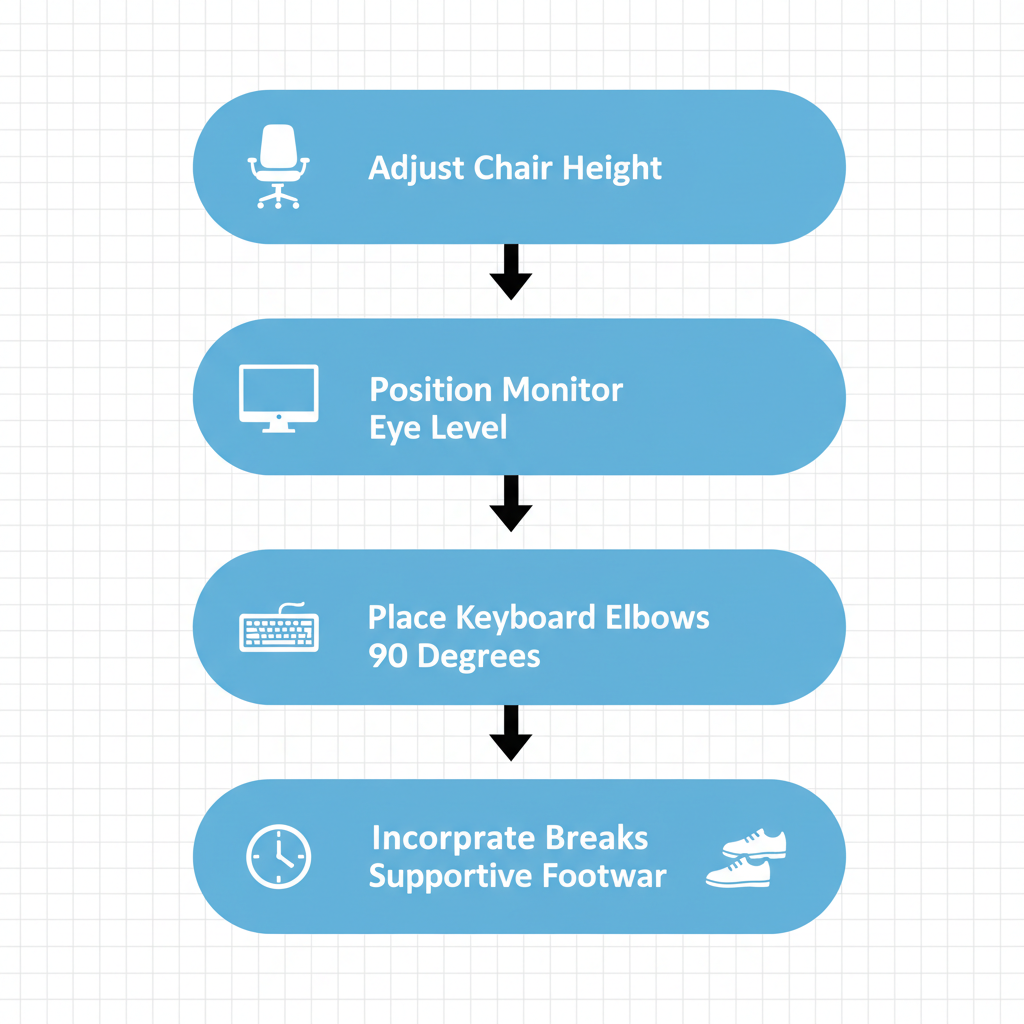
Steps to set up ergonomic workspace for better posture
With these adjustments, you’re ready to perform stretches that target tight muscles, building a pain-free routine effortlessly.
Chin Tuck Exercise for Neck Alignment
The chin tuck is a simple yet effective part of office posture improvement stretches, ideal for countering forward head posture from prolonged desk work. Perform it to strengthen deep neck flexors and align your spine.
Instructions:
- Sit or stand with your back straight, aligning with your ergonomic desk setup guide principles.
- Gently draw your chin back toward your neck, like creating a double chin, without tilting your head up or down.
- Hold the position for 5 seconds, feeling the engagement in your deep neck muscles.
- Release and repeat 10 times. This neck retraction technique integrates easily into work breaks as desk stretches for back pain relief.
Why It Matters: Chin tucks target forward head correction moves, reducing strain on your upper back and shoulders. According to chiropractic insights on neck pain in office settings, consistent practice can reduce forward head posture by 2-3 cm over weeks, promoting better spinal alignment and preventing chronic tension.
Tips: Breathe steadily during each hold to maintain relaxation. If you have existing neck issues, consult a professional before starting exercises for better posture at desk. Aim for 3-5 sessions daily for noticeable improvements in daily practice.
Bruegger’s Relief Position for Upper Back
Incorporating office posture improvement stretches into your daily routine can significantly reduce the strain from hours at a desk. Bruegger’s Relief Position targets the upper back, counteracting rounded shoulders and hunching that develop during prolonged sitting. This simple exercise opens the chest and promotes better alignment, making it an essential addition to your wellness practices.
To perform Bruegger’s Relief Position, sit at the edge of your desk chair with feet flat on the floor. Place your hands behind your back, fingers interlaced and palms facing up. Gently squeeze your shoulder blades together in a shoulder blade retraction motion, lifting your chin slightly while keeping your gaze forward. As you hold this anti-hunch pose, take deep breaths to enhance relaxation and thoracic expansion.
This position matters because it relieves built-up tension in the upper back and improves thoracic mobility, as noted in Harvard’s guide on preventing neck pain: “relief positions like Bruegger’s improve thoracic mobility.” By countering the forward slump from desk work, it helps alleviate related back pain and supports overall posture health.
For best results, hold the pose for 30 seconds and repeat 5-10 times, ideally hourly during your workday. Prioritize comfort over force to avoid strain. Use a mirror to check your form, ensuring even shoulder alignment. If you have existing back issues, consult a professional before starting these desk stretches for back pain.
Wall Angels for Shoulder Mobility
Transitioning from seated exercises like Bruegger’s, wall angels offer a standing stretch to further enhance shoulder mobility and counteract desk-induced slouching. This simple yet effective movement targets tight chest muscles and strengthens the upper back, promoting better alignment during long work hours.
Instructions: Stand with your back flat against a wall or doorframe, feet about six inches away to allow slight knee bend. Place your arms in a goalpost position–elbows bent at 90 degrees, forearms parallel to the ground, and hands touching the wall. Slowly slide your arms upward until they are fully extended overhead, keeping contact with the wall throughout, then lower them back down. Perform 10-15 repetitions, maintaining lower back contact to avoid arching. Focus on scapular strengthening as your shoulder blades retract and elevate smoothly.
Why It Matters: Wall angels activate rhomboids effectively, as noted in Women’s Health, improving scapula alignment and reducing forward shoulder posture from prolonged sitting. This boosts overall mobility, eases upper back tension, and supports ergonomic posture exercises for sustained comfort.
Tips: Ideal for office spaces with minimal room, use a sturdy doorframe if no full wall is available. Beginners can start with fewer reps and progress by holding the top position briefly. Incorporate these office posture improvement stretches into your routine alongside desk stretches for back pain to prevent strain and enhance daily ergonomics.
Upper Back Desk Stretch for Pain Relief
Building on wall angels for mobility, this desk stretch targets upper back tension from prolonged hunching over screens. According to Harvard Health, poor posture causes chronic strain in the rhomboids and trapezius muscles, but upper back stretches prevent chronic issues by promoting thoracic extension. Ideal for office workers, this move uses your desk edge for leverage to open the spine and relieve discomfort during long days.
Step-by-Step Instructions
- Sit forward on your chair, feet flat on the floor for stability.
- Place your hands on the desk edge behind you, shoulder-width apart, palms down.
- Gently lean back, lifting your chest while looking up toward the ceiling to extend the thoracic spine.
- Hold the position for 20-30 seconds, feeling a stretch in your upper back without pain.
- Release slowly and repeat 5 times, pausing between reps.
This desk stretches for back pain routine fits seamlessly into your workday.
Why It Matters
Incorporating office posture improvement stretches like this thoracic extension move reduces upper back pain by countering forward slouch, improving circulation and easing muscle tightness. It directly addresses pain from sitting, fostering better alignment and preventing escalation to chronic discomfort.
Tips for Success
Breathe deeply and steadily during the hold to enhance relaxation and oxygen flow to tight muscles. Avoid overarching your lower back; focus on a gentle lean to protect the spine. Try this as a quick mid-meeting break for sustained relief throughout your shift.
Neck Side Stretch for Tension Release
The neck side stretch targets lateral tension built up from prolonged phone use and uneven desk sitting, a key element in office posture improvement stretches. This simple move enhances balanced neck mobility and complements other desk stretches for back pain by addressing asymmetric strain.
Instructions: Sit tall in your chair with feet flat on the floor, maintaining an ergonomic desk setup guide in mind. Gently tilt your head to the right, bringing your ear toward your shoulder. Use your right hand to lightly assist by placing it on the left side of your head, avoiding any pulling. Hold for 20 seconds, keeping your left shoulder pressed down. Repeat on the left side. Perform three reps per side, breathing deeply throughout.
Why It Works: Lateral neck tilts release tightness in the scalene and trapezius muscles, promoting posture symmetry. According to Harvard’s stretching routine, 20-second holds optimize flexibility, helping prevent headaches from forward head posture common in office environments. This side tension reliever integrates seamlessly with broader Exercises for Better Posture at Desk routines.
Tips: Focus on equal time per side to avoid imbalances. If seated variation feels limited, stand with feet hip-width apart for added stability. Never force the stretch; ease in gradually for safe, effective relief.
Seated Spinal Twist for Core Support
Incorporate office posture improvement stretches into your daily routine to combat the rotational stiffness caused by prolonged desk sitting. The seated spinal twist targets the spine and core, promoting mobility and stability that help prevent lower back pain. According to Harvard Health, gentle rotational exercises like this enhance spinal flexibility, reducing the risk of discomfort from fixed positions.
To perform this desk stretches for back pain, begin by sitting sideways on your chair with one side of your body facing the backrest. Place your hands on the chair back or armrest, then gently twist your torso toward the side, keeping your hips stable. Inhale deeply to lengthen your spine, and exhale as you deepen the twist, focusing on controlled breathing. Hold for 20 seconds per side, repeating three times. Use a sturdy office chair for support, avoiding wheels if possible to maintain balance.
While desk stretches cannot cure severe lower back pain entirely, they play a supportive role in management by easing spinal rotation and strengthening the core. This chair twist flows naturally from neck-focused movements, preparing for chest-opening exercises ahead.
Chest Opener Stretch for Forward Lean
Forward leaning over desks often tightens the pectoral muscles, leading to rounded shoulders and poor alignment. This chest opener, as part of office posture improvement stretches, counters that by expanding the chest and strengthening the upper back. It serves as a key pectoral expander, helping restore open posture and alleviate tension from prolonged sitting.
To perform this stretch, stand or sit tall with feet hip-width apart. Clasp your hands behind your back, palms facing inward. Gently lift your arms slightly while squeezing your shoulder blades together to feel the chest expansion. Hold for 30 seconds, repeat 5 times daily, as recommended in stretching routines for optimal frequency.
For an add-on, incorporate a shoulder roll beforehand to loosen the area. If at a desk, use this as a desk-free option during breaks. Along with exercises for better posture at desk and desk stretches for back pain, it completes your routine. Proper integration supports an ergonomic desk setup guide, reducing forward lean issues. Now that you’ve mastered these stretches, let’s troubleshoot common posture challenges ahead.
Troubleshooting Common Posture Stretch Issues
Implementing office posture improvement stretches can transform your workday, but it’s normal to encounter hurdles along the way. Many people face frustrations like persistent discomfort or difficulty maintaining form, especially during busy schedules. This section tackles these common challenges with practical solutions to help you practice safely and effectively.
Common Issues and Quick Fixes
- Over-stretching risks: Pushing too far can strain muscles, leading to soreness. Modify by holding stretches for only 20-30 seconds and breathing deeply to avoid tension. According to Harvard Health, gentle consistency prevents injuries better than intense efforts.
- Incorrect form pitfalls: Poor alignment, like slouching during desk stretches for back pain, reduces benefits and may worsen issues. Focus on keeping your spine neutral and shoulders relaxed; mirror checks or apps can guide you.
- Consistency barriers: Life gets hectic, making daily routines tough. Set phone reminders for short sessions to build the habit without overwhelm.
These stretch routine adjustments address posture fix pitfalls upfront, ensuring you avoid setbacks.
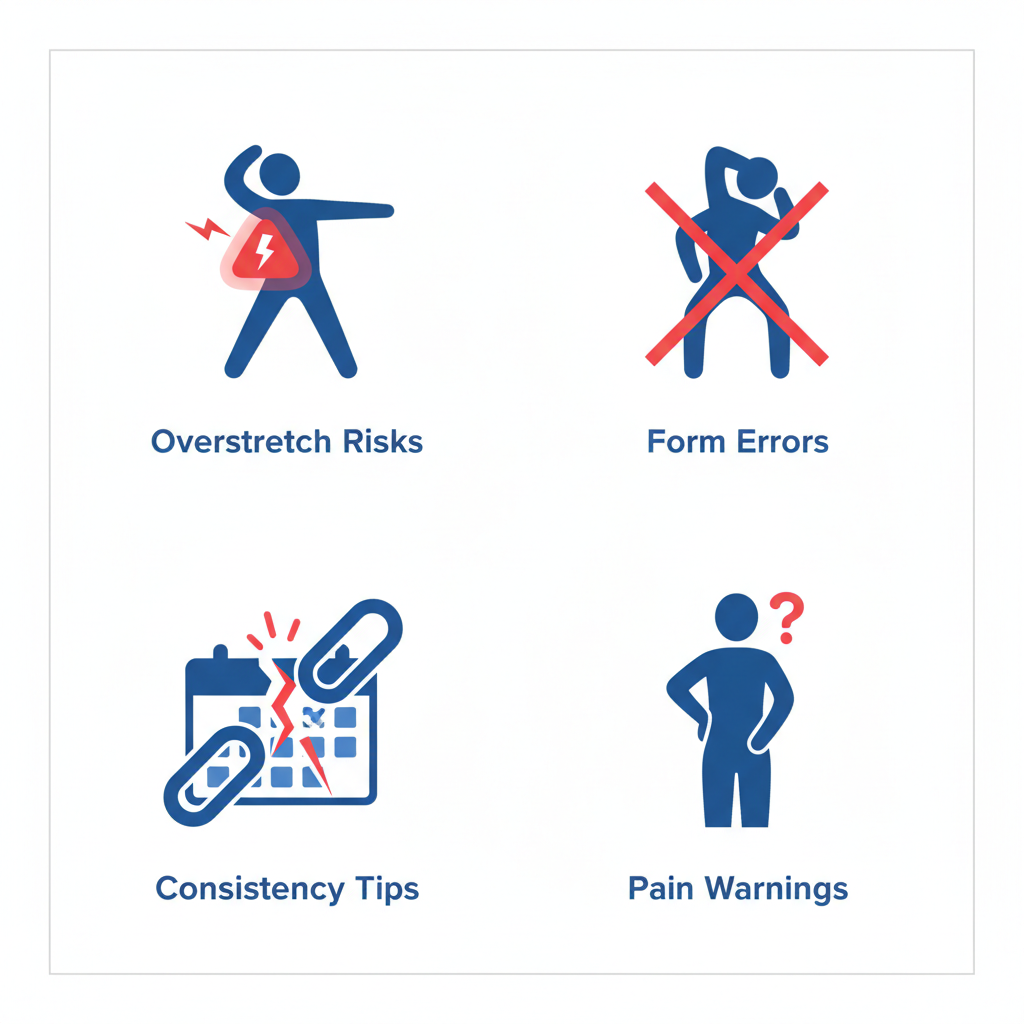
Illustrations of common posture stretch troubleshooting issues
Visual aids like these highlight key areas to watch, reinforcing proper techniques for long-term success.
Expect realistic timelines: noticeable changes from office posture exercises often take 2-4 weeks with regular practice. Aim for desk stretches for back pain 3-5 times daily, in short bursts of 5-10 minutes each. While helpful, stretches won’t cure severe lower back pain; they support relief alongside an ergonomic desk setup guide, like adjusting chair height to align knees at 90 degrees.
Know when to pause: if pain intensifies or persists beyond a week, stop and consult a doctor, especially for chronic conditions. Chiropractic experts advise seeking professional help if symptoms worsen, as underlying issues may need attention.
Pro Tips: Track progress weekly with photos or a journal to stay motivated. Pair stretches with an ergonomic desk setup guide for amplified results, fostering sustainable posture habits.
Integrating Posture Stretches into Your Daily Routine
Incorporating office posture improvement stretches into your workday transforms everyday habits into a powerful daily posture wellness plan. Techniques like the chin tuck, Bruegger’s stretch, and wall angels, combined with desk stretches for back pain, offer quick relief and build foundational strength. These simple moves enhance energy levels, reduce chronic discomfort, and boost focus, proving that small adjustments yield significant productivity gains.
To build a seamless workday stretch integration, aim for a 10-minute routine during breaks, syncing with your ergonomic desk setup guide principles like proper chair height and monitor positioning. Use app reminders to stay consistent, troubleshooting any tightness by adjusting frequency or pairing with deep breathing. This synergy prevents strain and supports overall office wellness.
Embrace this transformation for lasting posture health–regular routines, as noted in Harvard’s stretching guide, can prevent 70% of posture-related pain. Track progress in a journal to witness rapid improvements in vitality and comfort. Commit today; your empowered, pain-free workday awaits.
