
Table of Contents
Comparing Ozempic, Contrave, and Phentermine for Weight Loss
In the face of America’s obesity epidemic, where over 40% of adults struggle with weight management, prescription options like ozempic vs contrave vs phentermine have surged in popularity. These Weight Loss Drugs Compared offer targeted approaches to appetite suppression and metabolic support, addressing the demand for effective solutions amid rising health concerns.
Ozempic, a GLP-1 agonist injection primarily approved for type 2 diabetes, is widely used off-label for semaglutide weight loss, mimicking hormones to reduce hunger and slow digestion for sustained results. Contrave, an oral combination pill of naltrexone and bupropion, targets brain reward centers to curb cravings and emotional eating. Phentermine, a short-term stimulant, acts as an appetite suppressant by boosting norepinephrine to decrease hunger signals. FDA data shows these comparing prescription weight loss drugs can yield 5-15% body weight reduction on average, with GLP-1 prescriptions like Ozempic skyrocketing due to proven efficacy.
Ideal for adults with a BMI over 30 or obesity-related conditions, these appetite suppressant options require medical oversight to ensure safety and suitability.
Upcoming sections dive into detailed overviews, effectiveness, side effects, and the cost of weight loss injections vs pills to guide your choice–always consult a doctor before starting.
Overview of Ozempic, Contrave, and Phentermine
When evaluating ozempic vs contrave vs phentermine, understanding each medication’s profile is essential for informed decisions on obesity treatment options. These prescription appetite control meds offer distinct approaches to weight management, tailored to different needs and health conditions.
Ozempic (Semaglutide): This injectable formulation contains semaglutide, a GLP-1 receptor agonist, FDA-approved in 2017 for type 2 diabetes management but widely used off-label for semaglutide weight loss. Administered weekly via subcutaneous injection, it mimics hormones to slow gastric emptying and reduce appetite. Clinical trials, as noted in weight loss medication overviews, show 5-10% body weight reduction over 68 weeks. Ideal for long-term use in patients with BMI ≥27 and comorbidities, always under medical supervision.
Contrave (Naltrexone-Bupropion): An oral extended-release tablet combining naltrexone and bupropion, approved by the FDA in 2014 for chronic weight management in adults with BMI ≥30 or ≥27 with hypertension. Taken twice daily, it modulates neurotransmitters in the brain to curb hunger and food cravings. For details on Contrave vs Ozempic, efficacy data from references indicate sustained results when paired with diet and exercise. Suited for those seeking non-stimulant, long-term options.
Phentermine: This short-term appetite suppressant features phentermine hydrochloride, a sympathomimetic amine approved in 1959 for obesity treatment in BMI ≥30 cases. Administered as a daily oral pill, it activates the central nervous system to suppress hunger. Best for brief interventions, typically 12 weeks, to jumpstart weight loss.
Administration differs notably–injections for Ozempic versus pills for the others–with cost of weight loss injections vs pills varying based on insurance; consult providers for personalized guidance. Mechanisms highlight Ozempic’s hormonal mimicry, Contrave’s neural modulation, and Phentermine’s stimulation, paving the way for feature-based comparisons.
Key Features and Differences in Effectiveness and Side Effects
When evaluating ozempic vs contrave vs phentermine, key distinctions emerge in their mechanisms, administration methods, weight loss outcomes, and side effects. These medication efficacy contrasts help users identify the best fit for sustainable phentermine vs ozempic management or quick interventions.
To compare these options effectively, consider clinical trial data highlighting differences in how each drug targets weight loss. Ozempic leverages semaglutide weight loss through GLP-1 pathways, while Contrave focuses on brain chemistry and Phentermine boosts metabolism. This table outlines core features for quick assessment, drawing from studies like those comparing Contrave to GLP-1 injectables such as Wegovy, an analog to Ozempic.
| Feature | Ozempic | Contrave | Phentermine |
|---|---|---|---|
| Mechanism | GLP-1 agonist (appetite suppression, slows digestion) | Neurotransmitter modulation (reduces cravings) | Stimulant (increases energy, suppresses appetite) |
| Administration | Weekly injection | Daily oral pill (twice) | Daily oral pill |
| Avg Weight Loss | 10-15% body weight (long-term) | 5-10% body weight | 5-8% body weight (short-term) |
| Common Side Effects | Nausea, GI issues | Nausea, headache, insomnia | Dry mouth, increased heart rate |
Data sourced from clinical trials referenced in Healthline articles. Ozempic stands out for superior long-term efficacy, achieving up to 15% body weight reduction via sustained appetite control, ideal for those committed to ongoing treatment despite gastrointestinal side effects like nausea affecting over 40% initially. Contrave offers moderate 5-10% loss through craving reduction but brings neurological issues such as insomnia, suiting pill-preferring users wary of injections. Phentermine provides short-term 5-8% gains with energy boosts, yet cardiovascular risks like elevated heart rate demand caution for brief use only. Safety profile comparisons reveal trade-offs: Ozempic’s convenience in weekly dosing versus daily pills, but the cost of weight loss injections vs pills often sways choices toward oral options. Individual responses vary; consult a doctor for personalized risks and suitability (128 words total for table summary).
These features underscore Ozempic’s edge in sustained results, paving the way for pricing considerations.
Building on efficacy and safety insights, users must weigh lifestyle factors. For instance, injection aversion may favor Contrave or Phentermine, though long-term sustainability tips toward Ozempic for transformative outcomes. Professional guidance ensures alignment with health needs.
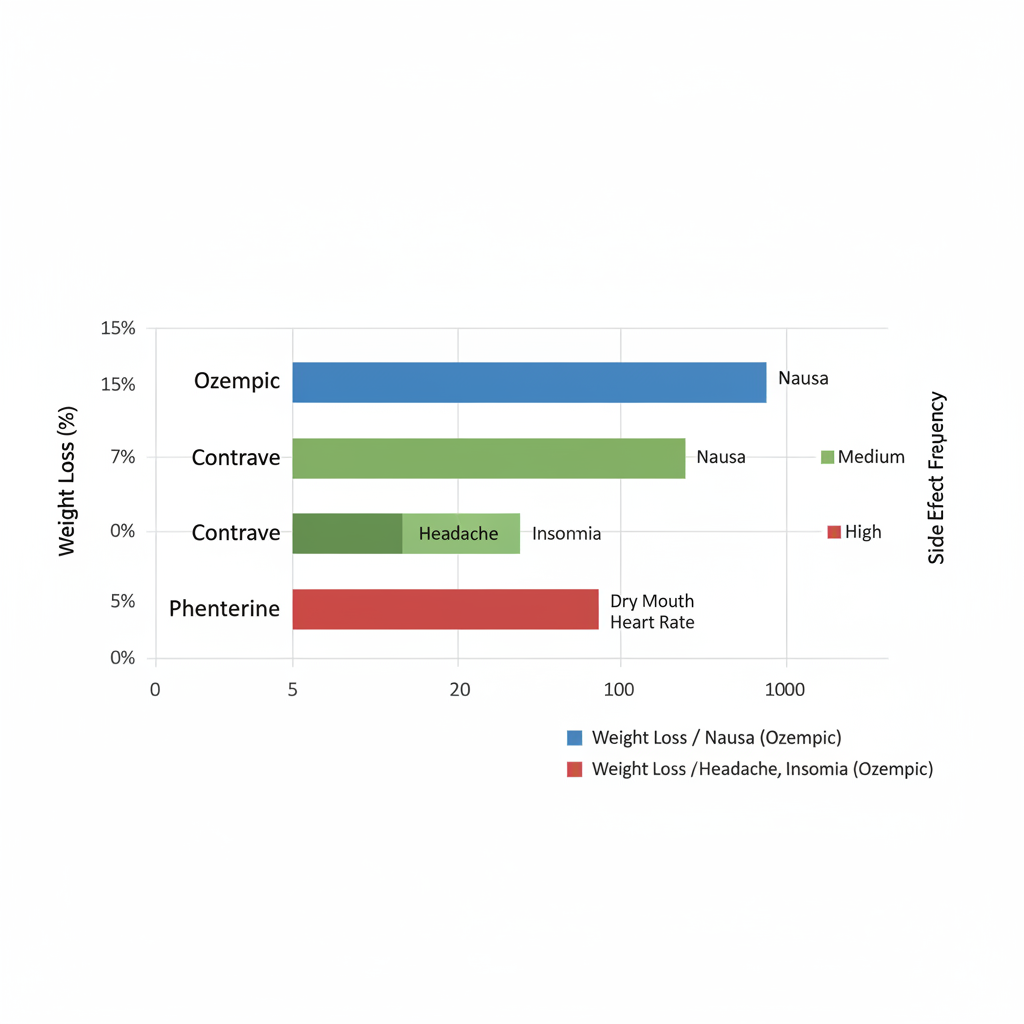
Comparison of effectiveness and side effects for Ozempic, Contrave, and Phentermine
Cost Breakdown of Ozempic, Contrave, and Phentermine
When comparing ozempic vs contrave vs phentermine for weight loss, affordability plays a key role in treatment selection. Ozempic, a semaglutide weight loss injection, often exceeds $900 monthly without coverage, while oral options like Contrave and Phentermine offer lower entry points. These prescription expense factors vary by pharmacy and location in the US.
Understanding the cost of weight loss injections vs pills is crucial for budgeting long-term obesity management. Factors like insurance eligibility and assistance programs significantly impact out-of-pocket expenses, making it essential to evaluate total affordability before starting therapy.
The following table provides a clear cost comparison:
| Aspect | Ozempic | Contrave | Phentermine |
|---|---|---|---|
| Monthly Cost (No Insurance) | $900-$1,300 | $250-$300 | $10-$50 |
| Insurance Coverage | Often for diabetes; variable for weight loss | Possible for obesity; prior auth needed | Generic, widely covered short-term |
| Assistance Programs | Novo Nordisk savings card (up to $150 off) | Currax copay assistance | Low-cost generics available |
Costs are based on 2023 US pharmacy averages from Healthline sources. Phentermine stands out as the most budget-friendly for short-term use, ideal for initial weight loss phases, whereas Ozempic’s higher price reflects its potency in sustained semaglutide weight loss results. Contrave falls in between, balancing efficacy with moderate costs. Insurance often favors generics like Phentermine, but phentermine elite 37.5 ozempic combinations may alter dynamics. Assistance programs can reduce Ozempic to as low as $25 monthly for eligible patients, enhancing the affordability of obesity meds. Always verify current prices and eligibility, as variables like generics influence overall expense.
This breakdown highlights how injections drive higher costs compared to pills, influencing decisions on sustainability.
For visual clarity on these economic aspects, consider the ongoing implications for users navigating coverage options.
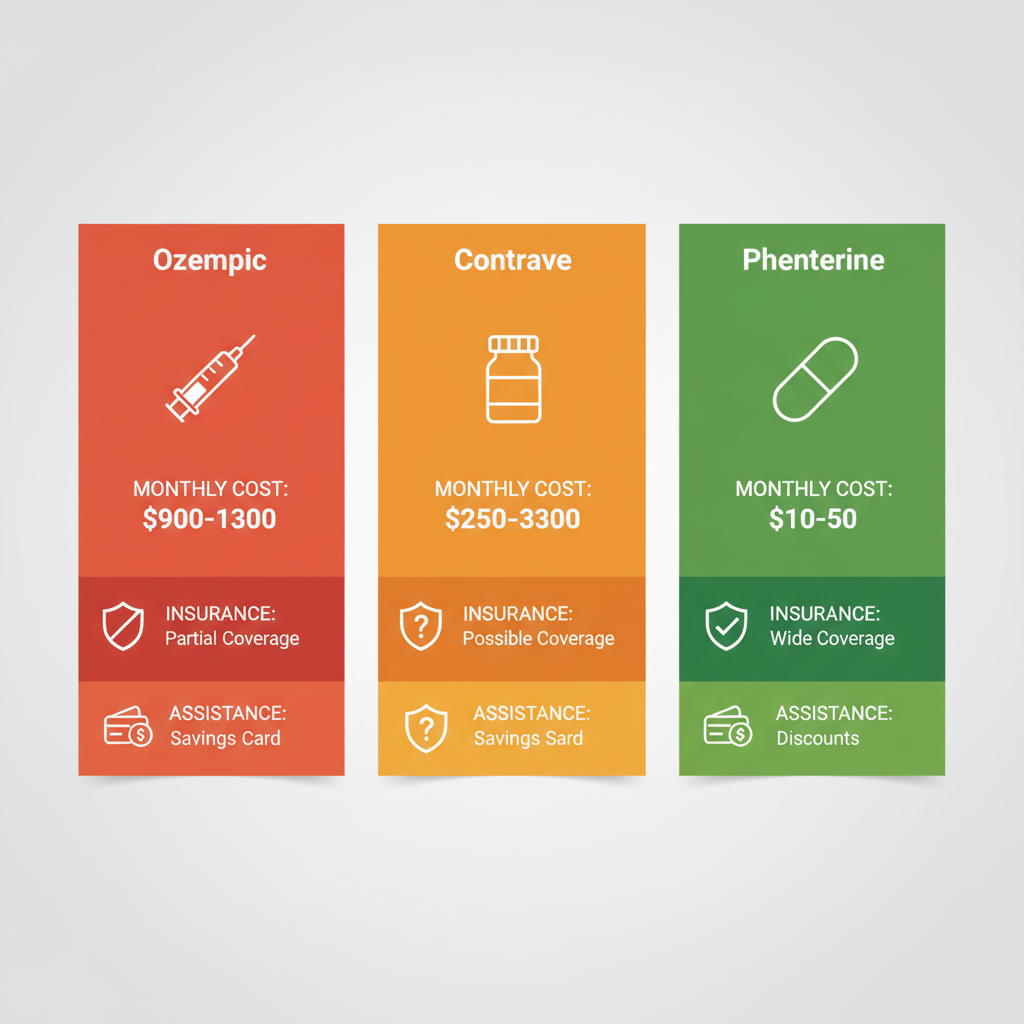
Cost comparison of Ozempic, Contrave, and Phentermine including insurance and assistance
In summary, while Phentermine offers immediate low-cost access, Ozempic provides premium value for committed semaglutide weight loss journeys despite the premium. Consult providers to tailor choices to personal budgets.
Which Weight Loss Medication Fits Your Needs?
In the ongoing discussion of ozempic vs contrave vs phentermine, the right choice hinges on your unique health profile and lifestyle priorities. Tailored obesity solutions emerge when aligning medications with goals like sustained results or quick starts, always under medical supervision.
For those committed to long-term, substantial weight reduction, Ozempic stands out. Its semaglutide weight loss mechanism supports ongoing maintenance, backed by studies showing superior sustainability over time compared to short-term options. Ideal for individuals with higher BMI or comorbidities like diabetes, it excels despite requiring weekly injections and potentially higher costs.
If moderate outcomes with fewer hassles appeal, Contrave offers pill-based convenience for curbing cravings and emotional eating. The contrave vs ozempic matchup highlights Contrave’s edge in accessibility for those avoiding needles, though results may plateau without lifestyle changes.
Budget-conscious users seeking a rapid boost might prefer Phentermine for its affordability and short-term appetite suppression. When weighing the cost of weight loss injections vs pills, Phentermine provides an economical entry point, best for kickstarting habits before transitioning to maintenance therapies.
A simple decision framework: Prioritize efficacy for chronic needs (Ozempic), balance results and ease (Contrave), or affordability for trials (Phentermine). Factor in BMI above 30, side effect tolerance, and insurance coverage–semaglutide often requires prior authorization.
Remember, these are off-label uses for weight loss; consult a healthcare provider to assess risks, interactions, and personalized fit before starting any regimen.
Choosing the Right Path for Sustainable Weight Loss
In the debate of ozempic vs contrave vs phentermine, each option offers unique benefits for weight management. Ozempic delivers profound results through phentermine elite ozempic, ideal for significant needs; Contrave provides a balanced approach combining appetite control and support; Phentermine serves as an entry-level stimulant for quick starts. These choices highlight effectiveness tailored to individual goals.
Key takeaways emphasize integrating diet and exercise for sustainable loss strategies. Consider holistic factors like side effects and insurance coverage, where the cost of weight loss injections vs pills varies–injectables often require assistance programs. Evidence from comparisons underscores evidence-based decisions for long-term health.
Empower your weight management choice by consulting healthcare providers for prescriptions, including semaglutide weight loss options. Visit WellnessHQ.net for more guides on personalized plans and support in the US.
