
Table of Contents
Unlocking Weight Loss Through Exercise
While nutrition sets the foundation, exercise accelerates results—here’s how to get moving. At WellnessHQ, we’re passionate about empowering and inspiring individuals to lead healthier lives through exercise for weight loss, which burns calories and boosts metabolism, supporting sustainable weight management, as per Centers for Disease Control and Prevention (CDC) guidelines.
For those starting physical activity, focus on low-impact options like walking and swimming—ideal beginner weight loss tips that enhance cardiovascular health and fat reduction, according to expert insights from Harvard Health Publishing. Aim for 150 minutes of moderate activity weekly, starting slow to prevent injury, and track progress for motivation. Complement with simple diet plans for weight loss, but remember physical activity drives the burn.
Consult your doctor before beginning, tailoring a plan to your needs as CDC recommends. Once comfortable with basics, explore intensified options for faster progress.
1. Walking for Steady Weight Loss
Walking stands out as a simple yet powerful exercise for weight loss, offering a low-impact way to burn calories and build sustainable habits. At WellnessHQ, we believe this accessible activity is perfect for beginners, helping you shed pounds steadily without overwhelming your routine. For an average adult, a 30-minute walk can burn about 200-300 calories, depending on pace and body weight, making it an ideal starting point for anyone embarking on physical activity for shedding pounds.
The physiological perks of regular walking extend beyond calorie burn, boosting cardiovascular health and enhancing fat oxidation for better weight management. To amp up results, incorporate brisk walking intervals—alternating moderate paces with short bursts of speed—which, as practical strategies from WellnessHQ highlight, elevate your metabolic rate and trigger an afterburn effect for continued calorie expenditure. We recommend starting with 20-30 minute daily walks, then progressing by adding 1-minute high-intensity intervals every 5 minutes in a 30-minute session. These interval training weight loss variations accelerate progress toward your goals without high strain.
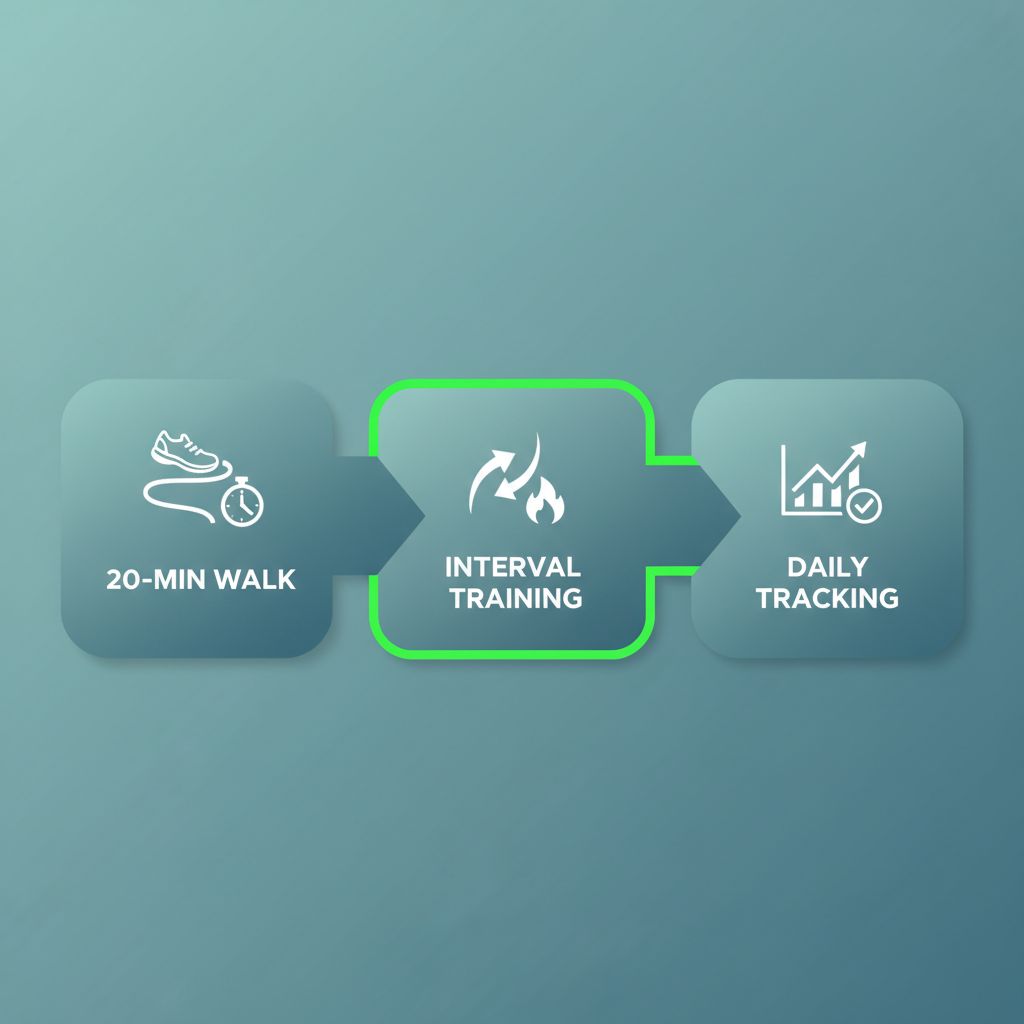
Three-stage walking program for steady and effective weight loss
Here are some weight loss tips to implement effectively:
- Choose a comfortable pace to maintain consistency.
- Track your steps with a simple app for motivation.
- Vary routes to keep things engaging.
If plateaus hit, combine walking with diet plans for weight loss, as authoritative guidelines from the Mayo Clinic advocate for pairing aerobic exercise like this with caloric adjustments and behavioral changes to overcome obstacles.
Consistent walking over 12 weeks, paired with a modest caloric deficit, can yield 5-10% body weight reduction, per Mayo Clinic recommendations. We encourage you to lace up and start today—pair it with smart nutrition for even greater strides in your wellness journey.
2. HIIT for Quick Fat Burning
Building on foundational cardio, HIIT offers a turbocharged approach to exercise for weight loss. High-Intensity Interval Training involves short bursts of intense exercise alternated with recovery periods, delivering efficient fat-burning results in under 30 minutes per session. We at WellnessHQ love how this method fits busy lifestyles while maximizing calorie burn.
One key benefit is the afterburn effect, or EPOC, where your metabolism stays elevated for up to 24 hours after a workout, boosting fat oxidation. Peer-reviewed scientific evidence from the morning exercise weight loss studies by the National Institutes of Health shows that timing HIIT in the morning enhances these effects, leading to greater reductions in weight and BMI compared to later sessions. This aligns with circadian rhythms for optimal fat metabolism, making it a smart choice for rapid results over traditional steady cardio.
Ready to try? Here are simple weight loss tips with sample HIIT routines: Start with 20-second sprints followed by 40-second walks, repeated for 20 minutes. Or, do burpees for 30 seconds, then rest 30 seconds, for 15 rounds. We recommend morning sessions to leverage these benefits, but always consult a qualified healthcare provider before starting any exercise program, especially if you’re new to intense workouts. Beginners should modify intensities to build safely and avoid injury, as practical FAQ insights from WellnessHQ emphasize gradual progression for effective weight management.
Pair these HIIT sessions with smart eating, like exploring diet plans for weight loss, for amplified results.
3. Strength Training for Muscle Gain
At WellnessHQ, we believe strength training is a game-changer for those pursuing exercise for weight loss. While cardio burns calories in the moment, strength training builds muscle that keeps your metabolism revved up long-term, helping you shed pounds more effectively.
Among the best exercises health, as recommended by Harvard Health Publishing, focus on compound movements for muscle hypertrophy. Squats target your legs and core, engaging multiple joints to build lower body power. Deadlifts strengthen your back and hamstrings, improving overall posture and grip strength. Bench presses work your chest, shoulders, and triceps, fostering upper body development. Start with 3 sets of 8-12 reps to see results.
Apply progressive overload by increasing weights 5-10% every 1-2 weeks, allowing 48-72 hours rest for muscle recovery, per practical Q&A guidance from WellnessHQ experts. For safety, warm up with 5-10 minutes of dynamic stretches and always check your form to avoid strains, especially in the lower back during deadlifts.
Boost gains with a 250-500 calorie surplus daily and 1.6-2.2 grams of protein per kg of body weight. This fuels repair while increasing muscle mass, which raises your resting metabolic rate by 5-10 calories per pound gained, supporting sustainable fat loss.
As weight loss tips, weave these workouts into your routine alongside balanced meals. Pair strength sessions with diet plans for weight loss rich in protein to maximize muscle growth and calorie burn. Consult a healthcare provider before starting. We empower you to build strength and transform your body—tease in nutrition next for full results.
4. Cardio for Endurance Building
Building on the foundational aerobic principles from our previous discussion on general cardio basics, let’s dive into how targeted cardio workouts can supercharge your endurance. At WellnessHQ, we believe that endurance in the context of cardio refers to your ability to sustain prolonged aerobic activity without fatigue, driven by physiological adaptations like increased mitochondrial density and improved VO2 max—the maximum rate of oxygen consumption during exercise, as cited in authoritative academic research from PubMed Central. When incorporated as exercise for weight loss, these sessions enhance cardiovascular stamina while promoting sustained calorie burn, empowering you to achieve lasting fitness gains.
To build endurance effectively, try these three specific cardio workouts, each designed to boost stamina and support fat reduction. First, long-distance running: Aim for 30-45 minutes at a moderate pace, engaging your full body to improve aerobic capacity and burn 400-600 calories per session, according to our internal wellness guidance from WellnessHQ. Next, cycling intervals: Alternate 5 minutes of high-intensity pedaling with 10 minutes of recovery, which elevates post-exercise oxygen consumption for continued metabolic effects even after you stop. Finally, swimming laps: Focus on a continuous 20-30 minutes with a steady rhythm, a low-impact option that strengthens your heart and lungs while aiding aerobic activities for fat reduction. These routines not only build resilience but also align with proven strategies for shedding pounds through exercise, burning significant calories to fuel your weight loss journey.
As weight loss tips go, integrate these into your daily routine gradually to stay motivated—start with 20-minute sessions and increase duration by 10% weekly to prevent overtraining. For even better results, pair your cardio with diet plans for weight loss to optimize nutrition and recovery. Ultimately, this endurance-building approach complements strength training for balanced fitness, playing a key role in sustainable weight management. Remember, consult a healthcare professional before starting any new exercise program to ensure it fits your needs.
5. Beginner Routines for Easy Starts
Building on the wellness fundamentals we’ve explored, you’re ready to dive into the ‘how’ of getting moving. At WellnessHQ, we know starting exercise for weight loss can feel daunting, but simple routines make it approachable and effective. These low-impact options help you build confidence while supporting sustainable habits that boost metabolism and gradual calorie burn.
We recommend structured wellness programs for beginner support, offering accessible entry points like our FAQs on motivation. Try three easy 10-15 minute routines: walking intervals (alternate 1-minute brisk walks with 2-minute casual paces), basic bodyweight squats (stand and lower as if sitting back into a chair), and gentle stretching sequences (reach arms overhead and hold for 20 seconds per side). These incorporate low-impact movements to prevent injury and promote adherence, as peer-reviewed scientific evidence from the National Institutes of Health highlights the long-term benefits of novice-friendly full-body exercises for fat mass reduction.
For a step-by-step example, start with walking intervals outdoors in local parks or indoors:
- Warm up: March in place for 2 minutes to loosen up.
- Intervals: Walk briskly for 1 minute, then slow for 2 minutes; repeat 4 times.
- Cool down: Stretch legs gently for 2 minutes.
Modify for mobility issues with seated marches. Pair this with morning coffee to integrate seamlessly into your day.
As weight loss tips, track small wins in a journal or add favorite music to combat motivation dips—practical guidance from WellnessHQ experts. Combine with diet plans for weight loss like balanced meals for better results. Remember, the content here is for informational purposes; consult a healthcare provider before starting. These steps lay the groundwork for progressing to intermediate challenges ahead.
6. Combining Exercise with Diet Plans
Building on effective diet plans, incorporating exercise for weight loss amplifies results by boosting metabolism and promoting sustainable habits. At WellnessHQ, we believe this synergy empowers and inspires individuals to lead healthier lives. When paired thoughtfully, these strategies can enhance fat burning while preserving muscle, leading to balanced wellness.
Aerobic exercises like running complement calorie-controlled diets to accelerate fat loss. For instance, combining brisk walks or jogs with a daily intake under 2,000 calories can yield 1-2 pounds of weekly weight loss, according to Wellness HQ’s practical Q&A guidance on balanced routines. Here are some weight loss tips: Start with 30-minute sessions three times a week, gradually increasing intensity while tracking portions to avoid fatigue.
Strength training pairs well with high-protein diets to maintain muscle during slimming. Aim for 1.6g of protein per kg of body weight through meals like grilled chicken salads or Greek yogurt bowls. Meanwhile, interval training with balanced macronutrient nutrition strategies for slimming down supports endurance. A sample 7-day schedule alternates cardio days with rest: Monday (HIIT run, high-carb breakfast), Tuesday (weights, protein-focused lunch), and so on, adjusting calories as needed. Participating in comprehensive wellness programs that blend exercise and diet, as recommended by our specialized integration advice, helps overcome challenges like overtraining. Use fitness apps to monitor progress and prevent burnout from restrictive eating.
Evidence from Wellness HQ shows combined approaches improve metabolic rates for long-term success. Personalize your routine with professional guidance to transition smoothly into maintenance phases—consult a healthcare provider before starting.
Building Sustainable Weight Loss Habits
Building on foundational weight loss principles, we at WellnessHQ believe that true transformation comes from sustainable habits. Incorporating exercise for weight loss early sets the stage for lasting change, helping you shed pounds gradually without burnout.
To turn these basics into lasting change, focus on practical strategies. Set realistic goals: Aim for 1-2 pounds weekly, as Mayo Clinic insights recommend for avoiding rebound effects. Track progress: Use apps or journals to log daily activities, boosting adherence per National Center for Biotechnology Information studies on exercise routines. For weight loss tips, tailor exercise to your fitness level, like full-body workouts shown effective for fat reduction. Combine with diet plans for weight loss by planning meals rich in veggies, lean proteins, and whole grains while minding calories—think grilled chicken salads or overnight oats.
Overcome barriers like motivation dips through group support or coaching for accountability. Regularly assess your routine and adjust based on feedback to sustain progress. With these habits, explore maintenance plans next for personalized wellness.
This article was researched and written with the assistance of AI tools.
Resources
- Discover 30-Minute HIIT Workouts for Effective Weight Loss
- Launch Seven-Step Employee Wellness Programs for Productivity Gains
- Build Holistic Wellness Initiatives for Comprehensive Employee Health
- Implement Targeted Wellness Programs to Enhance Workplace Well-Being
- Unlock Employee Wellness Benefits for Reduced Stress and Retention
- Follow Seven-Step Framework for Successful Corporate Wellness Programs
- Enhance Workplace Wellness with Fitness Nutrition and Contouring Options
- Start 150-Minute Weekly Activity Routines for Chronic Disease Protection
- Master Top Five Exercises for Long-Term Health and Fitness
- Achieve Greater Fat Loss with Morning Aerobic Exercise Sessions
- Treat Obesity with Lifestyle Changes Medications and Surgical Options
- Maximize Fat Reduction Using Full-Body Resistance Training Routines