Table of Contents
- Understanding Body Contouring Basics
- Fundamentals of Body Contouring
- Exploring Body Contouring After Weight Loss
- Practical Aspects of Body Contouring
- Advanced Body Contouring Considerations
- Frequently Asked Questions About Body Contouring
- Key Takeaways on Body Contouring
Understanding Body Contouring Basics
In today’s wellness-focused world, body contouring stands out as a popular way to reshape and tone the body, helping many achieve a more sculpted appearance. We believe this approach not only enhances physical form but also boosts confidence, making it a key part of your journey toward total wellness. At WellnessHQ.net, your premier source for health and beauty information, we explore how these methods support holistic well-being without invasive measures.
Body contouring involves procedures that remove or reposition excess fat and skin to improve overall shape, often sought after significant weight loss. Many turn to these options to address stubborn fat pockets or loose skin that exercise alone can’t fully resolve, leading to benefits like improved self-esteem and clothes that fit better. This can motivate sustained healthy habits, aligning with our comprehensive guides on weight management and body positivity. For those post-weight loss, it provides a way to celebrate progress while tackling remaining challenges, fostering a positive body image.
As we delve deeper in this guide, we’ll preview surgical and non-surgical body sculpting procedures, from fat reduction treatments to advanced technologies. We’ll also touch on body contouring costs and key considerations for safe choices.
Remember, the content on WellnessHQ.net is for informational purposes only and not a substitute for professional medical advice. We encourage consulting a qualified healthcare provider to discuss your goals and ensure safety, as emphasized by FDA guidelines on non-invasive options. Embrace this empowering step toward the confident, healthy you.
Fundamentals of Body Contouring
At WellnessHQ, we often hear from readers eager to understand body contouring as a way to enhance their wellness journey. Body contouring refers to a range of procedures designed to remove excess fat, tighten skin, and reshape specific areas of the body, helping individuals achieve a more sculpted appearance after significant weight loss or to address stubborn pockets of fat. These techniques support overall health goals by boosting confidence and encouraging active lifestyles, but they are cosmetic in nature and not a substitute for weight loss or medical treatment. Always consult a qualified healthcare provider to determine if these options align with your needs.
Surgical Body Contouring Options
Surgical approaches involve more invasive methods that physically remove fat and excess skin for dramatic results. We recommend these for those seeking substantial changes, often after major weight loss.
- Liposuction: This procedure uses a cannula to suction out fat cells from areas like the abdomen or thighs, permanently eliminating targeted fat deposits. It’s ideal for contouring but requires recovery time.
- Abdominoplasty (Tummy Tuck): Surgeons excise loose skin and fat from the midsection while tightening underlying muscles, creating a flatter stomach. This is particularly helpful post-pregnancy or bariatric surgery.
These methods provide long-lasting reshaping, with studies indicating high satisfaction rates when performed by board-certified professionals. However, they carry risks like scarring and infection, so thorough pre-op evaluations are essential.
Non-Surgical Body Contouring Options
For those preferring less downtime, non invasive body contouring offers gentler alternatives that use advanced technologies to disrupt fat cells without cutting the skin. Think of it like sculpting clay without a knife—subtle, effective tweaks over time. The FDA has cleared several devices for safety, emphasizing their role in cosmetic enhancement rather than obesity treatment.
- Cryolipolysis (e.g., CoolSculpting): Freezes fat cells, causing them to break down and be naturally eliminated; PubMed reviews note up to 20-25% fat reduction per session with minimal side effects like temporary numbness.
- Radiofrequency and Ultrasound Therapy: These heat-based treatments target fat and stimulate collagen for skin tightening. Clinical studies highlight their efficacy for mild contouring, with low risk of burns when FDA-approved devices are used.
Multiple sessions may be needed, but recovery is quick, making them suitable for busy schedules. Evidence from sources like PubMed supports their safety and moderate results for body reshaping techniques.
When considering contouring treatments, invasiveness levels play a key role in decision-making. Surgical options demand anesthesia and healing periods that can last weeks, while non-surgical paths allow most people to resume activities almost immediately. Factors like your tolerance for downtime and desired outcomes help narrow choices—always weigh these against personal health history during consultations.
| Aspect | Surgical Options | Non-Surgical Options |
|---|---|---|
| Involves incisions and anesthesia | Involves incisions and anesthesia | No incisions, minimal downtime |
| Results Duration | Permanent fat removal | Long-lasting but may require maintenance |
| Ideal For | Significant reshaping needs | Mild to moderate contouring |
This overview illustrates how surgical methods deliver bold transformations suited to extensive needs, whereas non-surgical ones fit seamlessly into wellness routines with less disruption. Choosing based on lifestyle—whether you prioritize quick recovery or comprehensive change—empowers informed decisions that enhance your path to total wellness. At WellnessHQ, your ultimate guide to total wellness, we encourage discussing these with experts to integrate them safely.
Eligibility for body contouring hinges on factors like BMI under 30 for optimal results, good skin elasticity, and realistic expectations. Post-weight-loss candidates often benefit most, as these procedures address sagging skin that exercise alone can’t fix. We stress that while empowering, these aren’t for everyone; a professional assessment ensures safety and suitability, aligning with your health goals.
The content on WellnessHQ.net is provided for informational and educational purposes only and is not intended as a substitute for professional medical advice, diagnosis, or treatment. Always consult with a qualified healthcare provider before starting any health routine or acting on health-related information.
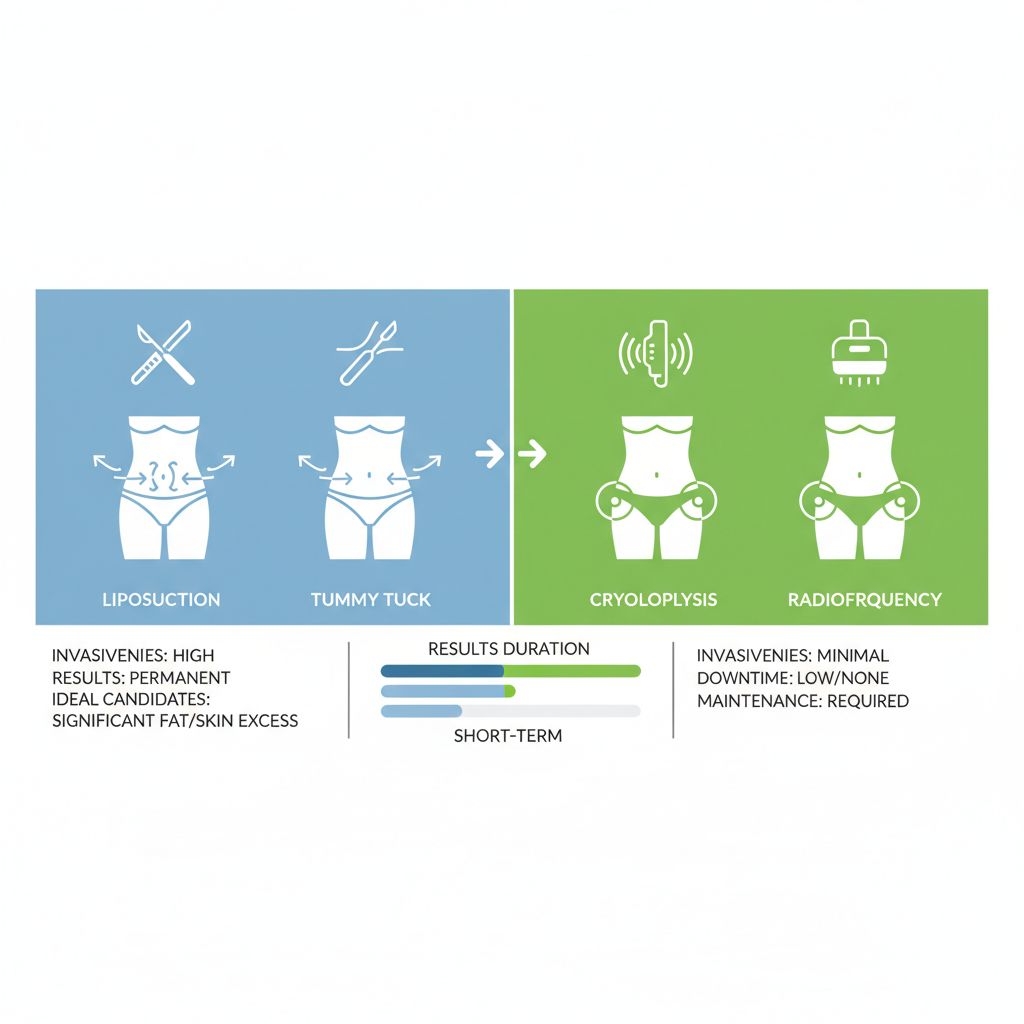
Visual comparison of surgical and non-surgical body contouring options
Building on these fundamentals, the next sections dive deeper into applications, especially after weight loss, to further inspire your wellness journey.
Exploring Body Contouring After Weight Loss
At WellnessHQ, we understand the incredible journey of weight loss and the transformations it brings. After significant shedding, many people face new challenges with their body’s appearance, and that’s where body contouring comes into play. We aim to guide you through these options as part of your broader wellness path, helping you achieve a more sculpted, confident self while prioritizing health and balance.
Post-Weight Loss Challenges and Solutions
Losing a substantial amount of weight, such as 50 pounds or more, is a major accomplishment that boosts health and vitality. However, it often leaves behind common issues like loose, sagging skin and uneven fat distribution, which can make clothes fit awkwardly and affect self-image. These changes occur because skin that stretched over time may not fully retract, especially after rapid loss through diet, exercise, or medical aids like medications.
Body contouring offers practical solutions tailored to these post-weight-loss hurdles. Surgical options, such as tummy tucks or arm lifts, remove excess skin and tighten underlying tissues, restoring smoother contours. For those with milder concerns, non-surgical methods like radiofrequency treatments stimulate collagen production to gradually firm the skin. Drawing from clinical insights, these approaches address functional issues too, like chafing or discomfort from loose folds, improving mobility and daily comfort.
We see emotional benefits as equally vital—many individuals report renewed confidence and motivation to maintain their healthy habits. Studies highlight how these procedures enhance quality of life by aligning physical appearance with one’s efforts. To ensure safety, we recommend consulting professionals for personalized assessments, as outcomes depend on factors like age, skin elasticity, and overall health. This way, body contouring supports your wellness without overwhelming your routine.
Integrating Contouring into Wellness Plans
Once you’ve navigated the initial challenges of weight loss, incorporating body contouring into your ongoing wellness strategy can help sustain those hard-earned results. We believe in a holistic approach where procedures complement lifestyle habits like regular exercise and balanced nutrition, rather than standing alone. For instance, after a contouring session, focusing on strength training can enhance muscle tone beneath tightened skin, promoting long-term firmness.
Personalization is key when selecting the right body contouring option, as needs vary based on the extent of weight loss and individual goals. Factors like your activity level, recovery capacity, and preferences for invasive versus minimally disruptive methods guide the choice. Evidence from medical literature underscores the value of staged procedures for safety, allowing your body to heal progressively while minimizing risks like swelling or infection.
The following table outlines popular body contouring options suitable after major weight reduction, emphasizing their roles in tackling skin and fat concerns:
| Procedure | Targets | Suitability After Weight Loss |
|---|---|---|
| Liposuction | Stubborn fat pockets | Moderate weight loss with remaining fat |
| Tummy Tuck | Excess skin and muscle | Significant skin laxity post-loss |
| Non-Surgical RF | Mild skin tightening | Initial post-loss toning |
Practical tips from wellness resources, such as wearing compression garments and staying hydrated, aid recovery and optimize contours. For non-invasive choices, non invasive body contouring devices like radiofrequency systems provide gentle tightening without downtime, fitting seamlessly into busy schedules.
Analyzing these options reveals their alignment with sustained wellness. Surgical methods like liposuction or tummy tucks offer dramatic reshaping for severe laxity, with studies showing high satisfaction rates and improved body image when combined with postoperative care. Non-surgical RF suits milder cases, promoting collagen regrowth for natural toning over months. Long-term benefits include better adherence to fitness routines, as enhanced proportions motivate continued effort. PubMed reviews confirm that integrating these with nutrition and activity reduces recurrence of fat deposits, fostering holistic health. We encourage viewing contouring as an enhancement to your weight loss journey, not the endpoint—pair it with mindful eating to preserve results.
To preview recovery, consider these steps:
- Follow surgeon instructions for wound care and movement.
- Incorporate light walks early to boost circulation.
- Schedule follow-ups to monitor progress and adjust wellness plans.
By weaving post-loss sculpting into your routine, you can enjoy enduring confidence and vitality. Remember, the content on WellnessHQ.net is provided for informational and educational purposes only and is not intended as a substitute for professional medical advice, diagnosis, or treatment. Always consult with a qualified healthcare provider before starting any exercise program, making changes to your health routine, or acting on any health-related information.
Practical Aspects of Body Contouring
Recovery Expectations and Timelines
We know that undergoing body contouring can feel both exciting and a bit daunting, especially when it comes to what happens afterward. Recovery varies based on the procedure’s invasiveness, your overall health, and how well you follow care instructions. At WellnessHQ.net, we aim to empower you with realistic timelines so you can plan ahead and focus on healing. Surgical options often involve more downtime, while non-surgical treatments allow quicker returns to daily life.
To illustrate the differences, here’s a comparison of recovery aspects for common body contouring procedures, drawing from insights on techniques like those offered by Sono Bello and general FDA guidelines on minimally invasive options.
| Procedure Type | Downtime | Care Tips |
|---|---|---|
| Surgical | 1-4 weeks | Compression garments, rest |
| Non-Surgical | Days to 1 week | Mild swelling management |
As you can see, surgical body contouring techniques tend to require more structured recovery, including managing swelling and monitoring for scars, but many patients resume light activities like gentle walks in week one. Non-surgical methods, such as laser lipolysis or cryolipolysis highlighted in non-surgical tummy tuck overviews, typically mean minimal disruption with side effects like temporary bruising fading quickly. We recommend staying hydrated, eating nutrient-rich foods, and avoiding strenuous exercise initially to support your body’s natural healing. Incorporating light wellness practices, like short daily stretches after the first few days, can enhance comfort and speed up progress without overdoing it. Remember, the content on WellnessHQ.net is provided for informational and educational purposes only and is not intended as a substitute for professional medical advice, diagnosis, or treatment. Always consult with a qualified healthcare provider before acting on any health-related information.
Choosing the Right Option for You
Selecting the best body contouring approach doesn’t have to overwhelm beginners—we’re here to guide you through it step by step. Start by assessing your goals: Do you want subtle enhancements or more transformative changes? Consider your health status, budget, and tolerance for downtime, as these factors shape beginner contouring choices effectively.
For those new to procedures, non-surgical options often serve as an accessible entry point, offering procedure recovery with less commitment. Preparation is key, so create a simple checklist: Schedule a consultation, discuss medical history, and align expectations with a certified provider. Budget-wise, non-surgical treatments might involve multiple sessions but lower upfront costs, while surgical paths could mean higher initial investment yet longer-lasting effects when maintained with healthy habits.
To help weigh your options, we put together this table comparing pros and cons for beginners, informed by practical overviews of Sono Bello’s laser-based methods and various non-surgical technologies like radiofrequency and HIFU.
| Factor | Surgical | Non-Surgical |
|---|---|---|
| Average Cost | $5,000+ | $1,000-$4,000 |
| Location Impact | Higher in urban areas | Varies by provider |
These comparisons highlight how non-surgical paths suit those with mild fat concerns and good skin elasticity, allowing you to ease in without major lifestyle interruptions. Surgical routes shine for significant reshaping but require more preparation, like pre-procedure wellness check-ins. Ultimately, prioritize providers with strong credentials and review before-and-after examples to ensure alignment with your vision. We encourage integrating post-procedure wellness, such as balanced nutrition and light exercise, to sustain your efforts. Results may vary; consult a healthcare professional before acting on health content. By focusing on these elements, you’ll make a choice that feels right for your wellness journey.
Advanced Body Contouring Considerations
When considering advanced body contouring options, we understand that budget plays a crucial role in your wellness journey. At WellnessHQ, we’re here to break down the costs associated with these procedures across the US, helping you make informed decisions that align with your goals for a sculpted, confident silhouette. Whether you’re exploring surgical transformations or non-invasive enhancements, understanding pricing helps demystify the process and empowers you to plan effectively.
Let’s start with the pricing ranges for body contouring. Surgical procedures, such as tummy tucks or full-body lifts, typically fall between $3,000 and $15,000, depending on the extent of the work. These often include more comprehensive reshaping for advanced goals like addressing multiple areas in one session. Non-surgical alternatives, like CoolSculpting or radiofrequency treatments, are more accessible, ranging from $500 to $5,000 per session. We see these as ideal for targeted sculpting without downtime. Averages can shift based on the provider’s expertise and the technology used, but starting with a consultation often reveals personalized quotes.
Several factors influence these advanced sculpting expenses. Procedure type is key—surgical options demand operating room fees and skilled surgeons, while non-surgical ones focus on device sessions. Location matters too; costs in California tend to run higher due to demand and overhead, as seen with popular choices like the brazilian butt lift in California, where premiums can add 20-30% compared to Midwest facilities. Add-ons such as anesthesia for surgery or multiple treatment rounds for non-invasive methods can increase totals by $1,000 or more. Regional variations highlight this: coastal areas like the West Coast charge more for premium care, while heartland providers offer competitive pricing without skimping on quality.
Costs aren’t just about upfront procedure pricing; variability across the US stems from facility standards, surgeon credentials, and local market dynamics. For instance, urban centers amplify expenses due to higher operational costs, whereas rural or Midwestern spots provide value without the markup.
This comparison underscores the spectrum of investments for body contouring. Drawing from WellnessHQ insights, surgical paths offer lasting transformations but at a steeper initial outlay, while non-surgical routes allow gradual progress with flexibility.
Assessing value means weighing long-term benefits against maintenance. Surgical results can endure years with stable weight, but revisions—like addressing sagging after a procedure—might add $2,000-$5,000 every few years, per expert FAQs on postoperative care. Non-surgical maintenance involves repeat sessions for sustained firmness, yet avoids recovery costs. We recommend factoring in these for full-body plans: prioritize board-certified providers to maximize ROI and minimize surprises. Ultimately, the true worth lies in enhanced confidence and wellness—costs in the US vary, but informed choices ensure they fit your lifestyle.
Remember, this information is for educational purposes and not a substitute for professional medical advice. Consult a qualified healthcare provider to tailor options to your needs.
Frequently Asked Questions About Body Contouring
We’ve compiled answers to some common contouring queries to help you navigate body contouring options. These insights draw from evidence-based sources to guide your wellness journey.
How soon can I exercise after a body contouring procedure? Recovery varies by type, but most patients wait 2-4 weeks for light activity. A PubMed review notes minimal adverse events with non-invasive methods, yet we advise consulting your provider to resume safely, tying into overall fitness maintenance.
Are body contouring results permanent? While fat cells removed don’t return, lifestyle factors influence longevity. Studies show average fat reduction of 8 mm, but clinical relevance is debated. We encourage balanced nutrition and exercise to sustain your empowered wellness.
What types of body contouring procedures exist? Options range from liposuction, the gold standard per research, to non-invasive radiofrequency treatments. For specifics like sono bello surgery, discuss with professionals. Integrating these supports your total wellness goals.
How much does body contouring cost? Prices start at $3,000-$10,000 depending on areas treated. Factors include technique and location. We recommend budgeting with expert advice, aligning costs with your health investment for lasting inspiration.
Key Takeaways on Body Contouring
Body contouring plays a vital role in your wellness journey, offering options from non-invasive treatments to surgical enhancements for a sculpted silhouette. We’ve explored definitions, benefits like boosted confidence and smoother recovery, along with typical costs and timelines. Key to success is post-procedure care, such as maintaining stable weight, following skincare routines, and regular check-ups as highlighted in our BBL FAQs for preventing sagging and sustaining results.
As you consider your sculpting journey, prioritize a consultation with a qualified professional to tailor the best path forward. At WellnessHQ.net, we’re committed to empowering and inspiring you to lead a healthier life. Dive into our comprehensive guides on skin care, beauty procedures, and total wellness to make informed choices today.
Resources
- Discover Body Contouring Costs Factors and Budgeting Strategies
- Explore Brazilian Butt Lift Procedures in California Guide
- Learn Sono Bello Surgery Benefits for Fat Removal
- Explore Non-Surgical Tummy Tuck Alternatives and Techniques
- Prevent and Address Sagging After Brazilian Butt Lift
- Understand Full Body Liposuction Procedure and Recovery
- Explore WellnessHQ Resources for Health and Beauty
- Discover FDA Non-Invasive Body Contouring Technologies Guide
- Review Non-Invasive Body Contouring Devices and Efficacy
- Explore Surgical Body Contouring Techniques and Outcomes
- Evaluate Electromagnetic Body Contouring Efficacy and Studies