
Table of Contents
The Rise of Prescription Weight Loss Medications
In the United States, obesity affects 42% of adults, creating persistent challenges for many seeking sustainable weight management. Traditional diets and exercise often fall short, leaving individuals frustrated and searching for effective solutions. The surge in prescription weight loss medications, such as Ozempic, Wegovy, Mounjaro, and Zepbound, has transformed this landscape since their FDA approvals post-2021, offering new hope through innovative GLP-1 mechanisms.
These drugs mimic gut hormones like GLP-1 to curb appetite, slow digestion, and regulate blood sugar levels, leading to significant weight reduction. As noted in NCBI resources, GLP-1 agonists demonstrate 15-20% body weight loss in clinical trials, making them a powerful tool for prescription obesity treatments evaluation. This GLP-1 medication efficacy analysis highlights their role in combating chronic obesity beyond mere calorie restriction.
Semaglutide-based options like Ozempic and Wegovy focus on steady appetite suppression, while tirzepatide-based Mounjaro and Zepbound combine GLP-1 with GIP effects for potentially enhanced results.
Upcoming sections provide a detailed weight loss drugs compared framework, exploring effectiveness, glp-1 drugs for weight loss side effects, pricing, and insurance coverage, including a wegovy vs zepbound comparison to aid your choice. Which drug offers the best balance for your health goals? Consult a provider to determine the right fit.
Overview of Key Weight Loss Drugs
When comparing weight loss drugs, understanding the profiles of leading prescription GLP-1 agonists is essential for informed decisions. This overview examines four prominent options: Ozempic, Wegovy, Mounjaro, and Zepbound, highlighting their active ingredients, FDA approvals, and primary uses to set the stage for deeper evaluations.
Ozempic (semaglutide) received FDA approval in 2017 for managing type 2 diabetes, with off-label use for weight loss. Wegovy, a higher-dose version of semaglutide, was approved in 2021 specifically for chronic weight management in obesity. Both are administered as weekly subcutaneous injections and target adults with BMI over 30 or over 27 with weight-related conditions like hypertension. For broader insights, including Ozempic vs Contrave vs Phentermine, these semaglutide-based therapies mimic GLP-1 hormones to act like a brake on hunger signals.
Mounjaro (tirzepatide), approved in 2022 for type 2 diabetes, and Zepbound, its 2023 counterpart for obesity, also involve weekly injections for similar BMI demographics. Tirzepatide targets both GLP-1 and GIP receptors, per NCBI analysis, offering dual-action benefits that often yield higher average weight loss percentages compared to single-agonist semaglutide. A wegovy vs zepbound comparison reveals key differences in hormone targeting, with initial tolerability varying; note potential glp-1 drugs for weight loss side effects like nausea during early use.
These obesity medication profiles demonstrate how each drug slows gastric emptying and suppresses appetite through gut hormone imitation, providing foundational options for diabetes or weight control in the US market.
Comparing Features and Efficacy
When weight loss drugs compared, Ozempic, Wegovy, Mounjaro, and Zepbound emerge as leading options for obesity and diabetes management. This analysis focuses on their efficacy through average weight loss from clinical trials over 68 weeks, alongside mechanisms that mimic gut hormones to reduce appetite and regulate blood sugar. These metrics aid commercial evaluations by highlighting therapeutic strengths for targeted patient needs.
Evaluating these drugs involves examining active ingredients, projected body weight reduction, biological action modes, and core indications. Semaglutide-based options target GLP-1 receptors to slow digestion and promote fullness, while tirzepatide adds GIP for amplified effects. All require weekly self-injections, simplifying routines and boosting compliance. Differences in weight loss potential–ranging from modest off-label use to substantial obesity treatment–inform choices between diabetes-focused and weight-centric applications. The table below summarizes these features using trial-derived data for clarity.
| Drug | Active Ingredient | Avg. Weight Loss (% Body Weight) | Mechanism | Primary Use |
|---|---|---|---|---|
| Ozempic | Semaglutide | 5-10% (off-label, over 68 weeks) | GLP-1 agonist | Diabetes management |
| Wegovy | Semaglutide (higher dose) | 15-20% (over 68 weeks) | GLP-1 agonist | Obesity |
| Mounjaro | Tirzepatide | 15-20% (over 68 weeks) | GLP-1/GIP dual | Diabetes |
| Zepbound | Tirzepatide | 20-25% (over 68 weeks) | GLP-1/GIP dual | Obesity |
Data sourced from clinical trials; individual results vary. Consult healthcare provider for personalized assessment.
Zepbound achieves the highest average loss at 20-25%, underscoring tirzepatide’s dual-agonist advantage for obesity over semaglutide’s single mechanism in Wegovy, which delivers 15-20%. In wegovy vs zepbound comparison, Zepbound shows superior sustained outcomes, answering queries on relative effectiveness for weight reduction. Both GLP-1 vs dual-agonist performance excel over six months or more, with Ozempic and Mounjaro providing solid diabetes support alongside off-label benefits. These patterns empower selections based on goals like rapid loss versus glycemic control.
Tolerability remains key, as glp-1 drugs for weight loss side effects are generally mild, with serious issues rare according to a Harvard/CDC study. This bolsters confidence in long-term efficacy despite variability. For broader options outside GLP-1s, a Contrave vs Ozempic review contrasts naltrexone-bupropion approaches, expanding commercial considerations beyond injectables.
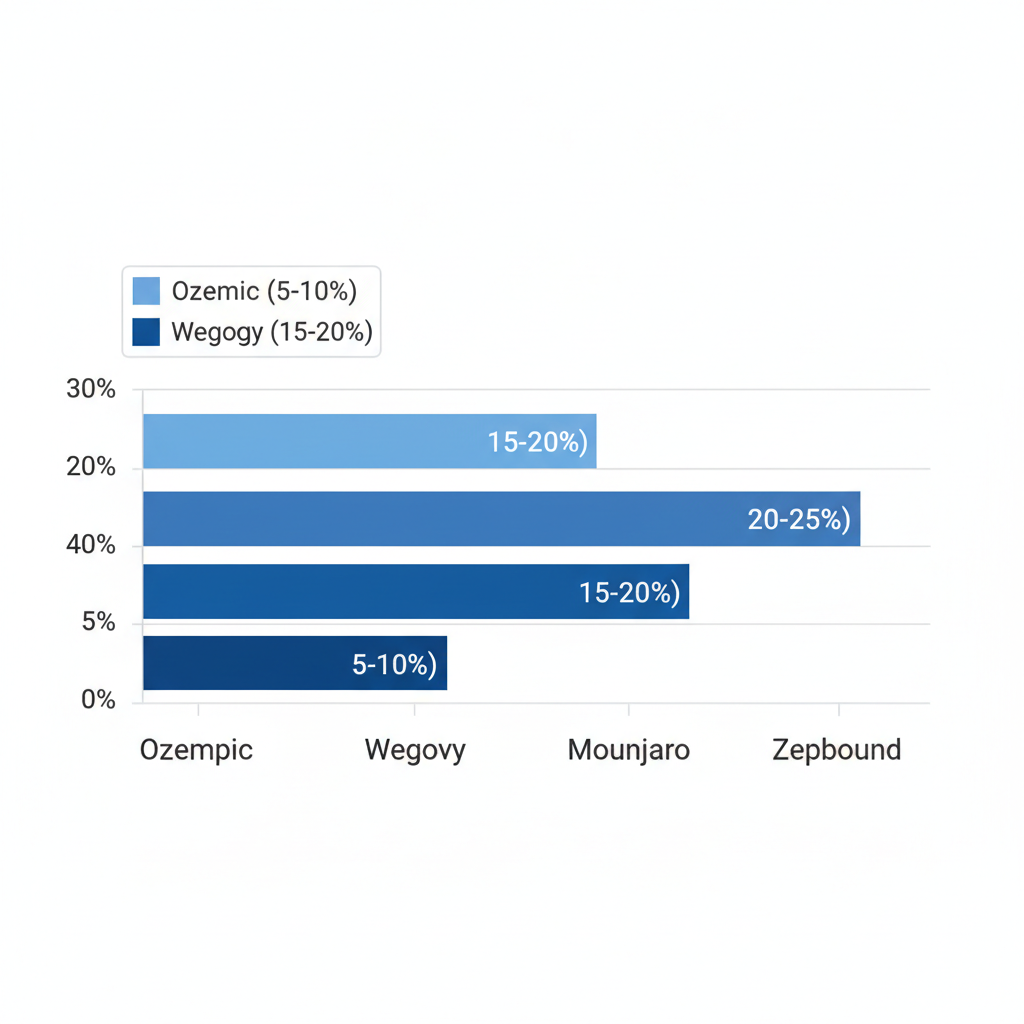
Average weight loss comparison of key GLP-1 drugs from clinical trials
These quantified differences set the stage for pricing analysis, ensuring comprehensive commercial assessments.
Pricing and Accessibility Breakdown
When evaluating weight loss drugs compared, cost is a major factor in accessibility. In the United States, these medications carry high list prices without insurance: Ozempic around $900 per month, Wegovy about $1,300, Mounjaro approximately $1,000, and Zepbound near $1,060. Per NCBI, average monthly costs range $800-$1,500, highlighting the financial burden for many seeking obesity treatments.
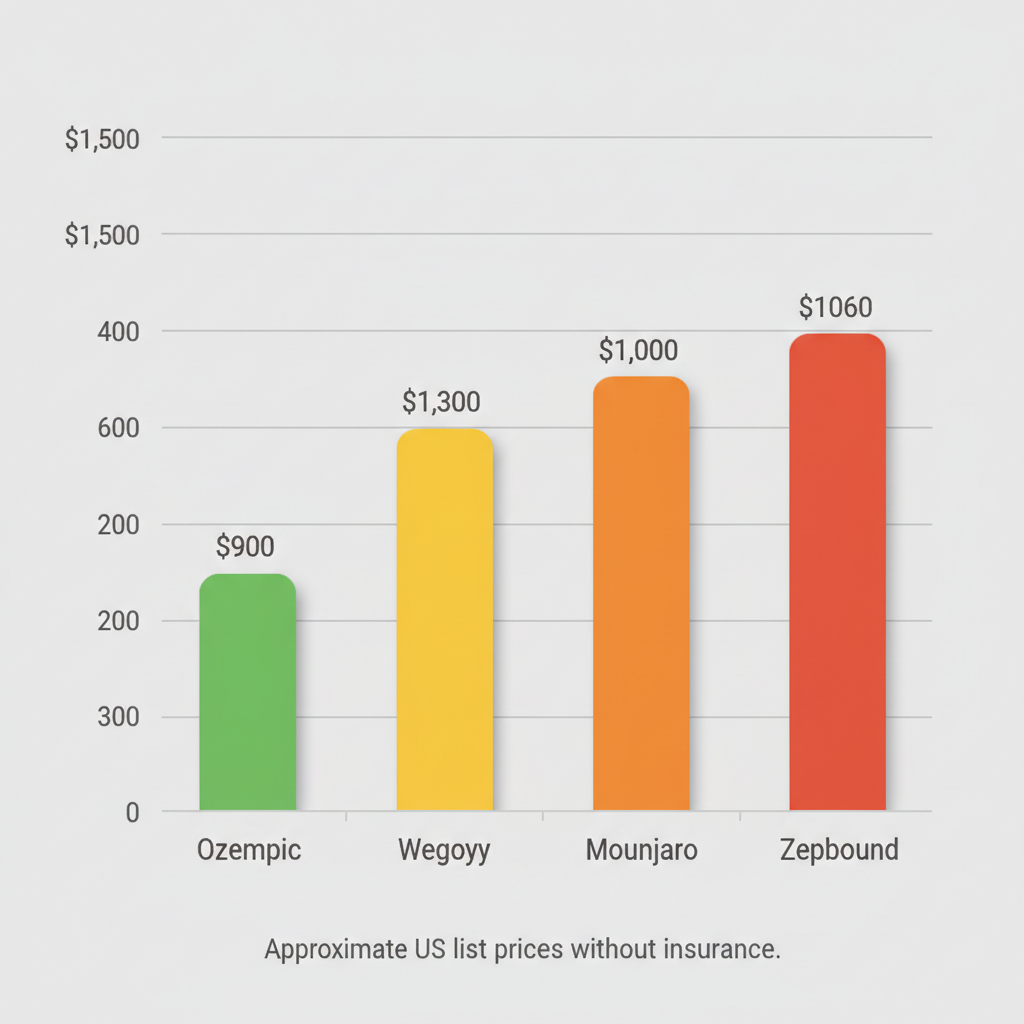
Monthly pricing comparison of popular weight loss drugs
For a wegovy vs zepbound comparison, Wegovy often edges out in coverage under private plans for weight loss, while both face hurdles with Medicare, which typically covers them only for diabetes management, not obesity. Insurance coverage for obesity treatments varies widely; some commercial policies cap copays at $25 with prior authorization, but others require full out-of-pocket payment. Manufacturer savings cards can reduce costs by up to $500, and tools like GoodRx offer additional discounts to ease the strain.
Supply shortages occasionally limit access, especially for popular options like Wegovy. If glp-1 drugs for weight loss side effects prompt a change, consider an ozempic to wegovy switch to maintain momentum without resetting budgets. These practical steps help navigate 2024 pricing fluctuations and affordability challenges empathetically.
Which Drug is Right for You
Selecting the ideal weight loss drug among Ozempic, Wegovy, Mounjaro, and Zepbound requires evaluating your unique needs. These GLP-1 medications excel in weight management, but trade-offs in efficacy, side effects, and costs shape the best fit. For instance, Wegovy suits pure obesity cases with focused fat reduction, while Mounjaro benefits those with type 2 diabetes by also controlling blood sugar. Zepbound edges out as the overall leader for its potent results, though it commands a higher price tag.
Consider these profiles:
- Obesity-focused: Wegovy delivers consistent 15-20% body weight loss without diabetes complications.
- Diabetes-integrated: Mounjaro balances glycemic control and shedding up to 22% weight.
- Maximum efficacy: Zepbound maximizes loss at 20-25%, ideal for stubborn cases.
In a wegovy vs zepbound comparison, efficacy favors Zepbound, but assess US insurance coverage, as many plans reimburse Wegovy more readily. A simple framework: Evaluate BMI over 30, tolerance for gastrointestinal issues, and provider input for personalized medication selection.
Side effects play a pivotal role in the side effect vs benefit balance for these drugs. Understanding common reactions helps weigh options against your lifestyle. The table below outlines key differences to guide your choice.
Side Effects and Tolerability Comparison
Quick comparison of common side effects to inform trade-offs in drug selection.
| Drug | Common Side Effects | Severity/Frequency | Management Tips |
|---|---|---|---|
| Ozempic | Nausea, GI upset | Mild, 20-30% users | Start low dose |
| Wegovy | Nausea, diarrhea | Moderate, 40% initial | Hydrate, gradual titration |
| Mounjaro | Nausea, vomiting | Mild-moderate, 25% | Anti-nausea meds if needed |
| Zepbound | GI issues, fatigue | Similar to Mounjaro, 30% | Monitor, consult MD |
Based on clinical data, rare severe effects occur, with most resolving in 4-8 weeks. For deeper insights on zepbound wegovy side effects, note that Harvard and CDC studies show serious issues are uncommon, leading to less than 1% discontinuation. Manage by following tips, staying hydrated, and consulting your doctor to optimize glp-1 drugs for weight loss side effects while maximizing benefits.
Choosing Your Weight Loss Path
In this obesity treatment summary, the weight loss drugs compared highlight Tirzepatide’s potential for greater weight reduction alongside Semaglutide’s proven safety track record from the wegovy vs zepbound comparison. These insights underscore the value of tailoring your medication decision recap to individual needs for optimal results.
Balancing benefits like sustained appetite control against trade-offs such as gastrointestinal issues remains key. Insurance coverage and out-of-pocket costs further influence accessibility, making personalized evaluation essential for long-term success.
Consult your healthcare provider to identify the best prescription weight loss medication suited to your health profile, especially if facing glp-1 drugs for weight loss side effects. With rare serious issues per Harvard studies, monitor progress closely and stay informed on evolving research. This empowered approach fosters sustainable wellness–prioritize professional guidance for safe, effective obesity management.
