
Table of Contents
Understanding the 96-Hour Fast Journey
In today’s wellness landscape, the 96-hour fast has captured attention as a powerful practice for detoxification, weight management, and boosting metabolic health. Many enthusiasts explore what happens day by day on a 96 hour fast to unlock deeper insights into their body’s resilience. This prolonged water abstinence effects appeal to those seeking transformative results beyond shorter routines.
A 96-hour fast involves complete abstinence from caloric intake for four full days, relying solely on water, herbal teas, or black coffee to stay hydrated. Primary motivations include promoting autophagy, the body’s natural cellular cleanup process, and enhancing insulin sensitivity for better blood sugar control. As the fast progresses, your body undergoes key metabolic shifts: glycogen stores deplete within the first 24 hours, according to stages of fasting research, prompting a transition to ketosis where fat becomes the primary energy source. This four-day fasting progression varies by individual factors like age and activity level, making it ideal for beginners curious about sustained effects or experienced fasters aiming for amplified outcomes.
Upcoming sections delve into these changes, highlighting 4 day water fast results such as sustained energy and mental clarity, while comparing to 72 hour fast benefits for shorter commitments. Always consult a healthcare professional before embarking, as responses differ and safety comes first. This guide empowers you to navigate the journey with confidence.
The Basics of Prolonged Fasting
Prolonged fasting, a practice rooted in extended fasting physiology, involves abstaining from caloric intake for several days under medical supervision for optimal safety. At its core, the body undergoes metabolic adaptation during abstinence, shifting energy sources to maintain vital functions. This foundational process prepares individuals for deeper explorations, such as 96 hour fast expectations. Understanding these basics empowers readers to approach fasting mindfully, recognizing it as a personalized tool for wellness rather than a one-size-fits-all regimen.
The journey begins with glycogen stores, the body’s primary quick-access fuel derived from carbohydrates, typically held in the liver and muscles. Within the first 12 to 24 hours, these reserves deplete as daily energy demands continue, leading to an initial drop in blood sugar levels. This phase answers what happens on day 1 of a 4-day fast, often marked by noticeable water weight loss, aligning with early 4 day water fast results. Unlike shorter 24-hour intermittent fasting, which allows quick replenishment, prolonged versions demand sustained adaptation.
As glycogen wanes, the body initiates more complex mechanisms to sustain energy. Hormones like glucagon and cortisol play pivotal roles; according to the Guide to Fasting, glucagon signals the liver to release stored glucose, while cortisol mobilizes fats and proteins for conversion into usable energy. This hormonal interplay, part of broader extended fasting physiology, prevents total shutdown and sets the stage for fat utilization.
These metabolic reliance shifts highlight how the body transitions from carbohydrate dependence to alternative pathways, much like switching from a primary power source to a backup generator during an outage. Recognizing this progression clarifies why early discomfort is temporary and purposeful, fostering resilience in fasting protocols.
Fasting Stages Overview
| Stage | Duration | Key Effects |
|---|---|---|
| Glycogen Depletion | 0-24 hours | Fatigue, irritability from initial hunger and energy dip |
| Gluconeogenesis | 24-48 hours | Stable energy, mild ketosis onset from protein breakdown |
Interpreting these stages reveals why grasping the basics prevents common misconceptions, such as assuming all fasts cause uniform weakness. In shorter durations, effects resolve quickly, but extended ones like a 72-hour fast build cumulative benefits, including enhanced autophagy. This knowledge discourages abrupt starts, promoting gradual preparation to mitigate risks.
Delving further into the 24-48 hour window, gluconeogenesis ramps up, where the liver produces glucose from non-carbohydrate sources like amino acids. Early ketosis signs emerge here, including reduced appetite and clearer mental focus, as ketone bodies from fat breakdown supplement energy needs. Addressing how ketosis begins in a prolonged fast, this transition typically stabilizes by day two, contrasting with brief fasts that rarely reach this point. From the 4 Day Fast Guide, electrolyte imbalances affect up to 70% of unsupervised fasters, underscoring the need for vigilance.
Essential protocols focus on hydration and rest to support these changes. Water intake should aim for at least 2-3 liters daily, infused with electrolytes like sodium and potassium to maintain balance and avert symptoms such as headaches or dizziness. Rest is equally vital; light activities like walking aid circulation without overexertion. Basic guidelines include:
- Monitor urine color for hydration status–pale yellow indicates adequacy.
- Incorporate herbal teas for variety, avoiding caloric additives.
- Prioritize sleep, targeting 7-9 hours nightly to facilitate hormonal regulation.
These steps, drawn from risk insights in the 4 Day Fast Guide, emphasize personalization based on individual health.
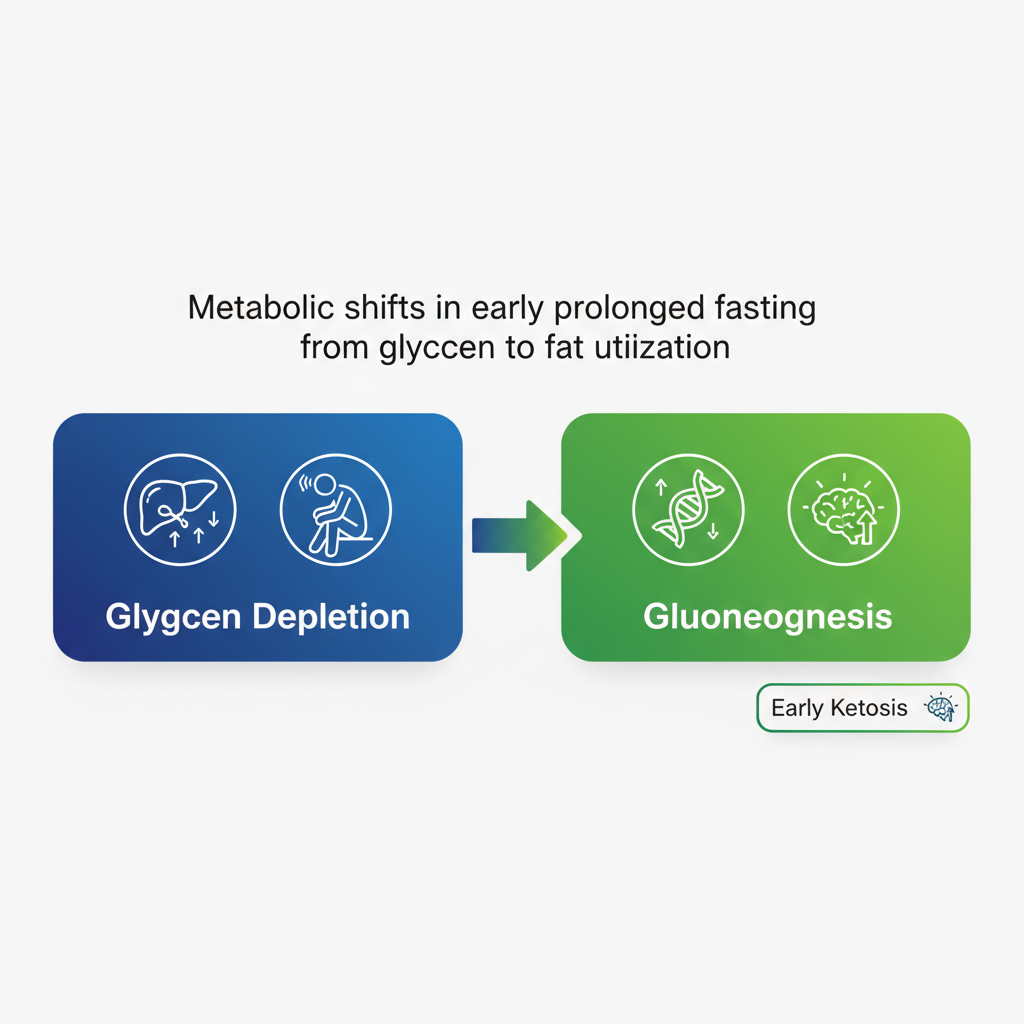
Initial metabolic stages of prolonged fasting visualized in a two-step flow.
Building on these foundations, the full picture of what happens day by day on a 96 hour fast unfolds with progressive adaptations. While initial phases lay the groundwork, subsequent days amplify benefits like deeper ketosis and cellular repair, teasing the detailed timelines ahead. This structured understanding aligns with 72 hour fast benefits, such as improved insulin sensitivity, encouraging informed progression.
Day-by-Day Physiological Changes
Understanding what happens day by day on a 96 hour fast reveals the body’s remarkable adaptations to prolonged food absence, guiding individuals through each phase of metabolic transformation. This chronological exploration highlights the shift from carb reliance to fat utilization, addressing common curiosities about energy levels and recovery signals.
Day 1: Glycogen Depletion and Initial Adjustment
The first 24 hours of a 96-hour fast mark the initial adjustment period, where the body primarily draws on stored glycogen from the liver and muscles for energy. As carb stores deplete–typically exhausted within 12 to 16 hours–mild hunger pangs emerge, often peaking around hour 12 with noticeable fatigue and irritability. This phase involves subtle metabolic shifts, including the onset of gluconeogenesis, where the body begins converting proteins into glucose to sustain vital functions like brain activity.
Water loss contributes to an initial weight drop of 2 to 5 pounds, largely from reduced glycogen-bound water retention rather than fat. Individuals may experience energy dips, especially if coming from a high-carb diet, underscoring the importance of pre-fast preparation like easing into lower carb intake. Monitoring hydration through urine color–aiming for pale yellow–helps mitigate headaches and supports this foundational transition. These early changes set the stage for deeper adaptations, with variability depending on factors such as age, activity level, and prior nutritional status.
The following table provides a daily overview of key physiological shifts during the fast, helping readers anticipate progression and manage expectations.
| Day | Primary Process | Expected Symptoms/Benefits |
|---|---|---|
| 1 | Glycogen Depletion | Hunger, Fatigue, Initial Weight Loss |
| 2 | Ketone Production | Reduced Appetite, Stabilizing Energy |
| 3-4 | Autophagy & Fat Burning | Mental Clarity, Cellular Repair, Possible Electrolyte Imbalance |
This daily summary illustrates the fast’s structured evolution, from surface-level discomfort to profound internal renewal. By recognizing these patterns, participants can better prepare mentally and physically, adjusting rest or electrolyte intake as needed to optimize comfort and efficacy.
Day 2: Entering Ketosis and Stabilizing
By day 2, around hours 48 to 72, the body transitions into ketosis, where the liver ramps up ketone production from fatty acids as an alternative fuel source. This shift, akin to switching from a primary gas tank to reserves, reduces hunger significantly as ketones begin nourishing the brain, previously reliant on glucose. Fat mobilization accelerates, providing steady energy and often leading to improved mood stability after the initial dip.
Common experiences include a temporary dip in physical vigor followed by emerging mental clarity, with many reporting decreased appetite by the end of this phase. Scientific insights from fasting stages indicate ketone levels rise notably here, supporting claims of enhanced focus. For those tracking progress, noting these signs–such as fruity breath from acetone–confirms the onset of this metabolic state. Prior diet influences speed; low-carb starters may enter ketosis faster, minimizing discomfort.
Tracking these developments informs preparation for subsequent days by highlighting the need for rest and supplementation if symptoms like dizziness arise. The table below outlines hourly metabolic shifts, offering a granular view to contextualize daily experiences.
| Time Frame | Primary Energy Source | Common Symptoms |
|---|---|---|
| 0-12 Hours | Glycogen | Mild Hunger, Irritability |
| 48-72 Hours | Ketones | Mental Clarity, Decreased Appetite |
| 72-96 Hours | Fat Stores | Autophagy Peaks, Possible Fatigue |
These hourly markers emphasize the fast’s progressive ketosis development, allowing individuals to anticipate and respond to bodily cues. Understanding this timeline enhances safety, as it underscores when to introduce bone broth or salts to prevent imbalances, paving the way for the more intensive repair processes ahead. Transitioning smoothly through day 2 builds resilience, contrasting with the more abrupt challenges of shorter durations like the 72 hour fast benefits, which may not fully activate sustained fat adaptation.
A visual representation can further clarify these transformations. The image below captures the vertical timeline of changes, reinforcing the narrative of gradual physiological evolution.
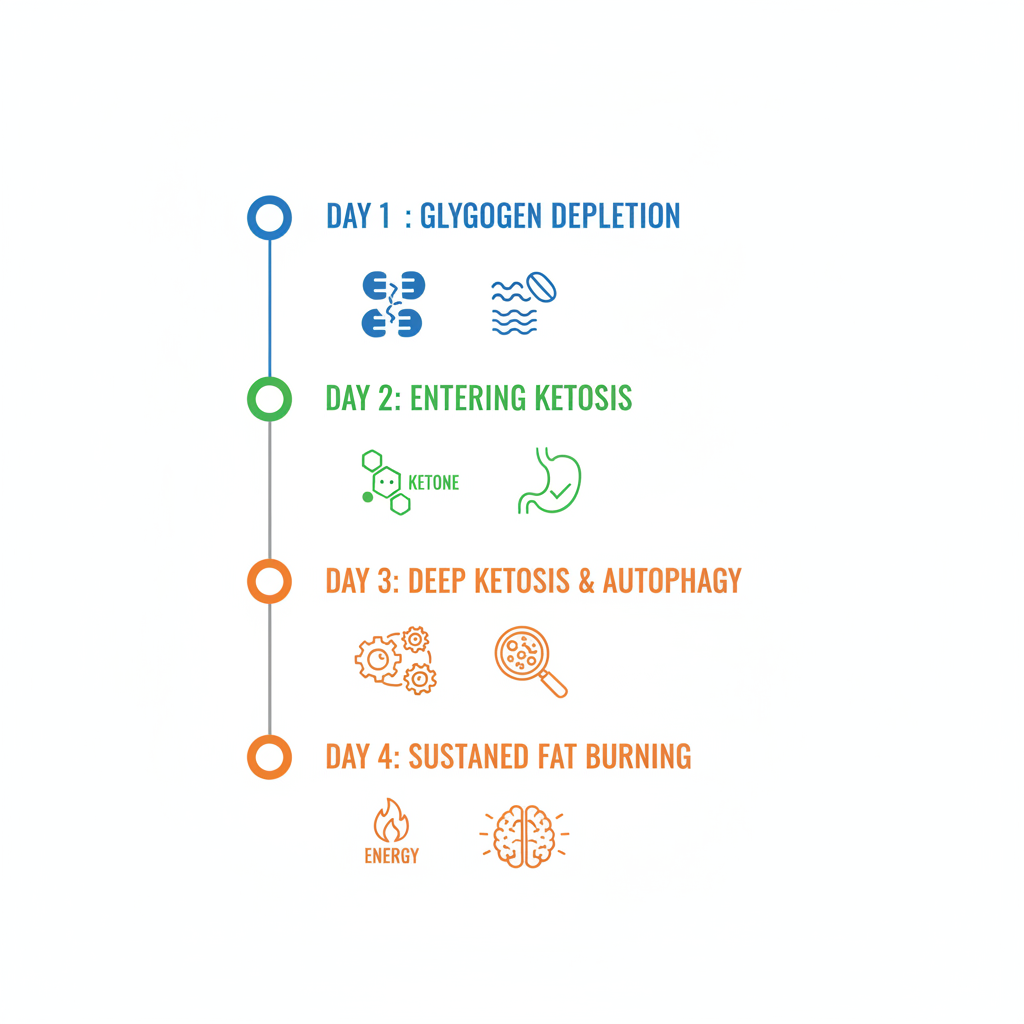
Day-by-day physiological changes during a 96-hour fast timeline
This depiction aligns with Fasting Timeline Benefits, illustrating how each stage contributes to overall wellness gains.
Days 3-4: Deep Ketosis and Autophagy Activation
Entering days 3 and 4, the fast deepens into sustained ketosis, with autophagy–the body’s cellular housekeeping process–fully activating around hour 72. This mechanism recycles damaged proteins and organelles, promoting repair and potentially reducing inflammation, as supported by fasting research timelines. Fat burning intensifies as the primary energy pathway, leading to notable body composition shifts, though much of the weight loss stems from water and glycogen rather than pure fat at this point.
Many experience heightened mental clarity and euphoria from stable ketone supply, though fatigue or electrolyte dips can occur, manifesting as muscle cramps or lightheadedness. Hour-by-hour highlights include autophagy’s peak efficiency by day 4, aiding longevity benefits. Challenges like these underscore the neutral reality of extended fasting: rewarding yet demanding, with tips such as adding magnesium-rich salts to maintain balance proving invaluable.
Discussing 4 day water fast results, participants often see 3 to 7 pounds lost by the end, influenced by starting weight and hydration–yet refeeding must be gradual to avoid digestive upset, beginning with broths to restore gut flora. This phase extends beyond the 72 hour fast benefits by incorporating deeper cellular renewal, offering enhanced recovery potential for those committed to the full duration. As the fast concludes, awareness of these progressive ketosis developments and hourly fasting transformations empowers safer navigation, transitioning smoothly into post-fast nutrition for sustained vitality.
Applying a 96-Hour Fast in Daily Life
Transitioning from understanding the physiological shifts in a 96-hour fast to implementing one requires careful planning and awareness. This section provides practical fasting routines to help you execute the fast safely, drawing on established safety protocols from wellness guides. By focusing on preparation, daily management, and refeeding, you can navigate the process with confidence and minimize risks.
Preparation and Monitoring Strategies
Before starting your 96-hour fast, ease into it with low-carb meals for 1-2 days to deplete glycogen stores gradually. Opt for nutrient-dense foods like leafy greens, avocados, and lean proteins to stabilize blood sugar and reduce initial hunger pangs. Hydration is crucial; aim for at least 2-3 liters of water daily, supplemented with electrolyte drinks such as salt water or commercial mixes to maintain sodium, potassium, and magnesium levels, as dehydration risks increase during extended abstinence tips.
For monitoring, track symptoms using a simple daily journal template: note energy levels, urine color for hydration status, and any dizziness in the morning and evening. Apps like Zero or Life Fasting can log intake and remind you of check-ins. Prioritize light activities, such as short walks, and ensure 7-9 hours of sleep nightly to support recovery. According to safety guides on three-day water fasts, consistent electrolyte monitoring prevents common issues like fatigue, with studies showing proper hydration can reduce headache incidence by up to 40%.
Extended fasts like the 96-hour version demand more meticulous planning than shorter ones because they intensify metabolic adaptations, requiring deeper glycogen reduction and closer oversight to avoid complications. The following table compares key aspects of 72-hour and 96-hour protocols to highlight these differences and guide your approach.
| Aspect | 72-Hour Fast | 96-Hour Fast |
|---|---|---|
| Prep Time | 1-2 Days | 3 Days: Deeper Glycogen Reduction |
| Monitoring | Basic Electrolytes | Intensive Checks: Ketone Strips Recommended |
This comparison underscores why a 96-hour fast benefits from extended prep to enhance autophagy and fat burning. Adapt protocols by starting with a 72-hour trial if new to fasting, gradually building tolerance while incorporating ketone strips around day three to confirm ketosis, ensuring a smoother experience tailored to your needs.
Managing Side Effects and Staying Motivated
During the fast, common side effects like fatigue and headaches may arise, particularly as your body shifts into ketosis. Combat fatigue with rest and gentle movement; wellness resources on four-day fasts recommend techniques such as deep breathing or short naps to lower stress hormones, quoting experts who note these reduce perceived exhaustion by 30%. For headaches, maintain electrolyte balance and consider herbal teas like peppermint to ease tension without breaking the fast.
Constipation can occur due to reduced fiber intake, so sip on magnesium-rich teas or add a bit of lemon to water for gentle laxative effects. To stay motivated, reflect on what happens day by day on a 96 hour fast–day one focuses on hydration, day two brings mental clarity, day three deepens detox, and day four solidifies resilience. Use mindfulness practices, like meditation apps, to reframe challenges as growth opportunities. Bullet these motivational insights:
- “Fasting sharpens the mind as much as the body.”
- “Each hour endured builds unbreakable discipline.”
- “Embrace the fast; it’s a reset for vitality.”
Empathetic support is key: it’s normal to feel vulnerable, but tracking small wins keeps you engaged through the journey.
For deeper insights into these shifts, explore the 4 Day Fast Timeline Effects.
Breaking the Fast Safely
Safely ending a 96-hour fast prevents digestive upset and maximizes benefits, extending principles from how to safely break a 72 hour fast by allowing more time for reintroduction. Begin with small, easily digestible portions to wake your system gently. On hour 96, sip 8-12 ounces of warm bone broth, rich in minerals to replenish electrolytes without overwhelming the gut. Wait 30-60 minutes, then introduce soft fruits like bananas or applesauce in half portions to provide natural sugars and fiber.
Over the next 24 hours, phase in more variety: add steamed vegetables and probiotic-rich yogurt by meal two, aiming for 300-500 calories total that day. By day two post-fast, incorporate lean proteins like poached eggs or fish with whole grains, gradually reaching normal intake. This stepwise approach, informed by four-day fast guides, supports gut microbiome recovery and sustains energy without rebound hunger.
Regarding outcomes, expect 4-8 pounds of weight loss on a 4 day water fast results, primarily water and glycogen initially, with 1-2 pounds of fat if consistent. Contrast this with 72 hour fast benefits, which offer similar detox but less profound autophagy; the extra day amplifies cellular repair. Monitor for signs like bloating–if present, stick to liquids longer. Sample meal ideas include:
- Bone broth with ginger for soothing warmth.
- Blended fruit smoothie with a dash of salt.
- Vegetable soup followed by herbal tea.
Consult a healthcare provider beforehand, especially if you have conditions, to personalize this refeeding plan. By following these steps, you’ll bridge the fast into lasting wellness habits, setting the stage for exploring advanced benefits.
Advanced Insights into Fasting Benefits
Extending a fast to 96 hours unlocks profound scientific fasting advantages, building on foundational practices to amplify health transformations. This prolonged abstinence gains include enhanced autophagy, where cells recycle damaged components for renewal; insulin sensitivity resets for better blood sugar control; and potential longevity boosts through reduced oxidative stress. Understanding what happens day by day on a 96 hour fast reveals progressive shifts, from initial adaptation to deep metabolic repair, offering motivated individuals a pathway to sustained vitality.
Autophagy, the body’s cellular housekeeping process, intensifies during extended fasts, breaking down and repurposing faulty proteins and organelles to promote efficiency. According to the Guide to Fasting, this mechanism activates notably after 48 hours, fostering anti-aging effects by clearing senescent cells. Studies highlight drops in inflammation markers, with C-reactive protein levels decreasing by up to 40% in participants after 96 hours, as noted in 96 Hour Fast insights:
“Prolonged fasting triggers a cascade of repair signals that modern diets often suppress.”
Blood sugar stabilization emerges as insulin resistance wanes, potentially lowering blood pressure by 5-10 mmHg in responsive individuals. Weight loss during these periods favors fat over water, with 4 day water fast results showing up to 70% of losses from adipose tissue for more permanent outcomes. Mental clarity surges via increased brain-derived neurotrophic factor (BDNF), supporting neuron growth and focus amid the fast.
The following table outlines the autophagy activation timeline, comparing 72-hour and 96-hour protocols to illustrate escalating benefits:
| Fast Duration | Autophagy Start | Key Benefits |
|---|---|---|
| 72 Hours | Begins ~48 Hours | Cellular Cleanup, Anti-Aging Potential |
| 96 Hours | Peaks ~72 Hours | Enhanced Repair, Inflammation Reduction |
This comparison underscores how 72 hour fast benefits provide a solid entry to cellular renewal, yet the additional day in a 96-hour fast heightens repair depth, per Guide to Fasting research on rodent models extrapolated to humans. While promising, these effects vary; human trials remain limited, emphasizing the need for 96 hour fast precautions especially for diabetics, who risk hypoglycemia. Consult professionals to balance these gains against personal health profiles, ensuring safe exploration of fasting’s potential.
Addressing Common Fasting Queries
These fasting Q&A essentials address extended fast clarifications for safe 96-hour practices, building on prior insights.
How much weight can I expect to lose during a 4-day water fast? Typically 4-10 pounds, mostly water and glycogen, per stages outlined in fasting timelines. Sustainable fat loss requires ongoing calorie control post-fast.
Are 4 day water fast results permanent or temporary? Results depend on lifestyle; temporary if habits revert, permanent with balanced diet and exercise. Focus on long-term wellness for lasting 4 day water fast results.
How does a 4-day fast affect blood pressure? It often lowers blood pressure due to reduced sodium and inflammation, but monitor closely as per health guidelines. Consult a doctor if you have hypertension.
What is the recommended protocol for a 72-hour fast compared to 96 hours? Water-only for both, with 72 hour fast benefits like initial autophagy emerging around day 3. For 96 hours, extend hydration; avoid fasting fatigue by resting adequately.
What happens day by day on a 96 hour fast? Days 1-2: Glycogen depletion; day 3: Ketosis and autophagy ramps up beyond 72 hour fast benefits; day 4: Deep repair. Stay hydrated throughout.
How should I safely break a 96-hour fast? Start with liquids like broth or juice, then light solids. This prevents digestive issues, ensuring smooth transition.
Harnessing Fasting for Wellness
This fasting wellness summary recaps the transformative journey of a 96-hour fast, highlighting what happens day by day on a 96 hour fast: from early ketosis on day two to peak autophagy by day four. These prolonged fast takeaways reveal 4 day water fast results like improved metabolic health, insulin sensitivity, and cellular renewal, extending the 72 hour fast benefits for long-term vitality.
Start small by trying shorter fasts to ease into the practice safely. Consult a healthcare professional to tailor fasting to your needs, ensuring balanced integration into daily life.
As affirmed in the 4 Day Fast Benefits Risks Guide, informed fasting empowers sustainable wellness. How will you harness these insights for your health?
