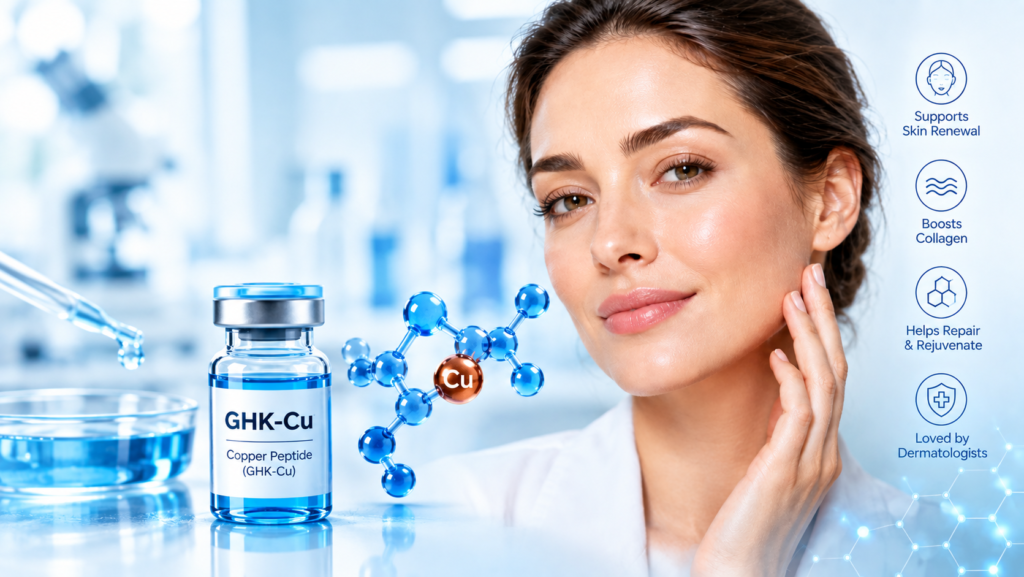
There’s a peptide that continues quietly showing up in dermatology journals, skincare labs, and studies papers and it has been doing so for over forty years. It is referred to as GHK-Cu, and in contrast to numerous ingredients that fashion for a season and disappear, this one has stuck around because the technology behind it continues conserving up.
In case you’ve never come across it before, here is a simple, honest breakdown of what it’s far and why such a lot of skin experts take note of it.
Where in GHK-Cu Truly Comes From
GHK-Cu is short for glycyl-histidyl-lysine, a tiny peptide constructed from surely 3 amino acids, paired with a copper ion. What makes it exclusive from maximum lab-engineered skincare substances is that it wasn’t invented, it turned into discovered. back inside the early 1970s, researchers found it going on obviously in human blood plasma.
One finding that attracted interest was that GHK levels in human plasma decline with age, which helped researchers become interested in its possible role in aging and tissue repair.
That single finding is really the reason GHK-Cu became such a long-running subject of study in skin biology.
Why Dermatologists Keep Talking About It
When dermatologists explain why GHK-Cu matters, it usually comes down to a handful of things this peptide is genuinely good at doing:
- Helping the skin produce more collagen and elastin, which is what keeps skin looking firm instead of loose or thin
- Playing a role in how skin repairs itself, which is actually where most of the early research on this peptide started — wound healing, not cosmetics
- Acting as an antioxidant, helping reduce the kind of cellular damage that speeds up visible aging
- Calming inflammation, since ongoing inflammation is one of the quiet reasons collagen breaks down faster than it should
- Supporting healthy circulation within skin tissue, which affects how “alive” and resilient skin looks over time
The reason researchers take GHK-Cu seriously isn’t because it sounds impressive — it’s because it interacts with skin on a deeper, cellular level instead of just sitting on top of it like a lot of surface-level ingredients do.
Skin care merchandise vs. research Peptides recognise the distinction
This is where a whole lot of confusion takes place, so it is really worth being clean about it.
In skin care, copper peptide serums and lotions are offered as topical beauty products, supposed to be carried out to the skin to assist a less assailable, extra younger appearance.
In research settings, purified GHK-Cu is studied via scientists looking to recognize exactly the way it impacts wound restore, ageing, and tissue regeneration at a molecular stage.
These matters aren’t the identical, and that they shouldn’t be dealt with interchangeably. Studies of peptides are made for lab observation, now not private use, and if someone is curious approximately the usage of peptides for his or her skin or fitness, the proper move is to constantly speak to a dermatologist or doctor first now not to bet.
What definitely sets GHK-Cu apart
Plenty of anti-ageing ingredients work via both stripping away old pores and skin cells quicker or throwing antioxidants at the floor GHK-Cu takes a quieter approach. Rather than forcing the skin to do something, it seems to work alongside the skin’s own natural repair process, almost like reminding it how it used to behave when it was younger.
That’s probably the real reason this peptide hasn’t faded out the way so many skincare trends have. It’s not riding on marketing. It’s sponsored by using decades of consistent, peer-reviewed research that keeps pointing within the same direction.
Conclusion
GHK-Cu isn’t always a flashy new discovery, it is a certainly taking place copper peptide that’s earned its recognition the gradual manner, through repeated research into collagen guide, pores and skin restore, and antioxidant protection. beauty versions are extensively to be had for everyday use, but the purified, research-grade shape is supposed strictly for clinical study, no longer self-remedy.