For decades, we’ve been taught to think about energy primarily in terms of glucose. Eat carbohydrates, blood glucose rises, insulin responds, and our cells use that glucose to produce energy. That’s certainly one way human metabolism works, but it isn’t the only way.
The human body possesses an extraordinary ability to adapt, with more than one pathway available to generate the energy we need. Understanding those different pathways changes the way we can think about metabolic health, brain function, exercise, performance and potentially longevity. One of the most fascinating of those pathways involves ketones.
Ketones have certainly become fashionable in health and biohacking circles, but my interest in them isn’t based on the idea that everyone should follow a ketogenic diet or start consuming exogenous ketones. I’m interested in what they reveal about the adaptability of human metabolism and the body’s ability to move between different fuel sources when circumstances require it.
What Are Ketones?
Ketones are molecules produced primarily by the liver when fatty acids are being used extensively for energy. The three commonly discussed ketone bodies are beta-hydroxybutyrate (BHB), acetoacetate and acetone.
When carbohydrate availability decreases during fasting, prolonged exercise, carbohydrate restriction or a ketogenic diet, the liver increases ketone production. Those ketones can then circulate through the bloodstream and provide energy to tissues including the brain, heart and skeletal muscle.
This isn’t a metabolic accident. It’s part of normal human physiology. For most of human history, we didn’t have refrigerators, stocked pantries or access to food 24 hours a day. There were periods when food, and particularly carbohydrates, simply wasn’t readily available. Human metabolism therefore had to be capable of functioning under very different nutritional conditions. When glucose availability decreased, the body needed another option.
Ketones are part of that survival system, and that ability to switch fuels is an important example of something I believe deserves much more attention: metabolic flexibility.
Ketones Don’t Just Provide Energy
For years, ketones were largely viewed as an alternative energy substrate, but this is where the science becomes considerably more interesting. We now understand that beta-hydroxybutyrate is also a signaling molecule.
BHB interacts with pathways involved in gene expression, inflammatory signaling, oxidative stress, glucose and lipid metabolism, and other cellular processes. Research has examined mechanisms involving HDAC inhibition, G-protein-coupled receptors and the NLRP3 inflammasome.
In other words, ketones don’t simply provide calories. They communicate with the cell. This fits into a much larger conversation my wife, Dr. Michele Sherwood, and I have been having with patients for years. The body doesn’t operate as a collection of completely independent parts. Metabolism affects hormones. Sleep affects metabolism. Stress affects sleep. Muscle influences glucose regulation. Inflammation can influence multiple biological systems. Underneath all of these processes, our cells require energy to function.
At the Functional Medical Institute, this interconnected view of health is fundamental to the way we work. Rather than looking at a symptom in isolation and immediately asking how we can suppress it, we want to understand what may be happening underneath it. Nutrition, movement, sleep, metabolic health, hormones, inflammation, stress and lifestyle can all contribute to the bigger picture.
Increasingly, Michele and I have also become interested in another question: How effectively is the body producing and using energy?
That question becomes particularly important when we start talking about healthy aging.
The Brain and Metabolic Flexibility
The human brain is metabolically expensive. Although relatively small compared with the rest of the body, it requires an enormous and continuous supply of energy. Glucose is normally its predominant fuel, but the brain can also use ketones extremely well.
That becomes particularly interesting when glucose metabolism isn’t functioning optimally.
Researchers are actively investigating ketogenic metabolic therapies and exogenous ketones in areas involving cognitive function and neurodegenerative disease. A systematic review and meta-analysis of 29 studies involving 1,347 participants found a modest positive effect of exogenous ketones on cognitive performance, although much more research is needed before we begin treating ketones as a therapy for neurological disease.
I don’t interpret findings like these as evidence that ketones cure cognitive decline. That’s exactly the kind of leap we need to avoid in health and longevity discussions. What I do see is another reason to appreciate the value of metabolic flexibility.
If glucose isn’t readily available, the body doesn’t simply shut down. It can mobilize fatty acids, produce ketones and continue generating energy. That’s an extraordinarily sophisticated system, and maintaining the ability to adapt and efficiently utilize different fuels may be an important component of metabolic resilience.
When Michele and I talk about longevity, resilience is one of the ideas we continually return to. We’re not simply interested in how many years someone can accumulate. We’re interested in health span: maintaining strength, cognition, mobility, independence, energy and the physiological ability to adapt as we age.
Living longer means considerably less if we don’t retain the health to participate fully in those additional years.
Making Ketones Versus Taking Ketones
There are two fundamentally different ways to increase circulating ketones. The first is to make them yourself. Fasting, exercise, carbohydrate restriction and ketogenic diets can all increase endogenous ketone production.
The second is to consume them. Exogenous ketone products can raise blood BHB without requiring prolonged fasting or severe carbohydrate restriction.
That distinction matters because taking ketones doesn’t necessarily mean someone is burning body fat. It is possible to raise blood ketones by consuming them while simultaneously consuming carbohydrates. A ketone measurement tells us that ketones are available; it doesn’t automatically tell us why they’re there or what is happening throughout the rest of the person’s metabolism.
This is where the rapidly expanding biohacking and longevity industries can sometimes create confusion. We discover an interesting biological mechanism, a product is developed around it, marketing takes over, and before long the mechanism begins to sound like a miracle.
Human physiology is rarely that simple.
A biomarker needs context. A supplement needs context. An intervention needs context. Most importantly, the individual needs context.
Not All Ketones Are the Same
Consumers should also understand that “ketones” is a very broad marketing category. Ketone salts, ketone esters, MCT-based products and other formulations are designed to increase circulating ketones through different mechanisms, and they aren’t interchangeable. Ketone salts deliver BHB bound to minerals such as sodium, potassium, calcium or magnesium and can introduce a substantial mineral load depending on the dose. Ketone esters can produce a different pharmacokinetic response and often raise circulating BHB more substantially. The formulation matters. The dose matters. And perhaps most importantly, the metabolic objective matters.
Simply seeing the word “ketone” on the front of a package doesn’t tell you enough to determine whether that product makes sense for you.
The same principle applies to many of the tools now attracting attention in health and longevity. Michele and I are frequently asked about supplements, hormones, peptides and emerging therapies. These are legitimate conversations, and there are fascinating developments taking place across many of these fields. But an advanced intervention should never become a substitute for understanding the individual or establishing the foundations of health first.
Ketones and Exercise
Athletes have understandably become interested in exogenous ketones, but this is another area where we need to separate marketing from science.
The evidence doesn’t show that simply taking ketones before exercise universally improves performance. Reviews have found that many studies fail to demonstrate an acute performance benefit. Interestingly, some emerging research may prove more compelling during the recovery and adaptation period.
Researchers are investigating post-exercise ketosis in relation to recovery, muscle signaling, glycogen, sleep, overreaching, erythropoietin and training adaptations. The science is intriguing, but much of it remains exploratory. That’s an important word because responsible biohacking requires us to resist turning an interesting mechanism into a guaranteed outcome.
We also shouldn’t become so distracted by advanced interventions that we overlook one of the most powerful tools already available to us: exercise itself.
Maintaining muscle becomes increasingly important as we age. Muscle contributes to metabolic health and glucose regulation while supporting strength, stability, mobility and independence. Cardiovascular exercise challenges another set of systems that are equally important for long-term health. Recovery, nutrition and sleep then allow the body to adapt to those challenges. The fundamentals may not generate the same excitement as the newest longevity technology, but they’re called fundamentals for a reason.
Ketones Don’t Cancel Poor Metabolic Health
This is the point I want to make extremely clear. You cannot pour ketones on top of poor nutrition, chronic overeating, sleep deprivation, inactivity, loss of muscle and metabolic dysfunction and expect them to erase the consequences. Ketones are a tool. The foundation remains the foundation.
We must:
- Build and preserve muscle.
- Move every day.
- Control visceral fat.
- Sleep deeply.
- Eat nutrient-dense foods.
- Maintain insulin sensitivity.
- Protect mitochondrial function.
- Manage chronic stress.
- Stay appropriately hydrated.
- Develop metabolic flexibility.
Then we can intelligently discuss advanced strategies. I apply this same principle to supplements, peptides, hormones and many of the emerging technologies being discussed in longevity medicine. There may absolutely be a place for advanced tools, but a tool should never become the foundation.
Energy, Mitochondria and Longevity
You can’t have a serious conversation about energy without eventually talking about mitochondria.
Mitochondria are responsible for producing much of the usable energy our cells require to function. Every heartbeat, thought, movement, immune response, repair process and recovery process ultimately requires energy. This is one of the reasons Michele and I developed the Sherwood Mitochondrial Clinical Framework™ around a simple but powerful idea: energy matters.
Our interest isn’t confined to one supplement, one metabolic pathway or one treatment. We look at interconnected factors involved in cellular and metabolic health, including genetics, mitochondrial function, oxygen delivery, redox balance, metabolic flexibility, cellular membranes and other biological systems.
Ketones fit naturally into that larger conversation because they demonstrate how adaptable human energy metabolism can be. But I want to make an important distinction here. The goal isn’t necessarily to remain in ketosis all the time.
The goal is flexibility.
I want the body to have options and to be capable of using those options efficiently when they’re needed. The same principle extends beyond metabolism. Healthy aging depends in part on preserving our ability to respond, recover and adapt to the challenges life places in front of us.
Ketosis Is Not Ketoacidosis
There is one important safety distinction that should never be overlooked. Nutritional ketosis is a normal physiological state in which ketones rise while the body’s acid-base regulation remains intact. Diabetic ketoacidosis, or DKA, is entirely different. It is a dangerous medical emergency characterized by uncontrolled ketone production, metabolic acidosis and usually severe insulin deficiency.
The two should never be confused. Anyone with type 1 diabetes, as well as certain people taking SGLT2 inhibitor medications, needs specific medical guidance before intentionally manipulating ketone levels. More broadly, anyone considering significant dietary changes, fasting protocols or exogenous ketone products should take their individual health circumstances into account. Just because something is available without a prescription or trending online doesn’t mean it’s appropriate for every person.
What Ketones Can Teach Us About Aging Well
Ultimately, I don’t think the most interesting thing about ketones is their ability to replace glucose as an energy source for a few hours. The bigger lesson is what they tell us about the human body.
We were designed with metabolic options. We can use glucose. We can use fatty acids. We can produce and utilize ketones. And we now understand that ketones can do more than provide energy; they can participate in cellular signaling as well.
I believe preserving that flexibility, in our metabolism, mitochondria, muscles, brain and overall physiology, is one of the central themes of healthy aging.
But after decades of working with patients, Michele and I have also learned that longevity cannot be reduced to metabolism or laboratory numbers alone. Sleep matters. Stress matters. Relationships matter. Emotional health matters. Purpose matters. What we repeatedly do with our bodies matters, and what we believe about our future can influence the way we live in the present.
That’s why I’ve never been particularly interested in longevity simply for the sake of longevity. I don’t want people spending decades trying to extend their lives only to lose the strength, mental clarity, independence or sense of purpose that makes those additional years meaningful.
Ketones aren’t magic. They aren’t a shortcut, and they aren’t a replacement for doing the hard things that create health. Used intelligently, however, they represent another fascinating tool for understanding human metabolism and the remarkable capacity our bodies have to adapt. Build the foundation first. Then use the tools wisely.
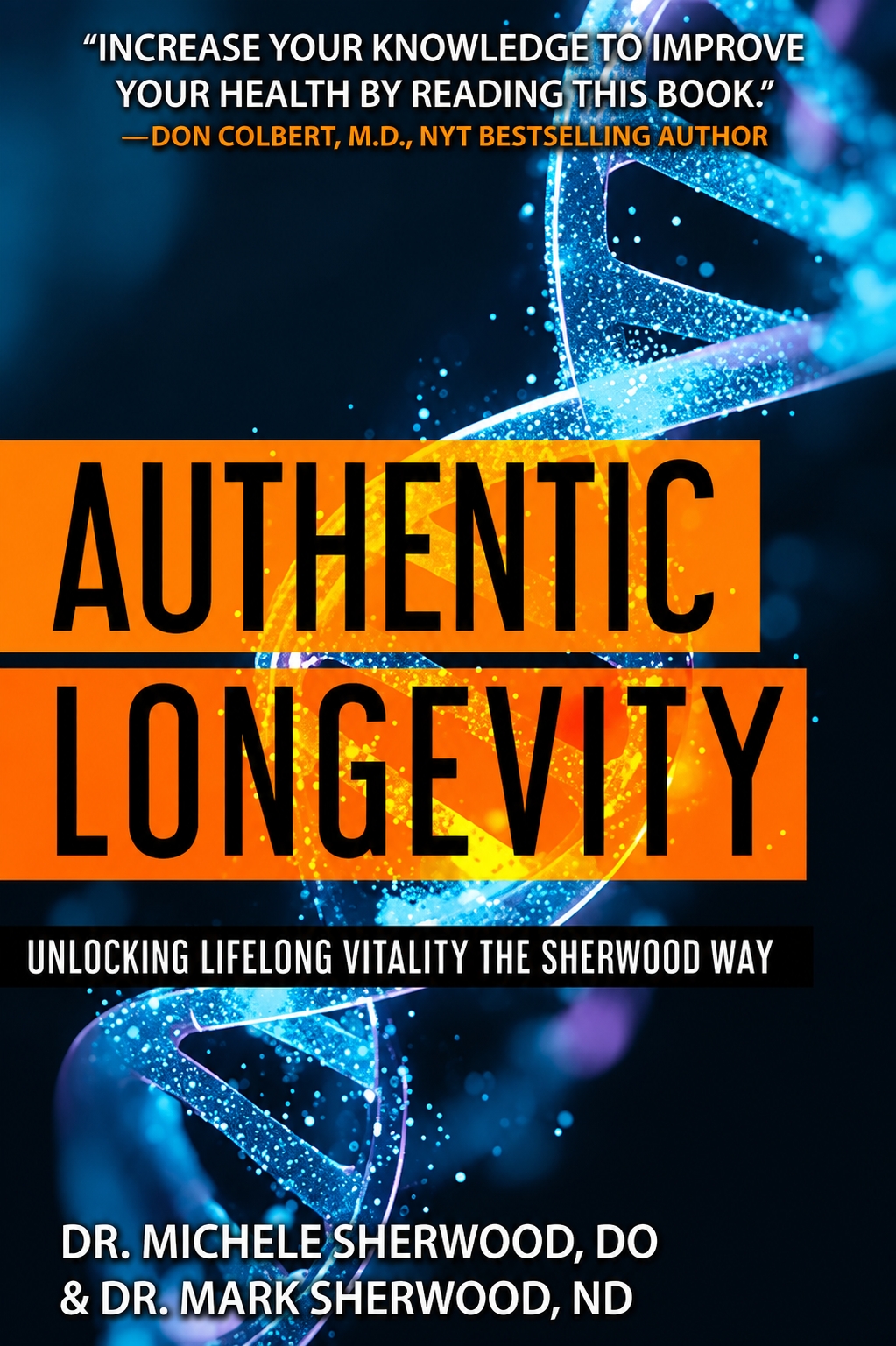
That’s how I think about biohacking, and it’s how Michele and I think about longevity. It’s also one of the reasons we wrote our new book, Authentic Longevity: Unlocking Lifelong Vitality, The Sherwood Way. After decades of clinical experience and working with tens of thousands of patients, we wanted to cut through some of the noise surrounding longevity and give people a framework they could actually understand and use.
The book begins with the areas we can influence every day, nutrition, movement, sleep, stress and hydration, and then moves into areas where professional guidance may be valuable, including genetics, peptides, supplements, hormones and laboratory testing. But we deliberately didn’t stop with the biology.
We believe authentic longevity also requires us to consider the connection between body, mind and spirit. Purpose, belief and emotional wellbeing are part of the conversation because living longer isn’t the ultimate objective. Living well is.
I don’t simply want people living longer. I want them living stronger, with the energy to participate in their lives, the physical capacity to maintain their independence, the mental clarity to remain engaged with the people they love and the sense of purpose that makes those additional years’ worth having. That’s what Authentic Longevity: Unlocking Lifelong Vitality, The Sherwood Way is really about. And that’s what longevity means to me.
To learn more and order Authentic Longevity: Unlocking Lifelong Vitality, The Sherwood Way, find your copy HERE.

About Drs. Mark and Michele Sherwood
Dr. Mark Sherwood, ND, is a traditional naturopathic doctor and clinician, and Dr. Michele Sherwood, DO, is a physician, educator, author and speaker. Together, they are co-founders of the Functional Medical Institute in Tulsa, Oklahoma, where their work focuses on personalized health, prevention, metabolic health, performance, healthy aging and whole-body wellness. Through their clinical work, books, podcasts, speaking engagements and educational outreach, the Sherwood’s have dedicated their careers to helping individuals become informed and proactive participants in their health.
Their new book, Authentic Longevity: Unlocking Lifelong Vitality, The Sherwood Way, combines decades of clinical experience with actionable science and a whole-person approach to health, exploring the daily choices within our control alongside advanced areas of longevity science and the often-overlooked connection between body, mind and spirit.