
Table of Contents
- Understanding Weight Management Basics
- Core Principles of Weight Management
- Exploring Weight Management Strategies
- Applying Weight Management in Daily Life
- Advanced Techniques for Weight Management
- Frequently Asked Questions on Weight Management
- Embracing Sustainable Weight Management
Understanding Weight Management Basics
At WellnessHQ, we believe that weight management is more than just a number on the scale—it’s a holistic journey toward better health and vitality. This ongoing process involves balancing calorie intake with expenditure through sustainable choices, helping prevent chronic conditions like diabetes and heart disease. By focusing on informed decisions rather than quick fixes, you can achieve lasting wellness that fits your life.
Weight management encompasses nutrition, regular exercise, and behavioral adjustments to support healthy weight loss habits without the hassle of constant tracking. Drawing from practical strategies, prioritize whole foods like fruits, vegetables, and lean proteins to naturally create a calorie deficit while boosting energy and mental well-being. Adequate sleep and stress management further enhance these efforts, as supported by heart health guidelines from the NHLBI, which note that maintaining a healthy weight can reduce heart disease risk by up to 30%. Education plays a key role here, steering you away from fad diets toward healthy weight control that builds long-term resilience.
In this guide, we’ll explore the fundamentals of sustainable body weight maintenance, dive into effective balanced weight strategies, and cover options like weight loss diet plans and weight loss programs. Whether you’re just starting or refining your approach, these insights empower you to make positive changes. Remember, the content on WellnessHQ.net is for informational purposes only—consult a healthcare provider before beginning any new routine. Join us as we uncover practical steps to a healthier you.
Core Principles of Weight Management
We all know that embarking on a wellness journey starts with understanding the fundamentals, and weight management is at the heart of sustainable health for beginners. At its core, effective weight control basics revolve around the science of metabolism and calorie balance, where your body burns calories through daily functions and activity. To lose weight, we create a modest deficit by consuming fewer calories than we expend, but always safely to avoid fatigue or nutrient gaps. This principle empowers us to make informed choices without falling into fad traps.
Let’s dive into nutrition first. A solid weight loss diet emphasizes balanced macronutrients: about 45-65% carbohydrates from whole grains and veggies, 20-35% fats from avocados and nuts, and 10-35% proteins from lean sources like chicken or beans. We recommend portion control using tools like hand-sized estimates to prevent overeating. According to the NHLBI Healthy Weight Guide, focusing on nutrient-dense foods helps regulate hunger hormones, making it easier to maintain energy levels. For beginners, start with meal prepping simple salads or stir-fries to build confidence in these habits.
Many newcomers confuse these essentials with quick fixes, leading to frustration. To clarify, here’s a table debunking common myths by contrasting true principles with misconceptions, drawing from evidence-based insights to guide your path.
| Principle | Description | Common Misconception | Why It Matters |
|---|---|---|---|
| Balanced Nutrition | Focus on whole foods and portion control | Crash Diets Lead to Quick Results | They often result in rebound weight gain; NHLBI notes sustainable diets reduce heart disease risk by 20-30% long-term |
| Regular Physical Activity | Incorporate cardio and strength training | Exercise Alone Burns Fat Effectively | Diet plays a larger role in calorie deficit; combined approaches boost metabolism by up to 15%, per NHLBI activity guidelines |
| Behavioral Changes | Build habits for long-term sustainability | Willpower is Enough | Environmental and routine adjustments are key; multidisciplinary strategies improve adherence by 50%, as per standards |
Grasping these distinctions lays a strong foundation, showing how beginner weight maintenance thrives on integration rather than isolation. By addressing myths head-on, we foster realistic expectations that lead to lasting success in our wellness goals.
Transitioning from these insights, visual aids can reinforce the message. For instance, icons highlighting nutrition’s role alongside activity remind us of the interconnectedness in holistic body weight strategies.
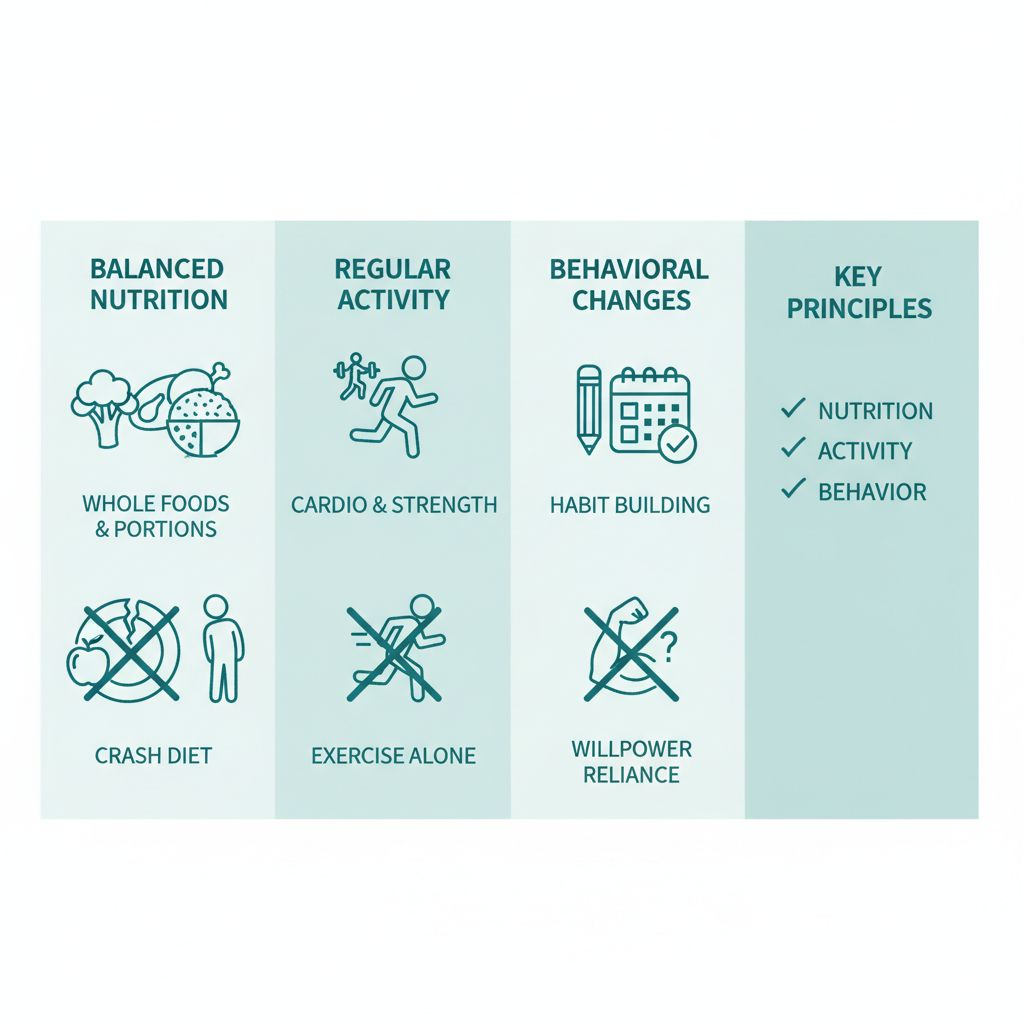
Core principles of weight management debunking common myths visually
Now, building on that, regular physical activity is crucial. We suggest starting with beginner-friendly options like brisk walking for 30 minutes daily or bodyweight exercises such as squats and push-ups three times a week. The NHLBI recommends at least 150 minutes of moderate aerobic activity weekly to enhance calorie burn and muscle tone. This not only aids weight management but also boosts mood through endorphins, helping overcome barriers like sedentary lifestyles.
Finally, behavioral changes seal the deal for sustainability. In structured weight loss programs, we advocate goal setting with SMART criteria and progress tracking via apps or journals. Techniques like mindful eating combat emotional triggers, while the standards of care obesity 2025 emphasize multidisciplinary approaches, including cognitive strategies for habit formation. We recommend small tweaks, like swapping evening scrolls for walks, to embed these into daily life. Remember, the content on WellnessHQ.net is provided for informational and educational purposes only and is not intended as a substitute for professional medical advice, diagnosis, or treatment. Always consult with a qualified healthcare provider before starting any exercise program or making changes to your health routine.
Exploring Weight Management Strategies
We’ve all heard how effective strategies can transform health journeys, and when it comes to weight management, the right approach makes all the difference. At WellnessHQ.net, we empower and inspire individuals to lead healthier lives by sharing practical, evidence-based tactics that fit into real-world routines. This section dives into nutrition, exercise, and mindset tools to help you craft a sustainable plan tailored to your goals.
Nutrition-Focused Strategies
Starting with what you eat sets a strong foundation for any weight management plan. We’ve seen great results with approaches like intermittent fasting, where you cycle between eating windows and fasting periods to control calorie intake naturally. For instance, a 16:8 method—eating within an eight-hour window—can reduce overall consumption without feeling restrictive, as long as you focus on nutrient-dense foods during meals.
A balanced plate method offers another accessible option, dividing your plate into sections: half vegetables and fruits, a quarter lean proteins, and a quarter whole grains. This promotes variety and balance, preventing boredom while ensuring you get essential vitamins and fiber. Incorporating a weight loss diet that emphasizes whole foods, like swapping processed snacks for fresh salads or grilled chicken with quinoa, helps curb hunger and supports steady progress. To overcome plateaus, experiment with portion tweaks or adding herbs for flavor without extra calories.
| Strategy | Effectiveness (Short-Term) | Sustainability (Long-Term) | Best For Beginners? |
|---|---|---|---|
| Diet-Only | High initial loss but plateaus quickly | Moderate; requires ongoing adherence | Yes, if simple plans |
| Exercise-Only | Slow but steady; builds muscle | High with routine enjoyment | Moderate; needs guidance |
| Combined Approach | Optimal for balanced results | Highest; holistic benefits | Yes, customizable |
A combined approach often yields the best outcomes, with studies on multidisciplinary obesity management showing 20-30% improved results through integrated care. This involves nutritionists, therapists, and physicians collaborating on personalized plans, leading to an average 1-2 pounds lost per week over six months. By blending diet with other elements, you address root causes like habits and support systems, making long-term success more achievable.
Exercise and Activity Integration
Building on nutrition, incorporating movement amplifies your efforts in strategic body weight optimization. We recommend combining cardio, strength training, and daily activity for optimal calorie burn while maintaining muscle mass. Cardio options like HIIT—high-intensity interval training—involve short bursts of effort, such as 30 seconds of sprinting followed by rest, burning more fat in less time than steady-state runs.
Mindset and Tracking Techniques
Shifting focus to the mental side, mindset plays a crucial role in sustaining progress without obsession. We’ve found journaling effective for reflecting on triggers, like stress eating, and celebrating non-scale victories such as increased energy. Apps for logging meals and moods provide gentle reminders, fostering accountability without overwhelm.
Applying Weight Management in Daily Life
Building a Sustainable Weight Loss Diet
- Assess your baseline: Track current eating habits for a week to identify areas for improvement, like swapping sugary snacks for fruits.
- Set goals: Aim for nutrient-dense meals; for example, a 1300-calorie plan works well for sedentary adults, offering three meals and two snacks to maintain blood sugar.
- Customize portions: Include inclusive choices like plant-based proteins for vegetarians or gluten-free grains for sensitivities.
| Diet Type | Key Foods Included | Safety for Long-Term | Effectiveness for Weight Loss |
|---|---|---|---|
| Mediterranean | Fruits, veggies, fish, olive oil | High | Sustainable and heart-healthy |
| Keto | High-fat meats, low-carb veggies | Moderate; monitor nutrients | Fast initial loss, potential rebound |
| Balanced Low-Cal | Portion-controlled all food groups | High if varied | Gradual, steady progress |
Incorporating Exercise Routines
Integrating exercise into daily life doesn’t require hours at the gym; we suggest starting with 30-minute sessions to build momentum. For home-based routines, try bodyweight circuits: 10 minutes cardio (jumping jacks), 10 strength (squats, push-ups), and 10 flexibility (yoga poses).
Advanced Techniques for Weight Management
| Approach | Cost Range | Support Features | Long-Term Results Focus |
|---|---|---|---|
| Online Programs | $20-100/month | Coaching, meal plans, community | High with accountability |
| App-Based | $5-15/month | Tracking, reminders, forums | Moderate; user-dependent |
| Self-Guided | Free or low | Books, free resources | Variable; requires discipline |
Frequently Asked Questions on Weight Management
How effective are keto diets for weight loss?
Keto diets can promote short-term weight loss by reducing carbs and emphasizing fats, but they’re not ideal for everyone. Pair a weight loss diet like keto with balanced nutrition for sustainability, as studies show mixed long-term results.
Embracing Sustainable Weight Management
We hope this guide has empowered you to approach weight management with confidence and clarity. In recapping key applications, incorporating a balanced weight loss diet alongside structured weight loss programs can yield sustainable results, much like the gradual progress seen in Mounjaro weight loss by week.
Resources
- Build Healthy Habits for Weight Loss Without Calorie Tracking
- Maintain Weight Loss After Ozempic with Proven Strategies
- Achieve Effective Weight Loss with Mounjaro Treatment Guide
- Compare Phentermine and Ozempic for Weight Loss Options
- Follow a Balanced 1300-Calorie Meal Plan for Weight Loss
- Optimize Wegovy Timing for Maximum Weight Loss Effectiveness
- Prevent Weight Regain After Ozempic with Expert Tips
- Explore 2025 Standards of Care for Obesity Management
- Implement Multidisciplinary Strategies for Effective Obesity Management
- Discover FDA Nutrition Initiatives for Healthier Eating Habits
- Apply Multi-Modal Interventions to Reverse Metabolic Syndrome
- Access NHLBI Guide to Healthy Weight and Heart Living